Chapter 2 – In The Blood
- ME AND DELL
- Stephen Curry (Dell Curry): One of the most famous examples, with his father, Dell, playing 16 seasons.
When did Dell play for the utah Jazz
Oscar Daniel Bezerra Schmidt – Nicknamed; Mão Santa (Holy Hand)
Must watch: ‘Only Live For The Love of The Game’, Oscar Schmidt Hall of Fame Speech. It was a good life. Listen carefully, filter through his English as his 4th Language difficulties. He renders the emotions recalling his Brazilian youth only wanting to play basketball, and how he first encountered his wife. Oscar played professionally 26 seasons, until he was 45 years-of-age. The last word was, ‘Oscar’ remains in the game coaching youth basketball.
Oscar Daniel Bezerra Schmidt – Nicknamed; Mão Santa (Holy Hand)
Must watch: ‘Only Live For The Love of The Game’, Oscar Schmidt Hall of Fame Speech. It was a good life. Listen carefully, filter through his English as his 4th Language difficulties. He renders the emotions recalling his Brazilian youth only wanting to play basketball, and how he first encountered his wife. Oscar played professionally 26 seasons, until he was 45 years-of-age. The last word was, ‘Oscar’ remains in the game coaching youth basketball.
Chapter 2: In The Blood
- Stephen Curry (Dell Curry): One of the most famous examples, with his father, Dell, playing 16 seasons.
- LeBron James & Bronny James: Created history as the first father-son duo to play together.
- Klay Thompson (Mychal Thompson): Son of former #1 overall pick Mychal Thompson.
- Al Horford (Tito Horford): Son of Tito Horford.
- Devin Booker (Melvin Booker): Son of former NBA player Melvin Booker.
- Jaren Jackson Jr. (Jaren Jackson): Son of NBA veteran Jaren Jackson.
- Jett Howard (Juwan Howard): Son of former NBA star Juwan Howard.
- Joe Caldwell: Grandfather to Marvin Bagley III and Marcus Bagley.
- John Barber: Grandfather to Jason Sasser and Jeryl Sasser.
- Ronnie Shavlik: Grandfather to Shavlik Randolph.
- Maurice King: Grandfather to Ish Wainright.
- John Townsend: Grandfather to Eric Montross.
- Historical Count: Approximately 80 sets of fathers and sons have played in the NBA.
- Active Players: At the start of the 2023-24 season, more than 20 players had fathers who played in the league.
- Milestone: In 2024, LeBron and Bronny James became the first father-son pair to play together in the NBA.
- Examples: Notable second-generation players include Stephen and Seth Curry (sons of Dell Curry), Kobe Bryant (son of Joe Bryant), and Klay Thompson (son of Mychal Thompson).
The NBA draft eligibility requires players to be at least 19 years old during the calendar year of the draft.
\
THE BIG BABY OF THEM ALL
- Youngest Active Player: Cooper Flagg (19 years, 30 days as of late 2025).
- Other Under-21 Players: Alex Sarr (20 years old).
It’s in the blood
‘WE SHALL PLAY BASKETBALL!”
WAS THE GAME ORDAINED WITH MANIFEST DESTINY.
It’s in the blood
‘WE SHALL PLAY BASKETBALL!”
WAS THE GAME ORDAINED WITH MANIFEST DESTINY.
It’s in the blood
‘WE SHALL PLAY BASKETBALL!”
WAS THE GAME ORDAINED WITH MANIFEST DESTINY.
- Youngest Player: As of December 2025, Cooper Flagg is the youngest active player in the NBA.
- Age Profile: The league features a high volume of players aged 19-21, often consisting of recent draft picks and sophomores, notes HoopsHype’s report.
- Draft Impact: Many of these players are top picks from the 2023, 2024, and 2025 NBA Drafts, which significantly contribute to the under-22 demographic.
- Youngest Active Player: Cooper Flagg (born December 21, 2006) is the youngest in the NBA.
- Key “Under 23” Talent: Many of the NBA’s top young players are within this age range, including Victor Wembanyama (20-21), Chet Holmgren (21-22), Paolo Banchero (21-22), and Stephon Castle.
- Draft Class Focus: Nine of the top 10 youngest players on NBA rosters for the 2024/25 season were selected in the 2024 NBA draft.
- Youngest Player: As of December 2025, Cooper Flagg is the youngest active player in the NBA.
- Age Profile: The league features a high volume of players aged 19-21, often consisting of recent draft picks and sophomores, notes HoopsHype’s report.
- Draft Impact: Many of these players are top picks from the 2023, 2024, and 2025 NBA Drafts, which significantly contribute to the under-22 demographic.
- Youngest Active Player: Cooper Flagg (born December 21, 2006) is the youngest in the NBA.
- Key “Under 23” Talent: Many of the NBA’s top young players are within this age range, including Victor Wembanyama (20-21), Chet Holmgren (21-22), Paolo Banchero (21-22), and Stephon Castle.
- Draft Class Focus: Nine of the top 10 youngest players on NBA rosters for the 2024/25 season were selected in the 2024 NBA draft.
- 19-year-olds: Cooper Flagg (2025 draft), Bub Carrington, Zaccharie Risacher, Ronald Holland II, and Tidjane Salaün.
- 20-22 year-olds: Victor Wembanyama, Bilal Coulibaly, Cason Wallace, and Dereck Lively II.
- Young Teams: The Oklahoma City Thunder, Portland Trail Blazers, and San Antonio Spurs entered the 2024-25 season with some of the youngest rosters, averaging just over 24 years of age.
- Active Players: 444–453 (2024–2026 season estimates).
- Total Roster Capacity: Generally around 15 players per team + 3 two-way contracts, roughly 18 players per team.
- Context: Only 1.2% of NCAA men’s basketball players end up drafted by an NBA team.
- Total Participants: Various reports place the number around 537,000 to 541,000.
- College Transition: Roughly 3% to 6% of these high school players continue to play at the college level (NCAA, NAIA, etc.), which equates to roughly 18,000–34,000 players.
- Popularity: Boys’ basketball is widely played, with high participation rates in states like Indiana, Texas, and California.
- Structure: Unlike the U.S. high school model, youth in Europe generally play for local clubs, which have teams across various age groups, often starting at under-12 or under-14 levels.
- Scale: In countries like Lithuania, which has a strong, small population, there are 138 registered clubs with extensive, year-round youth programming.
- Reach: Major events like Basketball Without Borders (BWB) Europe have, for example, involved prospects from numerous countries across the continent.
- Talent: Europe is a major producer of elite, high-level teenage talent, as evidenced by the 20 Under 20, or rising stars, identified annually by FIBA.
- Total D1 Men’s Players: 5,607 (as of March 2025).
- Alternative Data: Some reports indicate approximately 5,278 to 5,826 players, depending on the number of schools analyzed.
- Schools: There are 361 full-member Division I institutions.
- Roster Size: While scholarships are limited (13), the new, higher roster cap is 15 players.
It’s in the blood
‘WE SHALL PLAY BASKETBALL!”
WAS THE GAME ORDAINED WITH MANIFEST DESTINY.
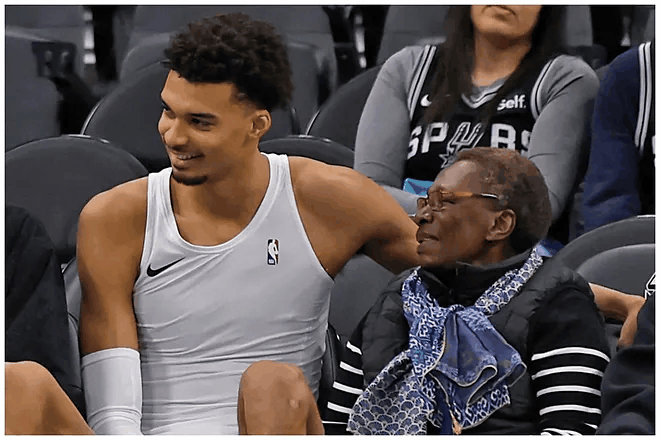
Marie Christine was more than just a spectator in Victor’s life. She was considered to be the one who built the bridge that connected Wembanyama to basketball and ultimately, made him a global icon. To fully understand who she was, one must look at the de Fautereau family’s athletic DNA.
Player Profile: He was described as a “rugged 6-7 dunking center
Marie Christine was more than just a spectator in Victor’s life. She was considered to be the one who built the bridge that connected Wembanyama to basketball and ultimately, made him a global icon. To fully understand who she was, one must look at the de Fautereau family’s athletic DNA.
- Club Career: He played for the Paris University Club (PUC), a prominent French team, during the 1960s.
- Timeline: He played for three seasons with PUC, beginning in the 1967-68 season.
- Player Profile: He was described as a “rugged 6-7 dunking center”.
- Family Legacy: His wife, Marie Christine, also played basketball, and his daughter (Wembanyama’s mother), Elodie de Fautereau, was a professional basketball player and coach.
- Establishment: Founded in 1906, the club is a non-profit association.
- Locations: Historically based at Stade Charléty, it utilizes 45+ other sporting facilities throughout Paris, including the Cité Internationale Universitaire de Paris.
- Sporting Activities: Offers a wide range of disciplines, including Basketball, Volleyball, Rugby, Athletics, Aikido, Judo, Baseball, and Chess.
- Training & Education: The club provides training for sports animators and educators.
- Partnerships: The club has a partnership with the Institut Mutualiste Montsouris (IMM) for medical care for its members.
- Activities: Organizes sports camps, training, and sports sections for various ages.
It’s in the blood
‘WE SHALL PLAY BASKETBALL!”
WAS THE GAME ORDAINED WITH MANIFEST DESTINY.
Melvin Rideout, one of Naismith’s students and original basketball disciple, went to Paris to help set-up the YMCA’s new center at 14, rue de Trévise in 1893. The 22-year old from Illinois introduced basketball to the group’s teachers in the building’s new gymnasium, today the world’s oldest original basketball court
The links between France and basketball go back to the game’s origins. Two years after the game’s 1891 invention in Springfield, Mass., 22-year-old YMCA educator Melvin Rideout arrived in Paris to transmit the game to French counterparts. The first basketball game on European soil was held Dec. 27, 1893, in the new Paris YMCA facility at 14, rue de Trévise, which today is the oldest original basketball court in the world.
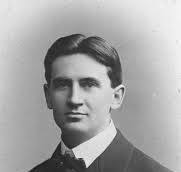
TThe game spread across Western Europe before the First World War, but it took on a new meaning during the early Cold War with Paris Université Club (PUC). This amateur club helped sow the seeds that made France a 21st century basketball breeding ground thanks to a culture of openness to outside influences
The team, composed mostly of university students from around the French capital, was one of the country’s elite of the era. It won French league titles and tournaments and featured members of the men’s national team on its roster, including longtime captain Roger Antoine, Team France’s first male basketballer with African roots. The club also traveled throughout Europe, including behind the Iron Curtain, and North Africa, exposed along the way to different styles of play.
Thanks to its cosmopolitan outlook and makeup, PUC was ground zero for integration of U.S.-influenced basketball tactics, techniques, and drills. Such efforts were due to the team’s first “American” of the postwar era, Martin Feinberg, the son of a Cleveland cab driver who arrived in Paris in 1954 to study at the Sorbonne. The tall U.S. player was rapidly recruited and introduced French teammates to some of the training drills and styles of play he learned back home, including during the 1945-46 season at the University of Michigan while he trained to be a U.S. Navy officer. Feinberg organized a trip for the team to travel to the United States—the first French side to do so—to see how differently the game was held, played, and consumed. The experience was transformative, and PUC began to integrate plays they picked up as a result of their trip into their on-court arsenal.
Several years later, another American, recruited by Feinberg, came to Paris to connect its basketball style to that flourishing across the Atlantic: Henry “Gentleman” Fields. By the 1960s, players like Boston Celtics star Bill Russell transformed the U.S. game into an ever-more vertical one, whereas its French counterpart was still centered on passes akin to a “ballet on the court.” Fields brought Bill Russell-style defense and techniques to France. Fields also modeled a U.S.-style work ethic when it came to sport; he diligently practiced hour after hour, at a time when basketball practices in France were semi-weekly.
Read More: Why Athletes Use Their Platform to Effect Change Off the Field
Fields’ impact was real. PUC clinched the French championship title in 1962, and the Coupe de France trophy in 1962 and 1963. He was also integral to PUC’s 1962 return to the United States, where they again tested themselves against American counterparts and picked up new tactics, techniques, and a first-hand understanding of how racial segregation in the United States impacted the game. By the time Wembanyama’s maternal grandfather, Michel de Fautereau, began to play the first of three seasons with PUC in 1967-68, the club’s style and culture were forever marked by “their Americans” Feinberg and Fields.
Fields wove an indelible mark on the game. He later conquered hardcourts with Antibes in the 1970s, as well as imparted his Russell-style game in clinics with the French, Swiss, and German national teams. These were further examples of how individuals played important roles evolving basketball overseas thanks to cultural, technical, and knowledge exchange—examples of what today would be considered types of sports diplomacy.
Thanks in part to these early informal people-to-people exchanges, the French game changed. Although basketball migrants from across Europe, Africa, and the French Caribbean contributed significantly to France’s hoops history since the mid-20th century, the game’s U.S. accent left a strong mark. Ever-more young men from the United States played on French hardcourts in the 1970s and 1980s, leading to what French media decried as an “American colonization” of the game; in the 1980s, their female counterparts also began to dribble in France, too, including Hall of Famer Denise Curry.
As a result, the flow of players began to change in the 1980s and 1990s as young Frenchwomen and men began to cross the Atlantic to play in North America. They became NCAA Division One starters, such as Marist College’s Paoline Ekambi, the first Frenchwoman to play at that level in 1984, and multi-year co-captains like University of Washington Huskies’ Katia Foucade. In 1997, Isabelle Fijalkowski and Tariq Abdul-Wahad made history as the first French players in the WNBA and NBA, respectively, as did subsequent generations including Tony Parker, the first Frenchman to win an NBA Championship in 2003 with the San Antonio Spurs and later enshrined into the Hall of Fame (2023), and Sandrine Gruda, the first Frenchwoman to win an WNBA Championship in 2016 with the Los Angeles Sparks
Victor Wembanyama’s grandparents: Michel de Fautereau and Marie Christine
Wembanyama — born in Le Chesnay, France in January 2004 — has traveled throughout the country during his playing career, both as an amateur and professional.
At seven years old, he began playing for Entente Le Chesnay Versailles (France) b
The links between France and basketball go back to the game’s origins. Two years after the game’s 1891 invention in Springfield, Mass., 22-year-old YMCA educator Melvin Rideout arrived in Paris to transmit the game to French counterparts. The first basketball game on European soil was held Dec. 27, 1893, in the new Paris YMCA facility at 14, rue de Trévise, which today is the oldest original basketball court in the world.
how much the NBA itself is shaped by international players, particularly its French connection, which has sent the most non-North American talent to the league all-time
Melvin Rideout, one of Naismith’s students and original basketball disciple, went to Paris to help set-up the YMCA’s new center at 14, rue de Trévise in 1893. The 22-year old from Illinois introduced basketball to the group’s teachers in the building’s new gymnasium, today the world’s oldest original basketball court
The links between France and basketball go back to the game’s origins. Two years after the game’s 1891 invention in Springfield, Mass., 22-year-old YMCA educator Melvin Rideout arrived in Paris to transmit the game to French counterparts. The first basketball game on European soil was held Dec. 27, 1893, in the new Paris YMCA facility at 14, rue de Trévise, which today is the oldest original basketball court in the world.
… We are attempting to establish in the minds of the readers of: Michael & The Cricket, that there is a definable mental, physical, environmental, and psychological mix of character and personal attribute that shows itself in the youth who best exercise the skills of the game.
There is a common trait, a tread, in those who succeed at winning basketball games.
This trait does not always result in life satisfaction … … … … it doesn’t always translate ..
as a matter of fact, it OFTEN, works contrary to the need
for every winning team, there is a loosing team
…. for every player that wins, there is the equal number of players that lose … told we shall never accept losing …
competitive spirit …
BUT THAT PHILOSOPHY IS UNREAL,
its not the way it goes IN LIFE.
Robert was born in 1910 in Fort Wayne, Indiana. He was a good young man and during his entire life he remained a good, pious, principled man with a very pleasant personality and a tremendous wit, topped off by a fantastic memory. He died at the age of 83 after a very decent life.
He did very well being educated in Catholic schools. As an exceptional mathematician and an avid reader, he was at the top end of the class. He played all of sports which the school had to offer. But he loved football the most of all. Throughout his life, he was a year around Midwest weekly golfer. He would even play off-the-greens winter golf on a cold snowy flurry day. Few if any summer days passed without a trip to the links until the day he was unable to walk the fairways and after more than fifty years of playing golf. He would say, golf kept him alive. He could tell you everything about all the famous golf professionals in his lifetime. There were always hundreds of magazines somewhere in his house, many where golf magazines. But nothing ever overcame his love for the ‘Fighting Irish’ football team in South Bend Indiana.
After years of chasing her through the neighborhood, Bob married his high school sweetheart in 1929, at the age of 19. She was even younger. They, just like much of the general population experiencing the ‘Great Depression’, had no money in the 1930’s. Bob’s dream of attending the University of Notre Dame was simply not feasible. He even spent a few days at a ND football tryout. But it wasn’t his path. He had mouths to feed and bills to be paid with a wife and a new baby in the house.
In 1930, there wasn’t much opportunity for employment for a young 19 year old boy as the vast number of unemployed elder men took most of the jobs. Under pressure to work, Bob was persistent, and he got hired to be the janitor. He was lucky and appreciative to have a job working in a factory cleaning up at night. It was a guaranteed solid check and he made just enough money for the three of them to survive as a family, living in the basement of another family member.
The company designed and manufactured specialty large equipment work vehicles for companies throughout the world. Thus, it was called International Truck Engineering. At night, as he swept and cleaned an empty factory, Bob could watch the daily progress over months to completion as these amazing large specialty vehicles as they were being assembled on the factory floor. This intrigued him.
In his spare time, while he worked through cleaning the factory floors, he would read the blue prints and schematics laying around, over trucks, on the factory tables, and even sometimes in the trash can. Those trashed drafts he kept for further investigation. Each truck was uniquely designed, and they all had obstacles and problems to overcome while being built.
After saving up money, Bob bought a used set of books on the study of Engineering. It wasn’t long before he was a self-taught well educated engineer. It was shortly after his home school episode that he began providing company engineering solutions to the guys on the factory floor. In only a few years, he was elevated to vice President by the owner. He worked at the same company for 37 years.
The Zoellner Automotive Engine factory was located across the road. They made the pistons for engines. It just so happens that Bob became friends with Fred Zoellner. And one of the perks of being friends with Fred was you had plenty of tickets to go watch the basketball team Fred created, supported and owned. Bob could walk to North Side High school from his house, spend a few hours watching basketball in the evenings and be home for early bed and early morning prayers.
Fred Zoellner loved the sport of basketball. He started the first long term successful professional Mid-west Indiana based basketball team, in the late thirties. Initially, he provided players employment in his factory. During those had economic times, this alone was key to an above average lucrative lifestyle. As things rebounded from the Great Depression, he began to pay players a salary. He treated everything to do with his Fort Wayne Pistons with the very best. He did everything he could to make the team successful and the organization to grow. Basketball was an obsession for Fred. He even got the city of Ft. Wayne to help build one of the largest arenas of its time.
Eventually he was inviting Bob to join the post game festivities which included a meal and mingling conversation with the players from both teams. Free food had its way of ensuring a big crowd in those days.
At one of these gatherings, Bob, standing 6’3 (which was considerably tall at that time period) became friends with the tallest 6’10” man in the room, someone from the opposing team, the Lakers, someone who he had closely observed playing with exceptional skill on the court. That player was no other than George Mikan, Mr. Basketball.
Mikan was at the start of a long and very successful basketball career. He became the first national, professional basketball superstar. He changed the game as a player that forced rule changes to respond to his on-court dominance, as he won many games ‘controlling the paint’. He later helped push the ABA into existence while working in League operations. The red, white, and blue balls … t… well, that was all George’s idea.
Bob and George spoke on many occasions over time and at one point Bob introduced his son Charley to George. George called him by his name familiar, Chuck, just as everyone else exercised. He made Chuck feel comfortable. Charles and Bob spoke often for years after even decades about Mikan and the basketball of that time period, always emphasising the unbelievable skill and performance of the ‘best player ever in the game’ (The G.O.A.T.) George Mikan, Mr. basketball, never missing the opportunity to mention what a swell nice guy George was during their encounters. I know this because Bob was my Grandfather and Charles was my father.
The story of the 19-18 game between the Ft. Wayne Pistons and the George Mikan led Minneapolis Lakers. was told to me in detail by Grandfather. I heard this story much more than just once. Always ending in, George forced the League to install the time clock. Thus changing the game forever. Followed by a family debate on what the 24- ( maybe it was 30?) – second-shot time clock was going to do negatively to the great game of basketball.
Post Card from Hawaii
Buford met Bill Self when he served as Self’s host during a recruiting visit at Oklahoma State University in 1981.[1] Buford has called Self his best friend
Buford first joined the Spurs in the summer of 1988 as an assistant coach on Larry Brown‘s staff.
Buford started his coaching career in 1983 as an assistant with the Kansas Jayhawks
Robert Canterbury Buford (born May 16, 1960) is an American basketball executive who is the CEO of the San Antonio Spurs of the National Basketball Association (NBA). He was named general manager in 2002 after five seasons serving as team president. Buford is also the president of sports franchises for Spurs Sports & Entertainment. Buford has won the NBA Executive of the Year award twice, for the 2013–14 and 2015–16 seasons, before his promotion to CEO prior to the start of the 2019–20 season