
Hezeriah The First Phenom
The history of professional basketball in 1960 shows a sport at the beginning of a big rise. More teams, more popularity and more money provided previously inexperienced opportunities for the increasingly talented youth.
The pro game began to develop as more athletic and physical players arrived on the scene.
The new American Basketball Association challenged the old guard NBA and a flood of new players that never would have had a chance in professional basketball found spots on rosters.
During this time period of the game, The center position was key to success and any reasonably talented 7-foot basketball player – no matter what their skill level was – had demand.
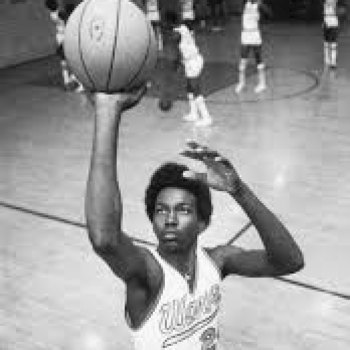
The Detroit Pistons drafted such a player and the first non-college-playing player in Reginald Hezeriah Harding , Reggie Harding, in 1962.
A Detroit native, Harding was selected in the 4th round of the 1962 draft after playing at Eastern High School. He was drafted a second time in 1963 in the 6th round. and made the Pistons roster that year.
He had a turbulent 6-year career that culminated with him being shot dead in the streets of Detroit at the age of 30 in 1972.
He was not age-eligible straight out of high school to play for the Pistons, as the Pistons fought to change the rules, Harding played for a Nashville prep school for two seasons and then in the professional Midwest league in Toledo and Holland, MI.
Finally, the rules allowed Harding to join the Pistons. He was the first player that propelled the professional leagues to draft younger players.
He became a quick and solid contributor averaging 27 minutes in 191 games, and averaging 9.3 points and 9.3 rebounds per game in his tenure with the Pistons.
He was a fun-loving guy but loved the street and party life. and surrounded himself with the sketchiest of characters.
Clubs, drugs, crime, guns, and alcohol became his focus as he became increasingly undependable as his career progressed.
He was suspended for the entire 1965-1966 season for what is believe to be a weapons charge and promptly wore out his welcome the following season.
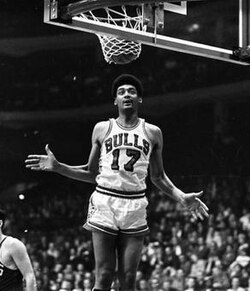
Even after serving suspension from the league, the Chicago Bulls traded for him prior to the 1967-68 season.
He again self-destructed after 14 games and his contract was terminated. But despite his off-court bad habits Reggie would not stop playing the game of basketball.
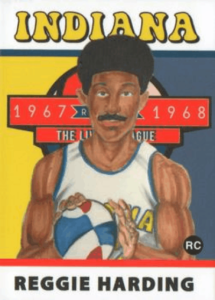
After a brief stop to play for the CBA’s Trenton Colonials, he wound up in the ABA with the Indiana Pacers.
By this time Harding was at his most maniacal, waking up roommate Jim Rayl at gunpoint and threatening to kill Pacer GM Mike Storen in a TV interview.
He lasted 25 games with the Pacers. His total monetary fines for team rule violations was more than his salary.
He never played pro ball again.
There were stories of him holding up the same gas station 3 times and raping Florence Ballard in 1960.
A teammate once said, “Some people viewed his story as the fault of society. Society did fail him, but we were never able to get him off drugs and out of the street. Reggie was where he wanted to be.”
Harding developed a heroin addiction during his NBA suspension in 1966.
In June 1968, Harding was a police prisoner at Detroit General Hospital for an investigation of armed robbery; he returned to the hospital the following week with gunshot wounds to both legs in a separate incident.
Harding was sentenced to 2 years in prison for a concealed weapons charge and served his sentence in Southern Michigan Prison. After his release in June 1971, he attempted to make an NBA comeback but never signed with a team.
Two weeks before Harding’s death, his birth mother, Lillie Mae Thomas, was shot to death in an argument with her husband. At her funeral, Harding stood over her coffin for 15 minutes and instructed the funeral director on how he would want his own funeral.
On September 1, 1972, Harding was shot twice in the head by Carl Scott, who had been involved in an argument with Harding 20 minutes earlier. Harding was taken to Detroit General Hospital where he died.
Through drug addiction, 11 arrest, and prison time, Reggie … … never quit playing basketball.. Only days before his death, Reggie was seen playing park basketball in Detroit.