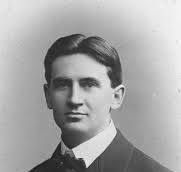
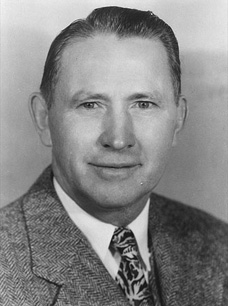
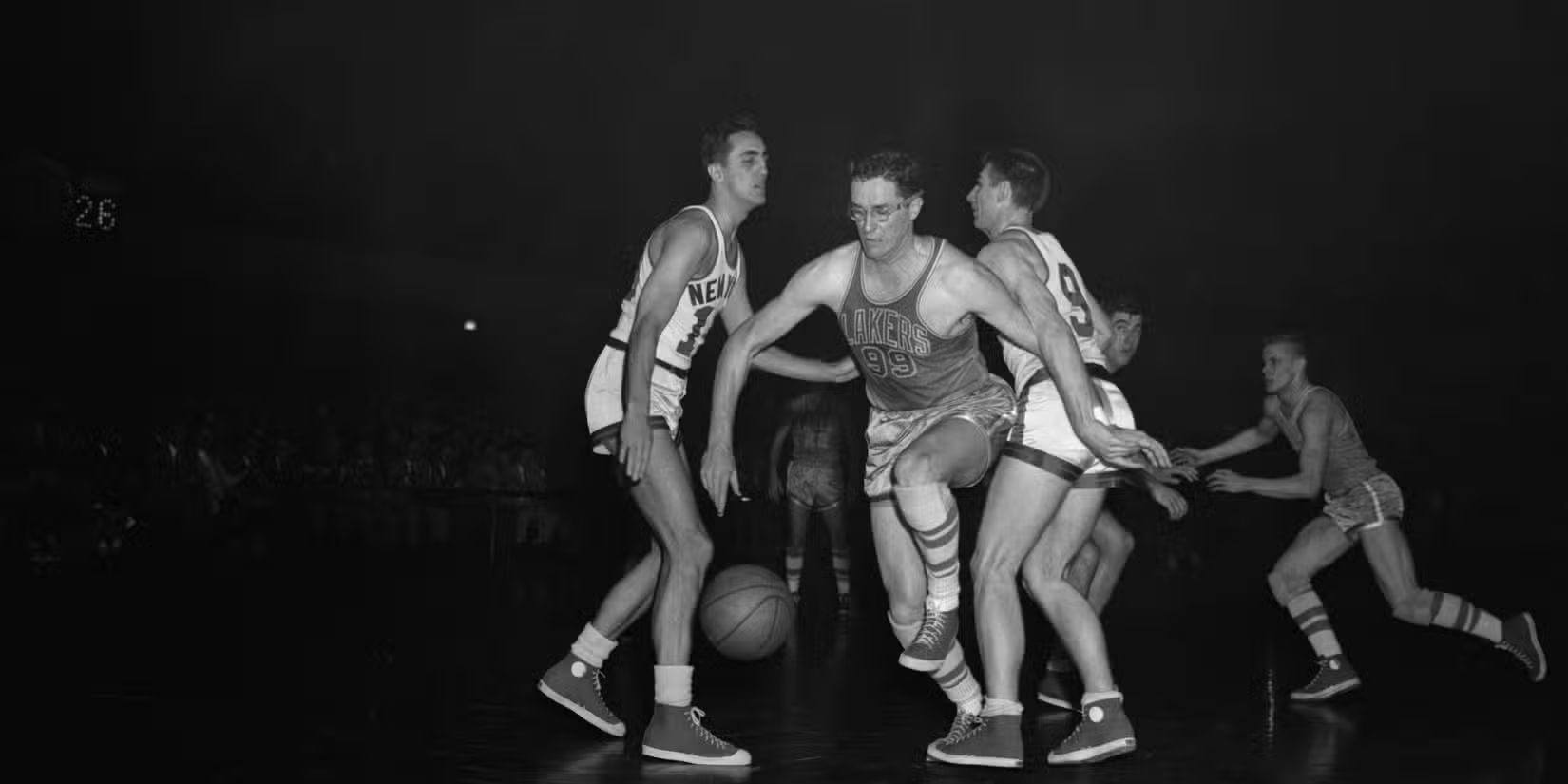
Scripture teaches God said: “Let There Be Light”, thereafter, there was light. Who said ‘Let There Be Basketball’, and what happened thereafter.

How did the game of basketball come into existence, and how did it grow into the version of the game we have today.

In this chapter, we address what happened immediately after it was proclaimed by the great Doctor Naismith that WE SHALL PLAY BASKETBALL!

WAS THE IT ORDAINED WITH ‘MANIFEST DESTINY’.

From the games initiation, it had a high acceptance level.  It was welcomed internationally, and by men and women as participants and fans.. There is no doubt something propelled the game forward  globally.  There was something magnetic about the sport of basketball. 

‘GOD SURELY MUST HAVE SHINED A LIGHT FROM THE HEAVENS ON THE SPORT OF BASKETBALL’

There is no doubt that basketball has provided much for many. 

Here on this website, we address professional basketball at the highest level.   For those who pursue playing at this level there are benefits.   But the highest levels of competition are not achieved without sacrifice and consequences.    Everyone must pay that price to play.  It can’t be paid with money.  And often, the toll comes well after one finishes playing competitive basketball.   Far too often, that effort to excel at playing basketball on its highest level results in the early termination of life itself.  …  … Let’s continue with this philosophy and cost analysis later.  Point made, it’s not all fun and games at the professional level of basketball.

Here in this chapter, ‘Let Ther Be Light’, we start to move toward an understanding  of those who had that special sauce, that  ‘SOMETHING”, the it FACTOR,  from the games invention in 1989 to mid 1900’s.  We believe a certain set of skill and circumstance has always existed in the game of basketball at its highest competitive levels.  In some manner or form in it appears often in those who strive for the top of the ladder within the game.

IN THIS CHAPTER NARRATIVE, WE ESTABLISH THAT THE ‘IT FACTOR’ WAS AN INTEGRAL PART MOST ALL YOUNG PROFESSIONAL PLAYERS DURING THE FIRST 70 YEARS OF THE GAME.

This  website is not a history of the game presentation.  However we need to understand a few basics to  proceed.   

Eventually, in subsequent chapters, we get to the 1960’s era of professional basketball.  This is where the real personal narrative on Michael & The Cricket actually begins.

In chapter one, we insufficiently cover 70 years of the games history on one website page,  … … a very quick and simple manner from a historical perspective. 

We address this ‘it’ factor as a key element in most all young phenom basketball players from half of the 20th century.

Further,  demonstrate that there  is a historical connecting element between: 

MICHAEL & THE CRICKET

 ‘Let There Be Light’ 

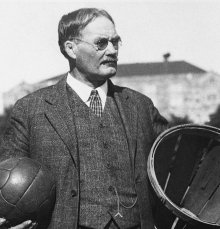
Basketball was invented by Dr. James Naismith, a Canadian physical education instructor, in December 1891 at the YMCA Training School (now Springfield College) in Springfield, Massachusetts.  He devised the game using peach baskets as hoops and a soccer ball, writing the original 13 rules himself.
 

The Challenge: Luther Gulick, the school’s director, asked Naismith to invent a new indoor game to keep students active during cold New England winters. 

The First Game: Played on December 21, 1891, using peach baskets nailed to the gym balcony and a soccer ball, with rules like no running with the ball

.

The Rules: Naismith’s initial rules emphasized passing and limited physical contact, laying the foundation for modern basketball.

Some say Naismith devised the game to create a less injury-prone indoor sport for winter.   

Currently, national emergency care room statistics in the U.S,A.  would prove his failure in that regard.  Basketball injuries rank in the top three events causing injury requiring medical attention to youth in the United States.  Basketball mishaps are not far behind skateboard injuries requiring emergency medical attention.

 Others have said, Naismith was in the pedagogic care of an exceptionally unruly hyper-active group of young men that needed a winter time activity to direct their youthful energy in a positive manner.  Perhaps, the instructions to create a suitable activity from Luther Gulick , who was dealing with the discipline of the school, supports this claim.

Another key to understanding the start of the game is in the name of its inventor, Doctor Naismith.  James was not a medical doctor, he held the highest advanced degree in the studies of physical education.   Naismith was attempting to put that education into practical action.

This online narrative, ‘Michael and the Cricket’ proposes what has propelled the game of basketball forward and into the hearts and minds of so many players was evident at the games initiation.
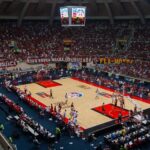
There was something unexplainable  happening … … 

Spread of the Game: Naismith spread the game nationwide through the YMCA network, and it became an Olympic sport in 1936.

…………………………….

Throughout the first half of the 20th century, the YMCA  was a nationwide organization with local programs in various sports.

Young Men’s Christian Association, a global non-profit organization founded in London in 1844 to provide safe spaces, spiritual support (Bible study), and social programs for young men during the Industrial Revolution, though it now serves everyone with diverse community, fitness, and youth programs.

Key points about the YMCA:

 Started by George Williams as a refuge from harsh city conditions for young men working long hours.

 Expanded from its Christian roots to become an inclusive organization open to all people, regardless of age, race, or religion, offering secular services.

 Offers health & fitness centers, sports leagues, childcare, camps, and community development programs

 Focuses on youth development, healthy living, and social responsibility, embodying Christian principles in practice
…………………………..

Why? This is the key question that directs to an important aspect of the game.  What made tossing a ball into a peach basket so appealing.  Further, why was it interesting to other YMCA organizations.

………………………………….

The answer to reaches into where we are headed in this online book.  The …

We can not verify that the voice or words in the above video are actually the words spoken by Dr, Naismith. 

However, we are certain beyond any doubt about his personal proclamations and the facts about the game’s creation.  Those facts are well documented.  As a man with a Doctorate in Education, Naismith, documented every detail in writing.  His writing still exist. 

If it is his voice, he confirms the delinquent rowdy and rough behavior of the boys.

THE POINT IS THAT THE GROWTH OF THE GAME OF BASKETBALL IS PARTIALLY DUE TO THE FACT THAT IT HAS ALWAYS APPEALED TO YOUTH OF A CERTAIN,  … … … SHALL WE SAY, ROUGH NATURE!

… is this not also why the game appealed to fans.  Who  among us doesn’t watch a fight in the school yard … 

BASKETBALL IS  AND HAS ALWAYS BEEN A ‘CONTACT’ SPORT THAT PEOPLE LIKE TO WATCH. 
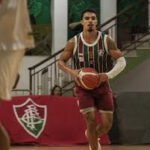
This instantly supports the narrative of this Online Website Book.  

 There were a limited number of surviving films/videos of the game of basketball from 1982 beyond the 20’s.  The video with female playes is believed to be the earliest surviving footage in 1909.  Notice rims with nets.

We have mostly only photographs to see what the game of basketball looked like. until 1940.

There are quite a few surviving audio clips about basketball during the early 20th century. They are difficult to obtain.

The earliest known film/video of a complete basketball game is from a doubleheader at Madison Square Garden in 1939.  See this film footage of the first profession game being recorded on film below.

What was going on with the game from 1889 until 1920 was difficult to comprehend.  Basketball became universally accepted by players and fans. …  … 

The game of basketball was growing like wildfire in popularity across the USA and in extablished roots in Europe.

Naismith went on a tour of YMCA facilities to share the game.  But the game was spreading exponentially.  many physical education teachers began studying and spreading the game.  Both young men and women enjoyed playing the game.  It was a group sport for everyone.


By 1892, basketball players were performing at paid revenues within only a short time of its creation.  Indicating that the new enjoyment of the game was visual to fans as well as physically to players.

Professional Leagues were created along the East Coast of the country.  The mid-west was filled with league and the West coast of the United States wasn’t to be left out of this new trend called basketball. 

THIS WAS A MAGICAL COMBINATION THAT REMAINS STRONG IN THE GAME OF BASKETBALL TODAY.  Fanatical new sports enthusiast were immediately willing to pay to watch the ‘New Game of Basketball’.

International awareness and playing the game began by the turn of the century.  It wasn’t just Americans catching ‘the bug’, it was global.  Not soon after Naismith kicked things off, one of the original Springfield student took the game to France.  The French were absolutely enthralled by the new sport, as international teaching exchanges on both sides of the ocean were undertaken. 

What was going on with the game from 1889 until 1920 was difficult to comprehend.  Basketball became universally accepted by players and fans. …  … 

The game of basketball was growing like wildfire in popularity across the USA and in extablished roots in Europe.

Naismith went on a tour of YMCA facilities to share the game.  But the game was spreading exponentially.  many physical education teachers began studying and spreading the game.  Both young men and women enjoyed playing the game.  It was a group sport for everyone.


By 1892, basketball players were performing at paid revenues within only a short time of its creation.  Indicating that the new enjoyment of the game was visual to fans as well as physically to players.

Professional Leagues were created along the East Coast of the country.  The mid-west was filled with league and the West coast of the United States wasn’t to be left out of this new trend called basketball. 

THIS WAS A MAGICAL COMBINATION THAT REMAINS STRONG IN THE GAME OF BASKETBALL TODAY.  Fanatical new sports enthusiast were immediately willing to pay to watch the ‘New Game of Basketball’.

International awareness and playing the game began by the turn of the century.  It wasn’t just Americans catching ‘the bug’, it was global.  Not soon after Naismith kicked things off, one of the original Springfield student took the game to France.  The French were absolutely enthralled by the new sport, as international teaching exchanges on both sides of the ocean were undertaken. 

Melvin Rideout, one of Naismith’s students and original basketball disciple, went to Paris to help set-up the YMCA’s new center at 14, rue de Trévise in 1893. The 22-year old from Illinois introduced basketball to the group’s teachers in the building’s new gymnasium, today the world’s oldest original basketball court

The links between France and basketball go back to the game’s origins. Two years after the game’s 1891 invention in Springfield, Mass., 22-year-old YMCA educator Melvin Rideout arrived in Paris to transmit the game to French counterparts. The first basketball game on European soil was held Dec. 27, 1893, in the new Paris YMCA facility at 14, rue de Trévise, which today is the oldest original basketball court in the world.

Melvin Rideout

TThe game spread across Western Europe before the First World War, but it took on a new meaning during the early Cold War with Paris Université Club (PUC). This amateur club helped sow the seeds that made France a 21st century basketball breeding ground thanks to a culture of openness to outside influences 

The team, composed mostly of university students from around the French capital, was one of the country’s elite of the era. It won French league titles and tournaments and featured members of the men’s national team on its roster, including longtime captain Roger Antoine, Team France’s first male basketballer with African roots. The club also traveled throughout Europe, including behind the Iron Curtain, and North Africa, exposed along the way to different styles of play.

Thanks to its cosmopolitan outlook and makeup, PUC was ground zero for integration of U.S.-influenced basketball tactics, techniques, and drills. Such efforts were due to the team’s first “American” of the postwar era, Martin Feinberg, the son of a Cleveland cab driver who arrived in Paris in 1954 to study at the Sorbonne. The tall U.S. player was rapidly recruited and introduced French teammates to some of the training drills and styles of play he learned back home, including during the 1945-46 season at the University of Michigan while he trained to be a U.S. Navy officer. Feinberg organized a trip for the team to travel to the United States—the first French side to do so—to see how differently the game was held, played, and consumed. The experience was transformative, and PUC began to integrate plays they picked up as a result of their trip into their on-court arsenal.

Several years later, another American, recruited by Feinberg, came to Paris to connect its basketball style to that flourishing across the Atlantic: Henry “Gentleman” Fields. By the 1960s, players like Boston Celtics star Bill Russell transformed the U.S. game into an ever-more vertical one, whereas its French counterpart was still centered on passes akin to a “ballet on the court.” Fields brought Bill Russell-style defense and techniques to France. Fields also modeled a U.S.-style work ethic when it came to sport; he diligently practiced hour after hour, at a time when basketball practices in France were semi-weekly.

Read More: Why Athletes Use Their Platform to Effect Change Off the Field

Fields’ impact was real. PUC clinched the French championship title in 1962, and the Coupe de France trophy in 1962 and 1963. He was also integral to PUC’s 1962 return to the United States, where they again tested themselves against American counterparts and picked up new tactics, techniques, and a first-hand understanding of how racial segregation in the United States impacted the game. By the time Wembanyama’s maternal grandfather, Michel de Fautereau, began to play the first of three seasons with PUC in 1967-68, the club’s style and culture were forever marked by “their Americans” Feinberg and Fields.
Fields wove an indelible mark on the game. He later conquered hardcourts with Antibes in the 1970s, as well as imparted his Russell-style game in clinics with the French, Swiss, and German national teams. These were further examples of how individuals played important roles evolving basketball overseas thanks to cultural, technical, and knowledge exchange—examples of what today would be considered types of sports diplomacy.

Thanks in part to these early informal people-to-people exchanges, the French game changed. Although basketball migrants from across Europe, Africa, and the French Caribbean contributed significantly to France’s hoops history since the mid-20th century, the game’s U.S. accent left a strong mark. Ever-more young men from the United States played on French hardcourts in the 1970s and 1980s, leading to what French media decried as an “American colonization” of the game; in the 1980s, their female counterparts also began to dribble in France, too, including Hall of Famer Denise Curry.

As a result, the flow of players began to change in the 1980s and 1990s as young Frenchwomen and men began to cross the Atlantic to play in North America. They became NCAA Division One starters, such as Marist College’s Paoline Ekambi, the first Frenchwoman to play at that level in 1984, and multi-year co-captains like University of Washington Huskies’ Katia Foucade. In 1997, Isabelle Fijalkowski and Tariq Abdul-Wahad made history as the first French players in the WNBA and NBA, respectively, as did subsequent generations including Tony Parker, the first Frenchman to win an NBA Championship in 2003 with the San Antonio Spurs and later enshrined into the Hall of Fame (2023), and Sandrine Gruda, the first Frenchwoman to win an WNBA Championship in 2016 with the Los Angeles Sparks

 Despite being considered a thoroughly American sport, basketball’s oldest surviving playing field is found in the basement of a Paris YMCA.The YMCA Paris was founded in 1852. Architect Émile Bénard, winner of the Grand Prix de Rome in 1867, designed its headquarters at rue de Trévise, inspired by models of American YMCA buildings.

Lyman Archibald introduced the game of basketball to Saint Stephen near the turn of the century. The first game was played on October 17, 1893. The original basketball court floor still exists in the former St. Stephen YMCA building on King Street

Melvin Rideout, one of Naismith’s students and original basketball disciple, went to Paris to help set-up the YMCA’s new center at 14, rue de Trévise in 1893. The 22-year old from Illinois introduced basketball to the group’s teachers in the building’s new gymnasium, today the world’s oldest original basketball court

The links between France and basketball go back to the game’s origins. Two years after the game’s 1891 invention in Springfield, Mass., 22-year-old YMCA educator Melvin Rideout arrived in Paris to transmit the game to French counterparts. The first basketball game on European soil was held Dec. 27, 1893, in the new Paris YMCA facility at 14, rue de Trévise, which today is the oldest original basketball court in the world.

It was  the late Spring of 1987, the best of times.  I was a mere 25 years of age  l had everything a man could wish for wearing my shoes.  I had my health,  I was in Paris, and there was plenty of money – in my mind, during that period of life – in US bank accounts.  I was close to obtaining a B.A. degree from the University of Utah.   Promises were being kept in the educational area, it would be completed soon. 

Believe me when I tell you this, I was one hell of a damn good basketball player in 1987, much better than just a few years before when I played college basketball.  At least, I was one of the top 400 – 500 players in the entire world.  Perhaps the top 220-250, that would be my guess.  I might have been able to make good in a second try out in the NBA,  but that would have been risky and I was in a good place playing hoops living in Europe.   

It did not make financial sense for me to try another second attempt to play in the NBA.  The basketball season started in July in Europe, by the end of August you were deep into weekend long pre-season multiple daily game tournaments.   By the end of August, game shape was only a short distance away. It was  amazing playing six teams in four days at these tournaments held in some historical European city, like, say, for example, Luxembourg.  Now that was my idea of fun ‘get your butt into shape’ basketball.  Playing in some NBA tryout camp in August, and then getting cut, you were left in between a rock and a hard place with no money, and no team in Europe.  You would be stuck playing in the CBA, a dreadful place was that Continental’ Basketball League, which was like purgatory with no water, food or money.  I was in a much better place in Europe and my game was improving monthly.

I knew that I never would be able to break into an NBA starting five.  I wasn’t that delusional, at least not back in that time in life.  Even if I beat the odds, got real lucky and made it past the cuts, my life was better than sitting on an NBA bench next to some unknown assistant coach and not playing in games. My entire life was about playing in games, not sitting watching games being played by other players.  Dean Smith knew that about me when I was 17 years old. 

Coach Smith told me precisely that during a telephone call while giving me and my high school coach  – who Eddie and Dean very much liked as a friend, and respected – advice on which college to attend.  

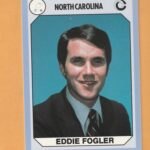
Coach Smith said,  I  had a place at UNC but should consider playing time possibilities in my selection choice.  Which actually meant, he did not think I could play the 3 spot in college. I should be a 4 spot guy, and could play the five, but not the 3 spot.  After watching Carolina in Assembly Hall in December,  Coach Smith had my High School coach put me at point guard for two games to make his final determination.  They taped the point guard experiment and Eddie Fogler came up to see one of the games.  I wasn’t surprised by the outcome.  Coach Smith was on top of things and in my court.  and I could come and sit next to him and Eddie at UNC during the games and get my 5 minute substitution time behind Sam Perkins and James Worthy.  But he did not need an unhappy player pretending that playing only in the  blue white squad scrimmage was enjoyable basketball. 

I wanted to play in a final four.  I could not sit on the bench for three or four years and remain with my sanity.  Doing that would be like quitting the game entirely in my book.   

[More on this recruiting and my college options later.  Suffice to say, it was a fiasco of massive adventures.  Topics include:  Bobby Knight, Johnny Orr, Lee Rose, Bill Frieder, Jerry Pimm, The Tipuka Family, Rick Majerus and others …]

Dean knew all the teams I was considering for college, and he knew all the players on all those college teams.  Coach had a mind of massive ability.   He knew my entire situation.  He approved of my decision to attend Utah, by a speaker  phone during a group conference phone call. I could play in games at Utah and could make it onto the very important NCAA 32 team  team tournament dance invite list.  Back in those days, there were 32 teams, not the current 64 teams, in the NCAA tournament.  This played a big part of my college selection. I wanted to play in the dance. I almost made Coach Smith regret that advice,  a year later, when UNC beat us by only 5 points on our court in the NCAA tournament in Salt Lake City.  He praised my Freshman year NCAA performance to the media after that game.  He knew my heart was broken by the loss and my dream of a final four was taken by his team.  But that was his wonderful way of coaching, always thinking about people … … … .  In all circumstances doing the right thing  was always a key factor in Dean’s decisions.   Completely aware and 10 steps ahead of everybody else. 

During that call in my Senior year in high school, Coach Smith said to me,  glad you are going to be a Runin’ Ute, I think you’ll do well there.  This before I had actually made that decision final, and he added, see you in June, as was usual for the past 5 years, at basketball camp.  But this time while attending the three week long Dean Smith Basketball School, I was going to be paid money to go to camp as a coach.  Coach Smith  always looked out for his ‘campers’.  He was going to pay me to work camp even if I wasn’t a Tarheel.  He paid me for 6 more years. 

I simply wasn’t a bench sitter.  It was not my idea of good basketball.  I had to play.  Financially it just made dollars and sense to stay in Europe.

Making $98,400  a year salary in the NBA in 1987 was just financially stupid for me.  That was the NBA minimum salary in 1987, give or take a little.  I know for a fact that in 1980 the NBA minimum salary was $72,500.0.  I know it increased a few grand in the next few years, but it was not anything close to what it is today.  I hear 1 million dollars being tossed around as the 2026 minimum salary. 

 I made a little less cash in Europe than the minimum at that time in 1987, but I kept all my money and I  banked more money than some of my college teammates playing in the NBA at that time. 

All my living, eating, local  transportation, plane tickets and travel were paid for by the teams,  above and beyond my salary.  It was always tax beneficial for the team owners to pay expenses, they could easily write off basketball team expenses.  I found out personally from guys that had played an entire season with a single NBA team,  that I had more money in the bank at the end of the year than they had after the cost was tallied up of playing in the NBA. 

In the USA, the government took 33% of your NBA contract money, right off the top, before you could touch it.  Bingo, your 95k just went to 65k, maybe you are at 69k.   That was the amount where I started calculating  my value as a basketball player in Europe by the third year.  I was worth $10,000.00 (10k) per month for 7 months.  That was my about standard pay for experienced players in Europe.  There were a few dual nationality guys in Italy, Spain and Greece making much more. Not many.  

Rules required a team limit of two Americans per team.  If you were American, good at playing the game, and you could carry a dual passport with dual nationality, you did not qualify as a foreign player.  Your value increased in that scenario.  Israel was full of American basketball players marrying New York USA citizenship seeking Israeli girls.  Every team in Israel had a few arranged married Americans.  I wouldn’t do that when I was offered.  So, I played under the limit rules.

In my rookie year, just happy to be there and in shock that I was going to make money playing basketball,  I was paid less than my value.  My rookie season I “signed “a $48,000.00 contract to play seven months in Israel, a few bonus deals were added on, all my living expenses were paid, plus extra plane tickets for a friend, and I was paid a  $12,000 cash on the table for signing the contract.   I was to be paid half of the 48 thousand money within 30 days, the remainder over the rest of the season.  But I never signed a contract.  That is a unbelievable story.  It’s called , ‘Avi, my Jewish self appointed sports agent.’  He appointed himself as my agent the moment the plane landed, immediately in the airport lobby.   I thought at first it was a joke.  I was wrong he would become my  agent. 

Avi was like a character out of a novel.  Unbelievable personality, a lovable guy who was crazy about basketball since childhood.  He sat every morning in the Tel Aviv hotel overlooking the Ocean reading every newspaper printed and made phone calls on a land line (no mobile phones, yet).  He knew everything about basketball in Israel the moment it happened.  Orange juice with Avi in the Hilton always produced positive results.  I never knew him at all before that day in the airport.  He really was heaven sent.  I liked him.  Within a month of entering Israel, I had more than half my money in a U.S.A. bank account.    I never sign a piece of paper contract with anyone.  Avi tried to explain, in Israel the paper contract means nothing, but with Avi you have something much more than a contract.  He was absolutely right.  We settled with team representatives in the hotel lobby with a handshake five days after I arrived in Israel.   In three years,  I got every single penny Avi ever promised to get me in agreements with three different teams.     He did dozens of other great things for me.  He was special.  The second year I was paid a $65,000.00 contract and $20,000  bonus, which I always said was not a signing bonus, it was an  ‘Avi takes you off the market bonus’.  In my third year,  I made about the same money, but Avi arranged for my transfer fee, which could be more than your salary contract.  If a League or team wanted to not release your international players license, they could delay it for months. That would result in big problems for a player.     I made $69,000.00 in Germany and had my Avi 10k bonus. I signed an actual contract paper in Germany.  No more Avi in Germany.  I couldn’t spend $1,000.00 a month in Europe if I had been trying to give it away.    Everything was paid for by the club.  I went to language school in the mornings, had team practice in the afternoons and coached at night.  I always coached one of the clubs boys or girls team. 

Lots of players in Europe and South America never got paid what was promised to them by the clubs, and they had financial problems.  I had Avi, I got all my money.   Avi used a simple contract method, he determined your total market value, get half now, half during the season.  That is  how you secure the cash at that time in Europe.  It made replacing you costly for a team, and money in the bank was a positive thing for European players at that time.  More on this topic later.  Many stories of how players were not getting paid in foreign countries to play basketball were frequently told, and most all factual, usually hilariously stupid.   

But in the NBA, you need a city area temporary apartment,  that costs $1,500.00 per month, more if you had a wife and a child.   Plus moving expenses when they dumped you on your butt and replaced you with another guy who they thought could sit on the bench better than you could sit on the bench.  Off they would ship you out in a second, or just release you completely.  That would cost you five thousand dollars to set up with another distant team.  Ask Del Curry about that,  – he comes up in chapter two” It’s In the Blood’, next in this digital presentation, as the blood father of Chewy – he was  a guy that mastered the NBA bounce you from team to team for many years.   Del knows all  the scoop about the 1980’s NBA money situations.   Yes, I call him Chewy.  Stephan is Chewy, you know, the mouth guard thing, chomp chomp, it’s his thing, the more tense the game gets, the more Chewy chews, it’s hilarious  to watch.  And the 1988 NBA financial butt kicker was the 41 road games schedule, With your out on the pocket  road expenses, night time entertainment, and airport hot dogs, the true value of your salary was decreased 41 times every year.  That could run into the $10,000 range area, every year, of course,  depending on your lifestyle, it could be much higher. 

 I paid no tax on my salary.  President Regan passed a law just for me, I could legally bring $60,000.00  (60k) back into the good old USA tax free, every year.  So, he had my vote, reluctantly. 

I couldn’t even pay for a beer in Europe at any time during the season, home or away games.   Nothing was without someone picking up the tab.   Much more social,  a very enjoyable game and  life relaxed atmosphere, socializing with other club members, barbecues,  wine fest in the Fall.  A very important fact was that we only played about 45 – 55 games in a year, compared to 85-100 in the NBA.

Life was good for me, I appreciated that fact.  I was taught, by coaches and parents, don’t let your ego try to fix something that is not broken.  I wasn’t leaving Europe.  So I stayed in Europe for the summer of 1987 and I was in the queen city of France.

In the Spring of 1987, I  was in Paris, negotiating between contracts and clubs, on the phone with Avi.  He would tell me everyday that he wanted me to return to Israel.. He even had four different women meet me for a possible arranged marriage that would increase my value and allow me to play without being under the foreign player limit.  But in the end, I would not marry someone for that purpose.  He always help me do what I wanted and he helped complete my transfer to Germany.  He had offers back in Israel and from Greece.   I was visiting for a few weeks with friends, staying in a high class multi-floor villa with many brilliant European young adults I had befriended in Israel, all with bright futures, some with great artistic and acting abilities. 

I had only previously discovered that you get better at playing basketball after college, and your best is somewhere in your mid to upper twenties.   I was approaching that point.  It is tough to get to that point of playing basketball and even more difficult to maintain that skill level.  Health and luck play a big part in it, and nobody beats father time, even if some are able to abuse him for a few more years, father time always wins.  But that wasn’t my concern,  I was in prime shape and top skill level at that time,  the whole part and pieces were working  well.  

I never dreamed I would play high level competitive professional basketball in Europe.  And come to  find out, it was better than what I might have dreamt.  I had loved playing basketball since I was a child.  At 24 years of age, it had become a part of my everyday ‘being’.  I had lived that way for six years.  There were many difficulties but the good far outweighed the bad.

 I had always thought competitive basketball was over for me after four years in college.  My dreams were all about the NCAA final four.   I got close twice on that road, more later … .. .. .  But there I was,  after two years in Europe vying for a third with multiple offers on the table.  I had changed how I played basketball and had  very good ‘game skills’. 

Early in my time in  Europe, I had discovered a new selfish, but financially rewarding , concept.  An inside secret to maintaining a career in the game of professional Euro basketball.  Be selfish and score points.    My magic had always been in making an entire team work like a clock.  I was a consummate team player.   I was excellent on defense.  I spent years guarding top NBA players at practice college, and  later I list the guys I guarded.  You can’t stop good players, but I could slow you down.  More on that later too … … .   In college I led the nation for a few weeks in field goal percentage.  But it wasn’t until pro ball that I learned to really score points.     

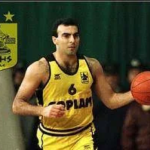
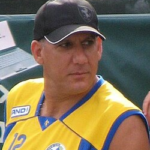
Quickly I learned these teams were paying me to score,  and I learned how to score.  Only a month previously to this time in Paris, France,  I had 44 points on Doron,  and I pounded him to the ground on defensive side.  He didn’t outscore me in any of the four games we played.  I also outscored Nikos Galis in a game.   Niko, the great Greek Hog Ball shooter never passed the ball.  I still maintained my inbred Indiana team ball skills, but I made the most of opportunities to score.  I learned to do that at a higher rate and at a good field goal percentage.

[  Doron Jamchy (born July 1, 1961) is a legendary Israeli former professional basketball player, recognized as one of the country’s greatest scorers. A 6’6″ (1.98m) shooting guard/swingman, he holds the all-time Israeli Basketball Premier League record with 9,611 points and starred for Maccabi Tel Aviv, winning 11 championships.]

[ Nikos Gali: Galis won eight Greek league championships, and he is also the Greek Championship’s amateur era all-time leading scorer, in both career points scored and career.]

Playing well against Doron had teams offering more money to stay in Israel.  I had other thoughts  and an opportunity to complete that degree.   It was still Spring time off season and I had a few weeks to decide my next move.

So, there I was in Paris during the beautiful May weather, playing  basketball in many of the oldest gymnasiums in the world.

I remember going down to this basement of this old gym  on rue de Trevise,  Later I learned it was the oldest gymnasium in the world and that the start of basketball in 1893 was in that gym.   I wasn’t aware that I was in that famous gym in Paris as I ran up down the court,  lathering sweat, doing some solo shooting drills. 

It was the best of times.

I had just finished my second year of a playing season with a team in Israel.  Horrendous team year, everybody got hurt, one teammate had a heart attack on the floor, two teammates broke bones.  Nevertheless, it was my best individual offensive performance of my life.  

The team in Israel was majority financed by Kibbutz Gan-Shumuel.   They had our practice gym, a heated pool, prepared dinners, laundry service,  and all the avocados and oranges you could eat.  But they had something even more appealing.  There were dozens of college age females staying for months at a time in Kibbutzim.   It didn’t take me long to give up my lonely apartment near the beach for a small cozy room at the Kibbutz. 

I made good friends with tons of people of different nationalities .  I had my own cheering section at the games, most of whom never saw a basketball game in their life. 

But my games were not the best sports  highlight.  Monday night football on tape delay  Tuesday nights were crazy events you can’t imagine.  Everyone would all gather in my apartment – because I had the only TV – for a night of partying, music, avocado dip and chips, Israeli beer, and good old American football.  There was nothing more fun than a bunch of sports starved fanatic Europeans screaming at the TV about the violent on field collisions and rough plays, while trying to get answers all their questions about the rules and regulations.  

I was never lonely in Israel after my move to the communist kibbutz. My entire mental and physical health had risen dramatically. 

With a daily diet of fish and chicken tossed in with an endless supply of everything that can possibly grow from dirt, add that to my natural maturation as a basketball player, morning lapse in an Olympic size heated pool, afternoon work-outs on the court and weights down the street from home, free cooked meals, and laundry service, then you might understand that I had an environment made to improve my basketball skills fast.  I was learning to make buckets.  Now you might understand and believe me when I tell you, I was damn  good at playing basketball during my first time in Paris.   Good at playing basketball and winning games, good at scoring points, and much better than when I was in college.

My time in Israel is when and where Aviva and I became  friends.  She did my laundry and baked me cakes.  I sat with great respect and attention many afternoons listening to here stories of surviving the Auschwitz Concentration Camp and the Nazi nuts of the war.  She would bring tears to my eyes at times.  But she would make me laugh as well.  She said humor was a key to surviving the camps.  Something I never forgot.  The day she told me how she survived years in the camp with her high school sweetheart, fought there way to Israel after 1945, then, only to  hold him in her arms on Haifa’s Dado Beach as he died of a heart attack minutes after they had made it to the shores of the  ‘promised land’ Israel.  She had me in tears for hours.  Experiences like that seldom come without living beyond your borders.

But my best friend of many was  Jean-Carlo, a very  gregarious , hard working, want to learn it all fast,  curious person.  He spoke many languages and made a stranger a friend faster than anybody I have ever known.  A rich French kid,  that wasn’t spoiled.  His mother kept marrying multi-high society millionaires.  Carlos  went off the into the deep water of the party too much pier.  So they sent him to Israel, with no money and no income.  He was sent to Israel to get straight.  Well, he got straight and that worked while we lived in Israel. I was blessed to have as a friend for decades.   A bunch of us from the Kibbutz had migrated to Paris and were staying rent free in one of Carlos’ step fathers latest apartment home complex buildings,  we all had our own floors, if we desired. but everybody spent all the time in the kitchen, dinner room or living room. Nacho had an art gallery in one of the top floors .  People would come and go quite often but the band was reunited in Paris, and I was spending my afternoons playing in all the different clubs in Paris.

After about three weeks, it was time to get back to serious training , and Paris with these lovely people just wasn’t the place for me to complete that phase.  I had signed a contract with a team in Frankfurt Germany, so off I went to improve my German.    I was sad to be leaving Paris

I returned many times to Paris over the next years. One such notable time was when the Chicago Bulls came to Paris.  They played a French teams in 1997.  Below are some details and video from the game.  It was a historic French basketball changing event. 

The links between France and basketball go back to the game’s origins.  SEE MICAEL JORDAN IN 1997 IN PARIS, FRANCE running up and down a terrible wood court pieced together with mis-fitted wood plank section, slobbering with his tongue out … It was a very big EVENT to have Jordan play with the Bulls in Paris.  Every player today from France playing in the NBA has a connection to what this did to basketball as a spectator sports.  In some manner, it was bigger than the Olympic 1992 game.  Yes, France isn’t in Spain, ’92’ was in Spain.  Big fun time.

First Ever: NBA Bulls Play a French Team.

Michael speaks in the breaks of the ame

Interesting game … but NOT competitive.  Bulls win, Bulls win, BULLS WIN!

The MJ in Paris  was a ….kind-of- Miles coming to Paris 

[ Miles was only great 25% of the time – 75% he was too stoned, a big time heroin addict  ….like, ya,man, you dig it, man1]

The whole thing was 

Fran-Dance (Live at the Newport Jazz Festival, Newport, RI – July 1958).

One last point.  There is a correlation between what happened to me regarding learning the ability to score points in a game, and Michael the scoring machine.

Yes, Michael Jordan always had an attitude for putting the ball through the basket.  With that said, he was always being put in a position to master that skill.  I.E. High School.  The cut, right.  Well his coach knew Michael was college material but he wanted him to play at a level and learn to score.  The only way that I know to learn to score points in a basketball game, is to score points in a basketball game.  When you have the ground work, foundation, and aptitude – like Michael Jordan – you still must master scoring.   I witness the coaches time and again make him exercise these basketball principles  …  score to learn to score more, in more difficult situation … more later.   It worked, because Michael could score in all circumstances in a game.

Nikos Galis
2010_Doron_Jamch
2010 Doron Jamch

I attended This Game in Paris,  cold outside …  there is was, ‘The Tongue in Paris’!


Date: October 17, 1997 | Venue: Palais Omnisports Paris-Bercy (Paris) | Attendance: 13515

Video: Spring Time in Paris 1987

Podcast: Spring Time in Paris 1987

Spring Time in Paris 1987

Forrest Clare “Phog” Allen

 (November 18, 1885 – September 16, 1974)

Phog Allen lettered in college baseball and basketball, the latter under James Naismith, the inventor of the game.


He was an American basketball coach and physician. Known as the “Father of Basketball Coaching,”

Coach Allen served as the head basketball couch at Baker University (1905–1908), the University of Kansas (1907–1909, 1919–1956), Haskell Institute—now Haskell Indian Nations University (1908–1909), and Warrensburg Teachers College—now the University of Central Missouri (1912–1919), compiling a career college basketball head coaching record of 746–264. In his 39 seasons at the helm of the Kansas Jayhawks men’s basketball program, his teams won 24 conference championships and three national titles.  

The basketball arena at Kansas is called Allen fieldhouse, named as a tribute to his coaching. 

The Helms Athletic Foundation retroactively recognized Allen’s 1921–22 and 1922–23 Kansas teams as national champions. Allen’s 1951–52 squad won the 1952 NCAA tournament and his Jayhawks were runners-up in the NCAA Tournament in 1940 and 1953. His 590 wins are the second most of any coach in the history of the storied Kansas basketball program.

Allen attended the University of Kansas, having already acquired the nickname “Phog” for the distinctive foghorn voice he had as a baseball umpire. At KU, Allen was a member of Phi Kappa Psi fraternity.

Allen served as the head football coach at Warrensburg Teachers College from 1912 to 1917 and at Kansas for one season in 1920, amassing a career college football head coaching record of 34–19–3. He also coached baseball at Kansas for two seasons, in 1941 and 1942, tallying a mark of 6–17–1, and was the university’s athletic director from 1919 to 1937.

Allen was inducted into the Naismith Memorial Basketball Hall of Fame with the inaugural class of 1959.  he home basketball arena the University of Kansas, Allen Fieldhouse, was named in his honor when it opened in 1955. His final season at Kansas was the first full season the Jayhawks played at Allen Fieldhouse.

Early life

Allen was born in the town of Jamesport, Missouri. His father, William Allen, was among the 30 people who originally incorporated Jameson, Missouri in 1879 and the doctor who delivered Allen lived in James. However, he had strong ties to Jamesport where he was town clerk, collector, and constable. His family later moved to Independence, Missouri.

James Naismith, the man who created basketball, coached Allen from 1905 to 1907 at the University of Kansas in Lawrence. Allen spent his last two years on school (1907–09) as the team’s coach. Naismith inspired Phog Allen to pursue a medical degree as well. After two years of coaching, Allen took a three-year break to complete his degree at Kansas City’s Central College of Osteopathy (now Kansas City University College of Osteopathic Medicine). After graduating from medical school, Allen integrated numerous concepts of healthy eating, efficient exercise regimens, and proper body alignment into his coaching. A section on sports medicine was included in his book, My Basket-Ball Bible. Among the many elite athletes he treated at his downtown office at 13 E. 8th St. was Mickey Mantle

In order to grasp the roots of basketball and how they have grown into the players and the game in the year 2026,  one must understand who coached Phog and who Phog coached during his lifetime.

The roots of his  coaching grew deep and they are alive and active today. You must see how he spread the game  Doctor Naismith invented.

…. … … he began classes at the University of Kansas in 1904, where he lettered three years in basketball under James Naismith’s coaching, and two years in baseball.

Unlike his time as a coach, the Jayhawks struggled on the court. In his three seasons as a player, the team only had one winning season. He was a player for the team for the Jayhawks’ first games in their rivalries against Kansas State and Missouri. In 1905 he also played for the Kansas City

Athletic Club

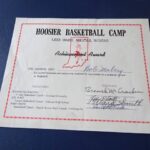
Hoosier Basketball Camp

Pete Newell
[More coming soon]

You can not mention the history of basketball without including the great ‘GURU” of the game, Pete Newell.

Pete Newell
[More coming soon]

You can not mention the history of basketball without including the great ‘GURU” of the game, Pete Newell.

Henry Payne “Hank” Iba was an American basketball coach and college athletics administrator.

He served as the head basketball coach at Northwest Missouri State Teacher’s College, now known as Northwest …

Born: August 6, 1904,
Easton, MO
Died:  Stillwater, OKC
Awards:
Naismith Outstanding Contributor to Men’s Basketball

Education: Classen SAS High School at Northeast, Westminster College

You can not mention the history of basketball without including Henry Iba

Henry Payne “Hank” Iba

You can not mention the history of basketball without including Henry Iba

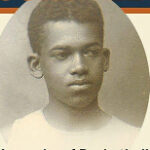
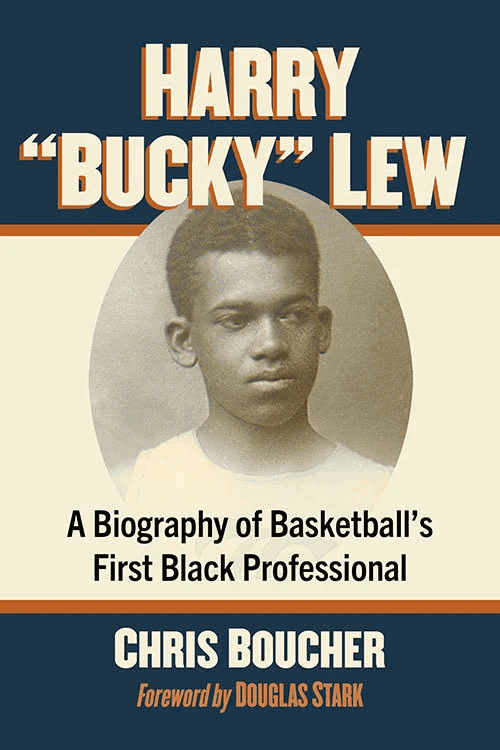
Harry “Bucky” Lew (1884-1963) was basketball’s first Black professional player, >breaking the color barrier in 1902 in the New England Basketball League (NEBL) with the , and went on to become the first Black coach, manager, referee, and franchise owner in the sport. Despite early racial resistance, he became a star known for his defense and passing, later owning and playing for his own Lowell-based teams, and inspiring later integration efforts in sports decades later.

Quote From Harry Lew: 

. . . all those things you read about Jackie Robinson, the abuse, the name-calling, extra effort to put him down . . . they’re all true. I got the same treatment and even worse. Basketball was a rough game then. I took the bumps, the elbows in the gut, knees here and everything else that went with it. But I gave it right back. It was rough but worth it. Once they knew I could take it, I had it made. Some of those same boys who gave the hardest licks turned out to be among my best friends in the years that followed.”

“The finest players in the country were in that league just before it disbanded and I always wound up playing our opponent’s best shooter,” Lew said. “I like to throw from outside but wasn’t much around the basket.”

“Of course, we had no backboards in those days and everything had to go in clean. Naturally, there was no rebounding and after a shot there was a brawl to get the ball. There were no out-of-bounds markers. We had a fence around the court with nets hanging from the ceilings. The ball was always in play and you were guarded from the moment you touched it. Hardly had time to breathe, let alone think about what you were going to do with the ball.

Below is an entire interesting Wikipedia article on Harry Buck Lew.  

Harry 'Bucky' Lew
Harry 'Bucky' Lew

1909  The First Basketball Trading Card

The last contender, and most widely accepted as the first true basketball card, is the 1909 T51 Murad college first series release for Williams College. The Murad set was produced by S. Anargyros Tobacco Company and released in their packs of Murad Turkish Cigarettes between 1909-1912.  The first marketing baof autographed baskettball memorabilia can be attributed to Bucky Lew.

A good understanding of  how professional basketball teams operated and made money in the 1910 to 1930 time period can be found in a review of the N.Y. Celtics, no relationship to the Boston Celtics.

The Original N.Y Celtics in were a barnstorming professional American basketball team. At various times in their existence, the team played in the American Basketball League, the Eastern Basketball League and the Metropolitan Basketball League.
…………………
The N.Y. Celtic’s roots lay in the New York Celtics team that disbanded during World War I. In 1918, James Furey assembled his own team around a nucleus of those truly “original” Celtics, adding other players mostly from the West Side of New York City, and defiantly called his new squad the Original Celtics.

Initially, they played in various struggling professional leagues, before becoming primarily a touring squad, which traveled up to 150,000 miles a year while completing a 150–200 game schedule. They won about ninety percent of their games and finished 1922–23 with the unbelievable record of 193–11–1.


Nat Holman

The team’s first dominant players were “Dutch” Dehnert, a 6 ft 1 in (1.85 m) standing guard who some credit with introducing the modern concept of pivot play. and Nate Holman.

… … …   the team took over the Atlantic City franchise when it was 4–7 and won five of six games before the Eastern League folded in January, 1923.


…………..

They also competed in the Metropolitan League but dropped out of the league during the 1st half after going 12–0.

Other outstanding individual players on these squads were “big man”, Joe LapchickJohn Beckman, George “Horse” Haggerty; John “Pete” Barry; and speedy Davey Banks.

1925–1930: ABL Dominates

American Basketball League owners proclaimed league success during the League meeting inthe summer of 1926.

But ABL directors banned the league from playing games against the N.Y. Celtics, drying up some of their most lucrative exhibition dates.

The Celtics joined the newly organized National Basketball League. The new league operated solely in and around the metropolitan New York City, but despite its geographical limitations was stocked with some of the best players in the country. After pulling off a coup by signing the Original Celtics, the NBL brashly raided ABL rosters for additional players.


————T

Top stars of this era were:  Rody Cooney, Teddy Kearns and Bob Grody, George Preston Marshall,  Elmer Ripley and Tillie Voss. 

Notable players: Rusty Saunders, Ray Kennedy and George Glasco, Cookie Cunningham  Gil Ely.,  George Artus, Tom Barlow, Stretch Meehan, Soup Campbell, and Chickie Passon,  Benny Borgmann, Honey Russell,

 The Celtics easily disposed of the weakened Cleveland team in three straight games to take the ABL championship.


The rival leagues ABL and NBL fought each other for the best players and teams

in order to stay in business.

In 1926, the American Basketball League,  the ABL, exercised their dominance and took control of professional East Coast – Mid West Basketball.  

In 1929 everything changed in the entire world,   game attendance plummeted and, further deflated by the Great Depression, the ABL folded after the 1931 season.

New York Celtics Basketball Team 1929

New York Celtics Video/Film footage 1929

The best basketball players of the 1920s were headlined by Nat Holman, regarded as the era’s premier all-around player and a star for the Original Celtics, alongside prolific scorer Bennie Borgmann. Other dominant figures included defensive specialists Dutch Dehnert and Joe Lapchick, plus college standouts like Paul Endacott. 
Key Players of the 1920s:
  • Nat Holman (“Mr. Basketball”): Regarded as the best all-around player, known for his elite shooting, passing, and floor leadership with the Original Celtics.
  • Bennie Borgmann: One of the greatest scorers of his generation,, capturing numerous scoring titles in various leagues.
  • Dutch Dehnert: A standout with the Original Celtics, recognized for pioneering the pivot play and exceptional defensive skills.
  • Joe Lapchick: Renowned as one of the best centers of the era and a key member of the dominant Celtics team.
  • Paul Endacott: A star at the University of Kansas, named Helms Foundation Player of the Year in 1923.
  • Chuck “Tarzan” Cooper: A dominant center in the 1920s professional circuit.
  • Harry “The Horse” Leonard: Known as a top defensive specialist and scorer.
  • Vern Corbin: A standout college player for Cal, earning All-America honors in 1928. 
These players established the foundation for professional basketball, with many playing for the touring Original Celtics, which dominated the era’s basketball landscape

Between 1930- 45 the depression and WW II did not help professional basketball expand.  Nevertheless, The War did amazingly help the game grow globally as hundreds of thousands of internationally stationed military men played basketball in numerous countries 1941 until today. 

This  period saw basketball have a global popularity boom as the local populations began to enjoy watching and especially playing the game of basketball.  


Until the 1930 ‘s  film/video/ the game of basketball wasn’t available.  Sound recordings were limited.  Below is believed to be the first complete basketball game on film.

Prior to 1930,  everything we know was passed on by personal voice of those that lived it,  audio recordings, limited short visual video/film clips,

We also have the writings.  Unfortunately, the death of the aging generation of early basketball has eliminated the word of mouth. 

But by the 1940′ we start to see a decent amount of film on teaching and of the actual games

Below we get into a  little  thought the thirty’s … … 

The Doctor Said: 'Let's Play Ball'

THE BEGINNING OF BASKETBALL

Between 1939 – 45 , during the World War II period, there were a many teams and leagues that continued to play.  However, most were semi-pro positions and regional-ocal in nature. 

Many young men who would be in their prime basketball years, were off fighting in a World War overseas.

1939 – 45 

  • Bobby McDermott: A standout guard in the NBL, he was arguably the most famous and dominant player in the first half of the 1940s, winning multiple MVP awards.
  • Joe Fulks: A prolific scorer for the Philadelphia Warriors, he was the top scorer in the BAA (precursor to the NBA) during the late 40s.

Tarzan Cooper: A legendary center for the New York Renaissance (Rens) in the 1930s and 40s

Bob Kurland

Robert Albert Kurland (December 23, 1924 – September 29, 2013) was an American basketball center, who played for the two-time NCAA champion Oklahoma A&M Aggies (now Oklahoma State Cowboys)
Standing 7-foot (2.1 m) tall, … …

he has been credited as the first person to dunk in a college basketball game. 

He led the U.S. basketball team to gold medals in two Summer Olympics, and led his AAU team to three national titles. He is a member of the Naismith Memorial Basketball Hall of Fame.


Kurland was born in St. Louis, Missouri to Albert and Adele Kurland. He graduated from Jennings High Schoo.
Personal life

Kurland received post-graduate management training at Stanford University. He became a salesman for Phillips Petroleum Company, where he played AAU basketball, and later served as a senior marketing executive. He held a variety of positions, including ones responsible for the development of the self-service gas station concept, growth of the agricultural and plastics divisions, and management of marketing initiatives. His corporate responsibilities took his family to Denver, Wichita, Memphis, Cincinnati and Atlanta. Ultimately, the family returned to the home of Phillips Petroleum, Bartlesville, Oklahoma, where Kurland served as vice mayor and as a member of the city commission for several years. He retired from Phillips in 1985.

Kurland was elected to the Naismith Memorial Basketball Hall of Fame in 1961. In 1996, he was inducted into the National Polish-American Sports Hall of Fame

After retirement, Kurland and his wife, Barbara, divided time between their homes in Bartlesville, Oklahoma and Sanibel Island, Florida.

Kurland died at his Florida home on September 29, 2013, at age 88. He was survived by his wife of 62 years, Barbara, their four children Alex, Ross, Dana, and Barbara, and seven grandchildren.

more soon … … 

more soon …

The First NBA Championship

While the NBA as the world knows it today did not come into fruition until the 1949-50 season, its first official season is considered to be the 1946-47 season. That year marked the formation and inaugural season of the Basketball Association of America (BAA), which merged with the National Basketball League (NBL) in the 1949-50 season to become the NBA as we know it today.

The league, and the game of basketball itself, was at a remarkably different place during its early days than it is today. The 1940s, therefore, saw a version of the game and league almost unrecognizable from today.

However, just because the era was different does not render its legitimacy worthless. The era came before the emergence of superstars, but there were still plenty of elite players during the game’s early days. The following are the five greatest players of the 1940s, the league’s inaugural decade.

1947

The First NBA Championship

Frank McQuire

You can not mention the history of basketball without including , at least the following people:


 UNC Coach before Dean Smith

Frank McQuire went in the NBA after a successful college coaching career at University of North Carolina

Pete Newell
[More coming soon]

You can not mention the history of basketball without including the great ‘GURU” of the game, Pete Newell.

Meeting Dean Smith

They Hung Dean Smith in effigy ….

January 7, 1965,  UNC basketball coach Dean Smith was hung in effig by students outside Woollen Gym after a 107-85 loss to Wake Forest.


The protest occurred during his fourth season following a four-game losing streak. Player Billy Cunningham pulled down the dummy, while Smith, unfazed, later recalled the incident with humor.


Details regarding the 1965 incident:

Context: The team had lost four consecutive games, culminating in a 22-point defeat to Wake Forest.

The Scene: Around 100 students gathered at the gym when the team bus returned, with a dummy hanging from a tree, which Smith recognized by its “big nose”. 


While Assistant Coach Ken Rosemond noted the incident, Smith instructed players to stay on the bus to avoid confrontation.

Billy Cunningham, a player on the team, went out and tore the effigy down.
 

It remains a notable moment in UNC history, representing the high-pressure, early-tenure struggles of the future Hall of Fame coach.

Smith, who was not actually fired, went on to lead the team to a win over Duke shortly after and never had another losing season in his career.


Despite this early low point, Smith was supported by the university administration and eventually became beloved by the same fan base, with the current arena bearing his name.


The good news was that the uppity snobby, raised nose, self indulgent UNC fan base stopped trying to hang real live (black) people at about the same time of this event.  The Carolina fan base hasn’t changd much over the years.  they have just gotten richer and more protective of their own clicks. 

Of course, the entire Bushnell of apples is seldomly rotten, you can always find a good apple.

In 1983, I witnessed six college age guys call a black guy out of a campus house and rough him up because he was dating a white woman.   Jimmy, a U.N.C. starting point guard, had to explain it to me.  We did stand up and move forward,  giving a little presence warning.  things subsided shortly thereafter. 


Charlie Scott was a two-time All-American and became the first great African-American player in ACC history. 

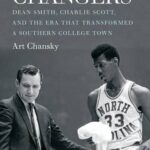
 Charlie was the first Black scholarship athlete to play for Dean Smith and the University of North Carolina (UNC) men’s basketball team, joining in 1967 and debuting on the varsity team in December of that year. He was a trailblazer in the Atlantic Coast Conference (ACC), leading the Tar Heels to two Final Four appearance.

Beyond recruiting Scott, Smith was a vocal proponent of civil rights in Chapel Hill, including efforts to desegregate local businesses.  Local,  as meaning, Chapel Hill!

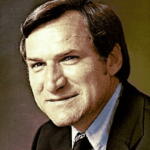
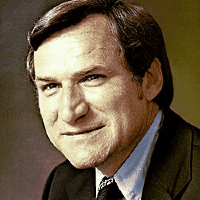
Dean Edwards Smith

(February 28, 1931 – February 7, 2015)

was an American men’s college basketball head coach. Called a “coaching legend” by the Basketball Hall of Fame, he coached for 36 years at the University of North Carolina at Chapel Hill. Smith coached from 1961 to 1997 and retired with 879 victories, which was the NCAA Division I men’s basketball record at that time Smith had the ninth-highest winning percentage of any men’s college basketball coach (77.6%).[1] Smith’s career total of 879 wins lasted until 2005 when Pat Summitt surpassed him with her 880th victory. During his tenure as head coach, North Carolina won two national championships and appeared in 11 Final Fours.[2] Smith played college basketball at the University of Kansas, where

he won a national championship in 1952 playing for Hall of fame coach Phog Allen.

Smith was best known for running a clean program and having a high graduation rate, with 96.6% of his athletes receiving their degrees.  While at North Carolina, Smith helped promote desegregation by recruiting the university’s first African-American scholarship basketball player, Charlie Scott, and pushing for equal treatment for African Americans by local businesses.[5] Smith coached and worked with numerous people at North Carolina who achieved notable success in basketball, as players, coaches, or both. Smith retired in 1997, saying that he was not able to give the team the same level of enthusiasm that he had given it for years. After retiring, Smith used his influence to help various charitable ventures and liberal political activities, but in his later years he suffered from advanced dementia and ceased most public activities.[6]

Biography
Early years

Smith was born in Emporia, Kansas, on February 28, 1931. Both of his parents were public school teachers.  Smith’s father, Alfred, coached the  Emporia High Spartans  basketball team to the 1934 state title in Kansas. This 1934 team was notable for having the first African American basketball player in Kansas tournament history. While at Emporia High School for two years and then at Topeka High School, Smith lettered in basketball all four years and was named all-state in basketball as a senior. Smith’s interest in sports was not limited to basketball. Smith also played quarterback for his high school football team and catcher for the high school baseball team. 

College years

After graduating from high school, Smith attended the University of Kansas on an academic scholarship. He majored in 

mathematics 

and joined the Phi Gamma Delta fraternity.  While at Kansas, Smith continued his interest in sports by playing varsity basketball, varsity baseball, and freshman football. He was also a member of the Air Force ROTC detachment. During his time on the varsity basketball team, Kansas won the national championship in 1952. In 1953, the team was an NCAA tournament finalist. 

Smith’s basketball coach during his time at Kansas was Phog Allen,

who had benched at the University of Kansas by the inventor of basketball, James Naismith.  After graduation, Smith served as assistant coach at Kansas in the 1953–54 season.

Coaching career

Early years in basketball coaching

Smith was commissioned as a second lieutenant on June 7, 1954, in the U.S. Air Force and was stationed at Fürstenfeldbruck Air Base in Germany where he was on a team that won the Air Force championship for Europe.[12] He later worked as a head coach of United States Air Force Academy’s baseball and golf teams.[11] Yet, Smith’s big break would come in the United States. In 1958, North Carolina coach Frank McGuire asked Smith to join his staff as an assistant coach.[11] Smith served under McGuire for three years until 1961, when McGuire was forced to resign by Chancellor William Aycock in the wake of a major recruiting scandal, and consequently, an NCAA mandated probation.

Smith (right) during the UNC v. North Carolina State game in 1964

Years later, Aycock recalled that McGuire came to his office on a Saturday and told him he was resigning. Smith was waiting in McGuire’s car outside South Building (UNC’s main administration building), so Aycock called him in and asked him if he wanted to take over as head coach. Smith accepted, and the hiring was formally announced the following Monda  When Aycock named Smith as head coach, he told the 30-year-old Smith that wins and losses didn’t matter as much as running a clean program and representing the university well.

The Atlantic Coast Conference (ACC) had canceled the Dixie Classic, an annual basketball tournament in Raleigh, North Carolina, due to a national point-shaving scandal including a North Carolina player (Lou Brown).  As a result of the scandal, North Carolina de-emphasized basketball by cutting their regular-season schedule. In Smith’s first season, North Carolina played only 17 games and went 8–9.  This was the only losing season he endured during his career.   In 1965, he was famously hanged in effigy on the university campus following a disappointing loss to Wake Forest.  After that game, UNC would win nine of their last eleven games, and Smith would subsequently go on to turn the program into a consistent success. From 1965 onward, Smith’s teams never finished worse than tied for third in the ACC For the first 21 of those years, they did not finish worse than a tie for second. By comparison, during that time the ACC’s other charter members each finished last at least once.

Smith’s first major successes came in the late 1960s, when his teams won consecutive regular-season and ACC tournament championships, and went to three straight inalF Fours, going all the way to the national championship game in 1968. They would appear in either the NCAA or NIT in every one of Smith’s final 31 years in Chapel Hill. However, this run occurred in the middle of UCLA’s stretch of 10 titles in 12 years, and in fact Smith lost to UCLA’s John Wooden in the 1968 title game.

First national championship
Smith cutting down the nets after winning the 1982 NCAA championship

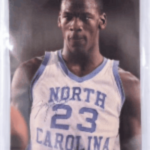
Smith won his first national championship with his 1981–82 team, which was composed of future NBA players Michael Jordan, James Worthy and Sam Perkins.


After winning the NCAA tournament, North Carolina had a record of 32–2.  The other teams that advanced with North Carolina were Georgetown, Houston and Louisville. The Tar Heels actually finished in a tie for first in the ACC regular season with the Ralph Sampson-led Virginia Cavaliers. In the semifinals, North Carolina defeated Houston 68–63 in New Orleans, while Georgetown defeated Louisville 50–46.

The national title game against Georgetown was evenly matched throughout. However, with 17 seconds left on the clock, and the Tar Heels behind by 1 point, Jordan made what ended up being the game-winning shot to put the Tar Heels up 63–62. On Georgetown’s ensuing possession, Hoya guard Fred Brown inexplicably passed the ball directly to Worthy with no Georgetown player anywhere near the pass. Worthy attempted to dribble out the clock, but was fouled with 2 seconds left. He missed both free throws, but Georgetown had no timeouts left. The Hoyas missed a halfcourt shot as time expired, giving Smith his first national championship in his seventh appearance in the Final Four.

Second national championship

Dean Smith’s 1992–93 squad featured George Lynch, Eric Montross, Brian Reese, Donald Williams, and Derrick Phelps. The Tar Heels started out with an 8–0 record and were ranked #5 in the country when they met #6 Michigan in the semi-finals of the Rainbow Classic. The Wolverines, led by the Fab Five in their sophomore season, won 79–78 on a last-second shot. North Carolina bounced back with nine straight wins before losing back-to-back road games against unranked Wake Forest and #5 Duke. After seven more straight wins, the Tar Heels were ranked #1 heading into the last week of the regular season (their first #1 ranking since the start of the 1987–88 season). North Carolina beat #14 Wake Forest and #6 Duke to close out the regular season and clinch the top seed in the ACC tournament. North Carolina reached the tournament final, but they lost 77–75 to Georgia Tech without Derrick Phelps, who was injured. Nonetheless, North Carolina was awarded the top seed in the east regional of the 1993 NCAA tournament, defeating #16-seed East Carolina (85–65), #8-seed Rhode Island (112–67), #4-seed Arkansas (80–74) and #2-seed Cincinnati (75–68) to reach the Final Four in New Orleans.

In the national semifinals, Smith’s Tar Heels defeated his alma mater Kansas (coached by future North Carolina coach Roy Williams) 78–68. In 1991, the same two teams also met in the national semifinals with Kansas prevailing and Dean Smith being ejected. The 1993 victory for UNC set up a rematch from earlier that season with #3 ranked Michigan in the Finals.

The 1993 national title game was a see-saw battle throughout, but is remembered best for Chris Webber calling a time-out while trapped against the sideline by two defenders. Michigan did not have any timeouts remaining and trailed by two points. Michigan was assessed a technical foul and North Carolina ended up winning 77–71, giving Smith his second national championship.[22] After a six-year investigation by the NCAA, Webber’s association and financial dealings with Ed Martin determined that there had been a series of violations and direct payments to players and was termed “the University of Michigan basketball scandal” and resulted in Michigan pulling down all of its banners and titles from that era.

Retirement

Smith abruptly announced his retirement on October 9, 1997. He had said that if he ever felt he could not give his team the same enthusiasm he had given it for years, he would retire.[23] His announcement was unexpected, as he had given little warning that he was considering retirement.[24] With such short notice of Smith’s retirement, Bill Guthridge, who had been his assistant for 30 years, succeeded him as head coach.

During his retirement, Smith had a large influence on the North Carolina basketball program. In 2003 Smith talked to Roy Williams regarding his decision about whether or not to replace a struggling Matt Doherty as head coach.[25] Williams had previously declined the head coaching position three years earlier when Guthridge retired.[26]

In July 2010, journalist John Feinstein disclosed that he had planned to write a biography of Smith, but had to shelve it due to Smith’s deteriorating memory.[27] Shortly after, Smith’s family released a letter stating that he had a “progressive neurocognitive disorder”, which had not been publicly disclosed as Alzheimer’s or anything else. He had trouble remembering the names of some of his players, the letter said, but he could not forget what his relationships with those players meant. He also remembered words to hymns and jazz standards, but did not go to concerts. He had difficulty with traveling but continued to watch his former team on TV. Williams said, “He does have his good days and bad.”[28]

Coaching profile

Smith-coached teams varied in style, depending on the players Smith had available. But they generally featured a fast-break style, a half-court offense that emphasized the passing game, and an aggressive trapping defense that produced turnovers and easy baskets. From 1970 until his retirement, his teams featured a shooting percentage of over 50% in all but four years.

Smith was credited with creating or popularizing the following basketball techniques: The “tired signal”, in which a player would use a hand signal (originally a raised fist) to indicate that he needed to come out for a rest, huddling at the free throw line before a foul shot,  encouraging players who scored a basket to point a finger at the teammate who passed them the ball, in honor of the passer’s selflessness   instituting a variety of defensive sets in one game, having the point guard call out the defense set for the team,   and creating a number of defensive sets, including the point zone, the run-and-jump, and double-teaming the screen-and-roll

Smith at a North Carolina game in 2007

Strategically, Smith was most associated with his implementation of John McLendon’s four corners offense, a strategy for stalling with a lead near the end of the game. Smith’s teams executed the four corners set so effectively that in 1985 the NCAA instituted a shot clock to speed up play and minimize ball-control offense.  Although fellow Kansas alum McLendon actually invented the four corners offense, Smith got credit for utilizing it in games.[29] Smith was also the author of Basketball: Multiple Offense and Defense, which is the best-selling technical basketball book in history.[2]

Smith also instituted the practice of starting all his team’s seniors on the last home game of the season (“Senior Day”) as a way of honoring the contributions of the substitutes as well as the stars.In a season when the team included six seniors, he put all six on the floor at the beginning of the game – drawing a technical foul – rather than leave one of them out.

During the 1993 run for the national title, Smith used a method that was introduced to him at a conference in Switzerland. At the conference, Smith was presented a tape by a lecturer who used doctored images to achieve his goal of losing weight. The photos showed the lecturer what he would look like if he were thinner as motivation to reach his weight-loss goals. Smith took a picture of the scoreboard from the 1982 Championship, modified it to read 1993 and erased the name Georgetown, leaving that space blank. He proceeded to place copies of the doctored photo in all of the players’ lockers.[22]

Student athletes under Smith achieved a graduation rate of 96.6% at North Carolina,[3][4] and he established a reputation for running a clean program.[35]

Personal life

Smith married Ann Cleavinger in 1954, shortly before his deployment overseas with the United States Air Force. They had three children: daughters Sharon and Sandy, and son Scott. Smith and Cleavinger divorced in 1973. Smith married psychiatrist Linnea Weblemoe Smith on May 21, 1976. They have two adult daughters, Kristen and Kelly.[36] Weblemoe Smith would battle Playboy over college all-star teams, “campaigning for an end of all sports associations with Playboy, to include all interviews as well as the regular picture-taking of top college basketball and football stars”.[37]

Death

Smith died on the evening of February 7, 2015, at age 83, at his Chapel Hill home surrounded by his family.[38] A private funeral was held on February 12 at Binkley Baptist Church in Chapel Hill, with burial following at Old Chapel Hill Cemetery on the UNC campus.[39] A public memorial service was held at the Dean Smith Center on February 22.[39]

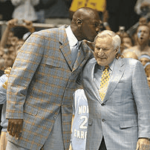
Michael Jordan and Dean Smith in 2007

Michael Jordan, who had played with the North Carolina Tar Heels with Dean Smith as coach, stated that Smith had been the most influential person in his life other than his parents and that he was “more than a coach — he was a mentor, my teacher, my second father.”

Smith willed a $200 check to each of the lettermen he’d coached during his 36 years at North Carolina, which included the message “Enjoy a dinner out compliments of Coach Dean Smith.” The estate’s trustee told ESPN that checks were sent out to about 180 ex-players.[41]

Accomplishments and recognition

Bust of Dean Smith at the Dean Smith Center

Accomplishments

Among the accomplishments of Smith:

  • 879 wins in 36 years of coaching, 5th most in men’s college Division I basketball history behind Mike Krzyzewski, Jim Boeheim, Roy Williams and Bob Knight, and the most wins of any coach at the time of Smith’s retirement.
  • 77.6% winning percentage, which puts him 9th on highest winning percentage.[1]
  • Fourth total number of college games coached with 1,133.[1]
  • Most Division I 20-win seasons, with 27 consecutive 20-win seasons from 1970 to 1997[3] and 30 20-win seasons total.[1]
  • 22 seasons with at least 25 wins.
  • 35 consecutive seasons with a 50% or better record.[3]
  • Two national championships (1982, 1993).
  • 11 Final Fours (behind Krzyzewski’s 13 and John Wooden’s 12).[3]
  • 17 regular-season ACC titles, plus 33 straight years finishing in the conference’s top three and 20 years in the top two.
  • 13 ACC tournament titles.
  • 31 consecutive appearances in either the NCAA tournament or NIT from 1967 to 1997.
  • 27 NCAA tournament appearances, including 23 consecutive from 1975 to 1997.[3]
  • Recruited 26 All-Americans to play at North Carolina under him.[3]
  • His players were often successful in the NBA. Five of Smith’s players have been Rookie of the Year in either the NBA or ABA. Among Smith’s most successful players in the NBA are Michael Jordan, Larry Brown, James Worthy, Sam Perkins, Phil Ford, Bob McAdoo, Billy Cunningham, Kenny Smith, Walter Davis, Al Wood, Jerry Stackhouse, Antawn Jamison, Rick Fox, Vince Carter, Brad Daugherty, Charlie Scott and Rasheed Wallace. Smith coached 25 NBA first round draft picks.[3] When Jordan was inducted into the Basketball Hall of Fame, he said, “There’s no way you guys would have got a chance to see Michael Jordan play without Dean Smith.”
  • In 1976, Smith coached the United States team to a gold medal at the Summer Olympics in Montreal.
  • Smith was one of only three coaches to have coached teams to an Olympic gold medal, an NIT championship and an NCAA championship.[3] The others are Pete Newell and Bob Knight.
  • At the time of his retirement, Smith was one of only two people, along with Bob Knight, who had played on and coached a winning NCAA championship basketball team.

Recognition

Smith received a number of personal honors during his coaching career. He earned National Coach of the Year honors twice — the NABC award in 1977 and the Naismith award in 1993 — and was an eight-time ACC Coach of the Year selection (1967, 1968, 1971, 1976, 1977, 1979, 1988, 1993).[42][43][44] Smith was also inducted into the Basketball Hall of Fame on May 2, 1983, two years after being enshrined in the North Carolina Sports Hall of Fame.

Smith was the first recipient of the Mentor Award for Lifetime Achievement, given by the University of North Carolina Committee on Teaching Awards for “a broader range of teaching beyond the classroom.”[4] He has also been awarded honorary doctorates by Eastern University and Catawba College.[45]

In 1982, Smith was the recipient of the Golden Plate Award of the American Academy of Achievement presented by Awards Council member Coach Tom Landry.[46]

The basketball arena at North Carolina, the Dean Smith Center, was named for Smith. It is also widely referred to as the “Dean Dome.” Smith coached the last 11.5 years of his career in the arena, making him one of the few college coaches to have coached in an arena or stadium named for him. In 1997, upon his retirement, Smith was named Sportsman of the Year by the magazine Sports Illustrated.[47] ESPN named Smith one of the five all-time greatest American coaches of any sport. In 1998, he won the Arthur Ashe Courage Award, presented at the annual ESPY Awards hosted by ESPN.[48]

On November 17, 2006, Smith was recognized for his impact on college basketball as a member of the founding class of the National Collegiate Basketball Hall of Fame. He was one of five, along with Oscar Robertson, Bill Russell, John Wooden and Dr. James Naismith, selected to represent the inaugural class.[49] In 2007, he was enshrined in the FIBA Hall of Fame.[50]

On November 20, 2013, President Barack Obama awarded Smith the Presidential Medal of Freedom.[51]

On December 8, 2021, the North Carolina State Board of Transportation approved naming Interstate 40 between U.S. 15-501 and North Carolina Highway 54 “Dean Smith Highway”.

Howie Dallmar

Despite only playing in the NBA for three seasons, Howie Dallmar is known for cementing the very first championship in the league’s history thanks to a clutch shot.

Dallmar and the Philadelphia Warriors (now the Golden State Warriors) were facing off against the Chicago Stags (who folded in 1950) in the 1947 Finals, the first basketball championship. The best-of-five series came down to the final minute of Game 5, where the score was tied at 80 apiece.

Joe Fulks

Fulks was the NBA league’s first scoring champion

Jim Pollard

Pollard graced the league with his leaping ability, popularizing dunking

The L.A. Lakers were originally the Minneapolis Lakers from their inception in 1947 until they moved to the West Coast in 1960. And even in their earliest days, the Lakers still featured superstars on their squad. One of the earliest stars they featured was one of the league’s earliest stars, Jim Pollard.

Known for his tremendous leaping ability, Pollard became known as the “Kangaroo Kid.” He used his 6-foot-4 and leaping ability to his advantage, becoming one of the first players in the league to dunk the ball, popularizing the phenomenon.

While the majority of Pollard’s success came in the 1950s, he did see tremendous success in his early career in the 1940s. He won the NBL championship with the Lakers in 1948, and the BAA championship with them in 1949 after the Lakers switched to that league (which eventually became the NBA). Pollard has gone down as one of the early game’s greats.

George Mikan

Mikan’s skill was so great that it led to rule changes

Players do not receive nicknames for nothing, and George Mikan’s nickname of “Mr. Basketball” was well-warranted. Playing for the Minneapolis Lakers, the 6-foot-10 Mikan graced the league with his rebounding and shot-blocking ability, but lit up the court offensively, averaging nearly 30 points per game (28.3) in 1949, unheard of for the time.


Mikan was instrumental in the Lakers’ first championship in 1949, over the Washington Capitols. He remained a staple of the team’s success, culminating in the franchise’s first dynasty, also winning titles in 1950, 1952, 1953, and 1954


But perhaps most significant was that Mikan’s skill level was so high for the time that it prompted the NBA to introduce several rule changes. They added the goaltending rule and widened the foul lane (which became known as the “Mikan Rule”).

His offensive capabilities also led to the league implementing the shot clock in 1954. But as for the 1940s, there was no doubt a greater player than “Mr. Basketball” himself, George Mikan.

George Mikan – 1940s vs. Career Stats

Category

1940s

Career

PPG

28.3

23.1

RPG

N/A

13.4

APG

3.6

2.8

FG%

41.6

40.4

FT%

77.2

78.2

In the game of basketball, one name lives on from the 1950’s,  George Mikan.

1950’s and 60’s 

Professional … in Europe , France …

 THE IT FACTOR

…   We are attempting to establish in the minds of the readers of: Michael & The Cricket,  that there is a definable mental, physical, environmental, and psychological mix of character, a personal attribute, something shared, and it shows itself in the life of the youth who best exercise the skills of the game.

There is a common trait, a common thread, yet it is never duplicated precisely the same in every young athlete.  But in those who succeed at winning basketball games at the highest level of competition all have it.

This trait does not always result in life satisfaction … … we address this later … … it doesn’t always translate in the best way for a satisfactory life. 

The ‘IT’ was there at the beginning of the game of basketball … …  ‘IT’ remains there today.  

Around 5,000 unique individuals have played at least one game in the NBA, with recent figures suggesting the number is closer to 5,000 as of late 2024/2025, though exact counts vary slightly depending on the source and cutoff date, with some sources citing over 4,800 or even 5,000+ players.
General Estimate: The consensus is roughly 5,000 players have suited up in the NBA.

Recent Data: As of late 2024, one source noted 4,898 players.
Historical Perspective: Over 5,000 players have played in the NBA throughout its history, with many playing just a few games

While there’s no definitive, publicly tracked total number, several notable NBA players have died from drug abuse, with prominent examples including Len Bias and Ricky Berry, tragically highlighting the ongoing issue, but a precise count of all players past and present who died from substance abuse isn’t readily available in aggregate statistics. 
Key Examples:
  • Len Bias: Died in 1986 from cocaine-induced cardiac arrhythmia shortly after being drafted by the Celtics, a pivotal moment that raised awareness about substance abuse in the league.
  • Ricky Berry: Passed away in 1989 from complications related to amphetamine abuse.
  • Haris Brkić: A European player, died in 2000 from gunshot wounds, but substance abuse was a significant factor in his life and death. 
Why a Precise Number is Difficult:
  • Data Collection: The NBA doesn’t widely publish or track this specific statistic for all former players across history.
  • Cause of Death Nuances: Sometimes, drug use contributes to deaths (like heart issues) but isn’t the sole listed cause, making categorization difficult. 
In summary, while specific names like Len Bias stand out, the total number of former NBA players who died due to drug abuse isn’t centrally cataloged, but it’s a recognized, tragic aspect of the league’s history

Robert was born in 1910 in Fort Wayne, Indiana. He was a good  young man and during his entire life he remained a good, pious, principled man with a very pleasant personality and a tremendous wit, topped off by a fantastic memory.  He died at the age of 83 after a very decent life. 

He did very well being educated in Catholic schools.  As an exceptional mathematician and an avid reader, he was at the top end of the class.  He played all of sports which the school had to offer.  But he loved football the most of all.  Throughout his life, he was a year around Midwest weekly golfer.  He would even play off-the-greens winter golf on a cold  snowy flurry day.  Few if any summer days passed without a trip to the links until the day he was unable to walk the fairways and after more than fifty years of playing golf.    He would say, golf kept him alive.  He could tell you everything about all the famous golf professionals in his lifetime.  There were always hundreds of magazines somewhere in his house, many where golf magazines.   But nothing ever overcame his love for the ‘Fighting Irish’ football team in South Bend Indiana.

After years of chasing her through the neighborhood, Bob married his high school sweetheart in 1929, at the age of 19.  She was even younger.  They, just like much of the general population experiencing the ‘Great Depression’, had no money in the 1930’s.  Bob’s dream of attending the University of Notre Dame was simply not feasible.  He even spent a few days at a ND football tryout.  But it wasn’t his path.  He had mouths to feed and bills to be paid with a wife and a new baby in the house. 

In 1930, there wasn’t much opportunity for employment for a young 19 year old boy as the vast number of unemployed elder men took most of the jobs.  Under pressure to work, Bob was persistent, and he got hired to be the janitor.  He was lucky and appreciative to have a  job working in a factory cleaning up at night.  It was a guaranteed solid check and he made just enough money for the three of them to survive as a family, living in the basement of another family member.

The company designed and manufactured specialty large equipment work vehicles for companies throughout the world.  Thus, it was called International Truck Engineering.  At night, as he swept and cleaned an empty factory, Bob could watch the daily progress over months to completion as these amazing large specialty vehicles as they were being assembled on the factory floor.  This intrigued him.

In his spare time, while he worked through cleaning the factory floors, he would read the blue prints and schematics laying around, over trucks, on the factory tables, and even sometimes in the trash can.    Those trashed drafts he kept for further investigation.  Each truck was uniquely designed,  and they all had obstacles and problems to overcome while being built. 

After saving up money, Bob bought a used set of books on the study of Engineering.  It wasn’t long before he was a self-taught well educated engineer.   It was shortly after his home school episode that he began providing company engineering solutions to the guys on the factory floor. In only a few years, he was elevated to vice President by the owner.  He worked at the same company for 37 years. 

The Zoellner Automotive Engine factory was located across the road.  They made the pistons for engines.   It just so happens that Bob became friends with Fred Zoellner.  And one of the perks of being friends with Fred was you had plenty of tickets to go watch the basketball team Fred created, supported and owned.  Bob could walk to North Side High school from his house, spend a few hours watching basketball in the evenings and be home for early bed and early morning prayers.  

Fred Zoellner loved the sport of basketball. He started the first long term successful professional Mid-west Indiana based basketball team, in the late thirties.  Initially, he provided players employment in his factory.  During those had economic times,  this alone was key to an above average lucrative lifestyle.  As things rebounded from the Great Depression, he began to pay players a salary.  He treated everything to do with his Fort Wayne Pistons with the very best.  He did everything he could to make the team successful and the organization to grow.  Basketball was an obsession for Fred.  He even got the city of Ft. Wayne to help build one of the largest arenas of its time.

Eventually he was inviting Bob to join the post game festivities which included a meal and mingling conversation with the players from both teams.  Free food had its way of ensuring a big crowd in those days.  

At one of these gatherings, Bob, standing 6’3 (which was considerably tall at that time period) became friends with the tallest 6’10” man in the room, someone from the opposing team, the Lakers, someone who he had closely observed playing with exceptional skill on the court. That player was no other than George Mikan, Mr. Basketball. 

Mikan was at the start of a long and very successful basketball career.  He became the first national, professional basketball superstar.  He changed the game as a player that forced rule changes to respond to his on-court dominance,  as he won many games ‘controlling the paint’.   He later helped push the ABA into existence while working in League operations.  The red, white, and blue balls  … t… well, that was all George’s idea.

Bob and George spoke on many occasions over time and at one point Bob introduced his son Charley to George.   George called him by his name familiar, Chuck, just as everyone else exercised.  He made Chuck feel comfortable.    Charles and Bob spoke often for years after even decades about Mikan and the basketball of that time period,  always emphasising the unbelievable skill and performance of the ‘best player ever in the game’  (The G.O.A.T.) George Mikan, Mr. basketball, never missing the opportunity to mention what a swell nice guy George was during their encounters.  I know this because Bob was my Grandfather and Charles was my father.   


The story of the 19-18 game between the Ft. Wayne Pistons and the George Mikan led Minneapolis Lakers. was told to me in detail by Grandfather.    I heard this story much more than just once.  Always ending in, George forced the League to install the time clock. Thus changing the game forever. Followed by a family debate on what the 24-  ( maybe it was 30?) – second-shot time clock was going to do negatively to the great game of basketball. 


Coach Ray Mear /Depaul Coach / Gearge Mikan Coach /  / Me  / Chicago / 1984 /  The walk up honor …  my Grandfather sitting there … 

Limited Time and Resource will not allow anythiny close to sufficient in historical perspective of all those who crought the game up until the 1960’s.  Nevertheless, we add name of note.
[More coming soon]

You can not mention the history of basketball without including the great ‘GURU” of the game, Pete Newell.

johnny Wooden … 

Coach  / Player / Both: 

Coach  / Player / Both: 

Coach  / Player / Both: 

Coach  / Player / Both: 

Coach  / Player / Both: 

Coachj Player

Bio / shorts

Coachj Player

Bio / shorts

Coachj Player

Bio / shorts

Coachj Player

Bio / shorts

Coachj Player

Alex Hannum 

Murray Mendenhall (Fort Wayne Pistons)


Red Auerbach (Boston Celtics)

Ossie Schectman (New York Knicks – Early 1940s ABL)

John Kundla (Minneapolis Lakers)

Don Nelson (Born 1940)


Ray Mear

Bio / shorts

Adolph Rupp

Bio / shorts

Branch Macraken

Bio / shorts

Arrnie Farrin

Bio / shorts

Fred Taylor

Frederick Rankin Taylor (December 3, 1924 – January 6, 2002) was an American college men’s basketball coach for Ohio State University from 1959 to 1976. Prior to that, he played baseball for the Washington Senators. Zanesville, Ohio, U.S.

NBA

Oscar Daniel Schmidt: Mão Santa

NBA

Joe Barry Reads For Success

Basketball Young Phenoms

Hugo the Hustler

Basketball Young Phenoms

The ‘Dean’ of Basketball

Basketball Young Phenoms

Kon: The New NBA Phenom

NBA

Spurs: Videos of A Dynasty

Basketball Young Phenoms

Tarzan Cooper

Basketball Young Phenoms

Chuck Cooper

Basketball Young Phenoms

Hezeriah: The First Young Basketball Phenom

Basketball Young Phenoms

Harry Buck Lou

Basketball Young Phenoms

Moses Parted The Sea