Title: How To Make It From Snowbird to the NBA Draft
Date June 25, 2026
By: Doctor Dunkenstein (a.k.a. Christopher Lee Winans)
I was 22 years old, it was 1984, George Orwell (The Author of the Book 1984) was dead, and my dreams were also slowly dying. So I thought … … … !
I thought the end was near, and the future would be empty of playing basketball, something I had held a deep passion to do since I was ten years old.
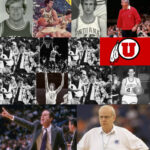
The realization of this ending came with hours of crying in a blubbering mess during Senior awards night at the downtown Hilton for the University of Utah basketball. I wasn’t prepared for this apparent ending of my way of life. I could not mentally accept life without daily basketball competition, and a team to play on. I was, at that moment, not really any longer a member of the group celebrating my end. The last place I wanted to be was in some hotel conference room with teammates I would never play with again and a few hundred athletic boosters receiving awards, eating steak dinners and talking to each other about our dead end losing season. The entire event was adding insult to injury, and I was supposed to smile and make chit-chat with the boosters.
I had spent the previous six months knowing my team at Utah was not any good, we ended the season with an 11-19 record.
After two successful seasons of reaching the final sweet 16 in NCAA March Madness tournament, I had all but given up improving at basketball or winning games. By Christmas time of my last Senior season, the writing was on the wall and the snow was deep on the Wasatch Mountains. I played college basketball to win games and get into the NCAA tournament. It wasn’t going to happen in my Senior year, neither was a graduation with a college degree. With this realization, I devoted myself to another great passion other than basketball. While enduring the losing season, I spent more time skiing at Snow Bird Ski Resort or Park City than I did on the basketball court during the final months of my Senior year.
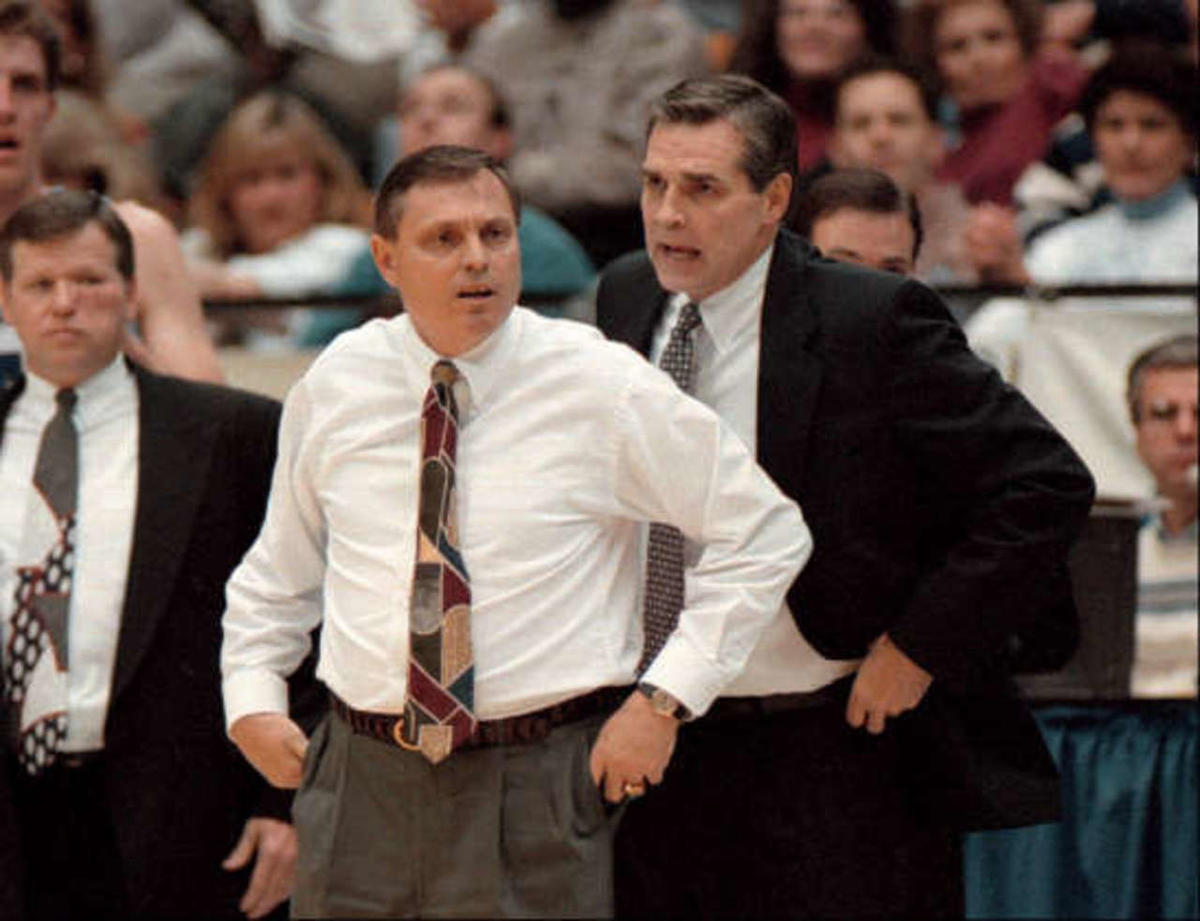
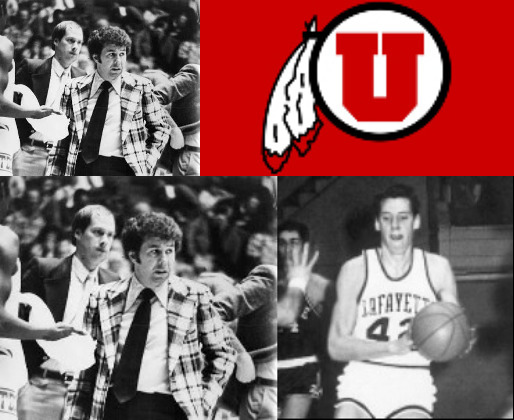
There was a coaching change between my Junior and Senior season, Lynn Archibald was hired to be the Head Basketball Coach at the University of Utah for my last year. Lynn had been an assistant coach during my Junior season, the year prior. We reached the sweet sixteen during that season.
Lynn was a marvelous person, and a good coach. But the cupboards had been left dry by the previous Coach, Jerry Pimm, my head coach at Utah for my first three seasons. I spent my entire Senior season playing basketball in what was the result of those empty dry storage cupboards with Lynn Archibald at the helm.
Pimm knew how to coach college basketball. He could get you into the Tournament. You needed to heed what he told you on the basketball court. He understood the game well and he could teach on the court with the best of them. But he was a shark. Pimm had an engaging fun personality in his social life, but you couldn’t trust him or anything he said to you off the basketball court.
He cost me a year of eligibility my Sophomore season by lying to me about the NCAA red shirt game rule limits. I started the season with a torn Achilles Tendon, it was not healing quickly. Nevertheless, stubbornly, I tried playing in games. Then, I played hurt in one too many games and lost my eligibility for an injury red shirt replacement year. I was relying on Pimm’s information. His face-to-face lies about the required limit in the number of eligibility games and his push and pressure to play, persuaded me to continue playing injured. I re-tore the Achilles a second time having played one game over the NCAA allowed limited games to acquire red-shirt status. If I had not played in that one extra game, I would have been provided with an entire extra year of playing eligibility beyond the normal four years.
I lost a year of college basketball because I forced myself onto the basketball court injured, I made that decision, ultimately I was responsible. But I made it based on the lies Coach Pimm told me in his office in our face-to-face conversations. Terrible medical advice as to a timely path to recovery also contributed. When I inquired about the matter, Pimm said, he had checked with the Athletic Director and the NCAA, he told me I was already over the limit of games for red-shirt status. I wasn’t over the limit, I forged on with playing hurt. He flat out lied to me. Later I was informed by the athletic department, Pimm hadn’t checked anything with anybody, and I got re-injured during the game that set me over the limit. Pimm was a snake.
I should have never believed him, as I didn’t trust him after my Freshman year, witnessing his off court shenanigans. That’s another long story. … … … ! I had been fooled yet once again by Pimm. It wouldn’t happen a third time, but I wasn’t going to transfer to another basketball program and spend yet another year not playing in college basketball games. The NCAA Division I transfer required an entire year of sitting out games before your eligibility kicked in – just another NCAA noose placed around a player’s neck. I was stuck playing in the yard with a snake in the grass for my Junior year at Utah.
Pimm was all about his money and his self preservation. That was the real nature of the business for most college coaches of that time period in the 80’s. Nobody raised an eyebrow over the entire fiasco of my lost Sophomore year.
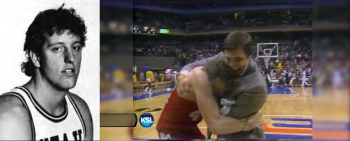
Lynn Archibald was in Pocatello, Idaho coaching during my lost year, he had nothing at all to do with the situation. But he did play a large part in my return to the court in the next season, my Junior comeback year. Perhaps, that’s why you see us hugging in a crazy victory celebration after we won a game against UCLA in the NCAA tournament at the end of this season. (Video below)
Pimm could spot talent, but he could not recruit worth a darn. He had great assistant coaches recruiting for the program when I arrived at Utah. However, both of his assistant basketball top recruiting coaches during my Freshman year – including my good friend and the recruiter who persuaded me to attend Utah – Tracy Tripuka, had left Pimm’s employment with a sour taste in their mouths. After my Freshman year and the good assistant coaches having moved on from Utah to better pastors, Coach Pimm couldn’t recruit any good players. We missed out on landing some big fish players that should have been my teammates.
Lynn knew how to recruit and he could spot talent from miles away. His secret, recruiting the mothers of under privilege, usually black, but not always, youth. He had a history of being trusted with a mother’s precious son. He had brought Jerry Tarkanian’s — ‘Tark the Shark’, a coach who actually was not anything close to a shark, as the NCAA and media portrayed him into being — early teams together at Long Beach and U.N.L.V., and I knew he would do it all again at Utah. He did just that by taking Utah back to the NCAA tournament in 1987, two years after my playing time expired. My eligibility didn’t fit his program.
With the help of Lynn Archibald as the brand new assistant coach in my Junior season, we got lucky in the very late summer by persuading one great player to come to Utah, Manual Hendrix.
Manny, who wasn’t recruited to play basketball by any other major college basketball program, turned into a four year starter for the Utes basketball program. More amazingly, he transferred his lightning speed to the NFL after college. Without having ever played a single college football game, he subsequently had a six year career with the Dallas Cowboys. How we got Manny, was all about magical Lynn’s recruiting methods.
Lynn put a tiny, precious, naive, and inexperienced 5’10 Manny Hendrix, in a dorm room four doors down from my own dorm room. He told me, knowing my social tendencies as a third year college student and all my friends in the Fraternity Houses, keep an eye on him, protect him, and with a smile, he continued, … but keep him away from your friends. I did just that, and Manny was our Freshman starting point guard during our road to the sweet 16 in 1983.
During my underclassmen years, four teammates had moved on to the NBA by my Senior year. We had some good Freshman and Sophomore players on the team, but they wouldn’t play defense.
During my Junior year at Utah, Lynn Archibald was brought into the program as a new assistant basketball coach. Lynn Archibald had a history of college recruiting success at Long Beach State, the University of Nevada Las Vegas (UNLV), and Idaho State, where he made a five year stand as the Head basketball coach. Lynn could recruit, and he could coach. He was highly responsible for our NCAA tournament accomplishments during my Junior season at Utah.
I most often called him, Lynn, not regularly Coach, as I had always done in the past respectfully addressing all my coaches throughout my career. I addressed him as Coach sometimes, but Lynn was a dear friend, and it’s less formal around your assistant coaches than around your Head Coaches, Lynn was both to me, I addressed him as I did, out of respect.
Lynn became much more to me than a coach. He was responsible for so many positive things in my life I cannot tell you about all of them in a complete book.
As an assistant coach, Lynn developed a special bond with myself and my two other Senior teammates, Angelo Robinson, who Coach Archibald knew quite personally, from his childhood, during Lynn’s Las Vegas coaching days while coaching Angelo’s much older brother at UNLV, and Scott Hill, the smartest and most humor filled teammate I ever had in my career. Lynn just loved time with Scott and Angelo. Just sitting in his office and talking was often undertaken. Then there was me.
He told me for years after my career ended, I was his favorite player of all time. I believed him because I wanted to believe anything he told me.
He would swat my ass with encouragement in practice after many practice drills. His specialty defensive teaching method required maximum effort. I always gave top effort. It was an intense portion of every practice.
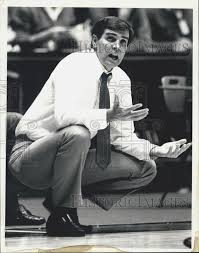
He would tell me, I played hard with maximum effort more than any other player he had ever coached. During this special defensive drill, Lynn, who was normally mild mannered, would get down in a crouched stance, spread his legs, and his voice would rise with intense encouragement. Then he would scream ‘that-a-boy, that-a-boy, dig, dig ,dig, slide, slide, slide, … … … dig, dig, great job! He wouldn’t stop until the grueling 3 minute killer drill was complete. This slide, stance and defensive switching footwork drill was complete torture. As I would walk out of the drill, he would often give me a big swat on the ass and one last that-a-boy. I loved being treated like a race horse running in the stretch for the wire.
Later in life, he once told me, if I hadn’t done what he said that Junior year and stuck out the hard times early in the season, and if I hadn’t played so darn hard all throughout my Junior comeback year, we might have not won NCAA tournament games, thus, Pimm would not have gotten a new Job at UCSB, and he might not have been named the Utah Head Coach in the following season, my Senior year. We had a special bond, only understood by us.
He often said that the difficult drill of his from hell, which we regularly performed at our Utah practice sessions, was part of what made U.N.L.V. the best defensive basketball team I ever played against in college. Lynn’s drill was the most demanding drill I had ever performed.
Lynn was responsible on many different occasions of destroying ‘The Illusion of The End’ of my basketball playing career.
During my seven years of professional play, I would come to him about personal topics and discuss my options, and talk about the idea of moving on from playing basketball often enter the conversations. Lynn would simply say, in regards to any questions I put to him about trying to continue playing professionally, or going to Brazil to play, or ending my playing days and moving on, he would always express advice, “hey, just do it, someday you won’t be able to play any more. If they want you, and they are willing to pay you money. Why not, go play.” I followed Lynn’s advice until I was 29 years old.
I eventually achieved a University Bachelor’s of Arts (BA) degree in German Language and Literature. I was able to take many courses in Utah’s international education programs in Europe, and for a few years, I would return to the Utah campus for quick six to eight week summer time – off basketball season – course completions. During this endeavor, I paid for all my education. I was not on any scholarship program. It took me three years after my Senior year to complete my 1987 University of Utah Degree, as I was also playing professional basketball at the same time in Europe, and learning a new second language.
Lynn was proud that day I showed him the actual paper certificate of a Degree with my name on it from the University of Utah. He understood what I did to achieve that degree, few others at the University cared. Including the athletic director, Chris Hill, who was a coach of mine during my Freshman and sophomore seasons. Most University athletic programs during the 80’s had a sports revenue priority, not a student-athlete graduation rate priority. Utah wasn’t different from most other schools.
Don’t misunderstand me, Chris Hill was a great Athletic Director for the University of Utah, and he reached out a few times to help me with important situations after I graduated. But college basketball was a big time business, players education help or concern was not extended beyond your fours of playing ball.
There just wasn’t enough ‘student’ in the student-athlete playing at a major college level NCAA basketball program in the 1980’s. One crazy stupid NCAA rules was that you were not allowed to take a single college class in the summer time break if you held a job. You had to select work or full time summer school. One simple class a year during the summer break while making enought money to survive the year from a summer job would have helped the graduation rate. Common sense did not often apply to NCAA rules, and the University programs played along with the system.
Maximum effort on the court would drain you and require time daily to rejuvenate your physical and mental state. Studying was only easy if you didn’t practice as hard as possible. I was drained after every practice at Utah. Lots of guys could practice easily , loft through practice and at night study. Few could be starters, practice hard to get better, and also apply the required daily study.
That didn’t stop me from eventually getting a degree. It was just the first college of many other degrees on the road to becoming Doctor Dunkenstein.
Lynn was also proud of me the day I showed him my acceptance letter to The University of Toledo Law School. He laughed, – knowing I had just spent two years playing in Brazil, just as he had earlier advised me to do – with a smile, he said, “how in the world did you do that in Brazil”!
I explained, I bought a couple of LSAT law acceptance examine preparation books, I took them to Brazil, and I studied those books intensely. Then, I took the LSAT – Law School entrance exam – and I got accepted to two schools. Lynn really laughed with pleasure on that endeavor.
Then finally, for the first time in my life, he said, it’s time to put up your sneakers and go to Law School. I had a good 7 year professional basketball run in the game. I was 29 years old, so I again, followed Lynn’s advice. He always had my best interest at heart. He had a big heart.
A few days before Lynn died of cancer at the young age of 53, I called his house number from Europe, just as soon as I heard the sad and unexpected news. His wife Anne indicated he was in bad shape and at the end of his rope on life. But in the background he found out it was I who was on the phone, he mustered up enough strength to get on the phone. I tried not to cry and appear strong. Lynn could barely speak. I told him I loved him. He died sometime in the next few days in Utah. If there is a God, Lynn’s soul is somewhere nearby.
Lynn was a great basketball coach, and a better person. But he had a completely different style of recruiting and team assembly than did the previous Coach, Jerry Pimm. It was not the fault of Lynn Archibald that I was ‘left out in the cold’ and in the middle of the coaching transfer, without high skilled teammates, and too many young inexperienced, but very talented players, with no defense intensity, during my Senior year of college.
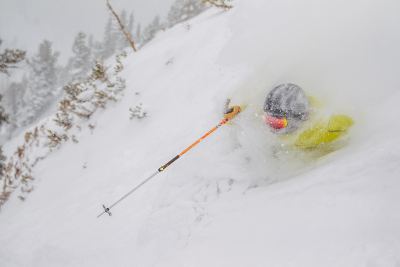
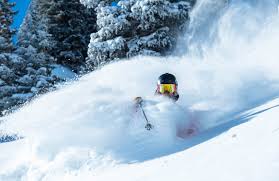
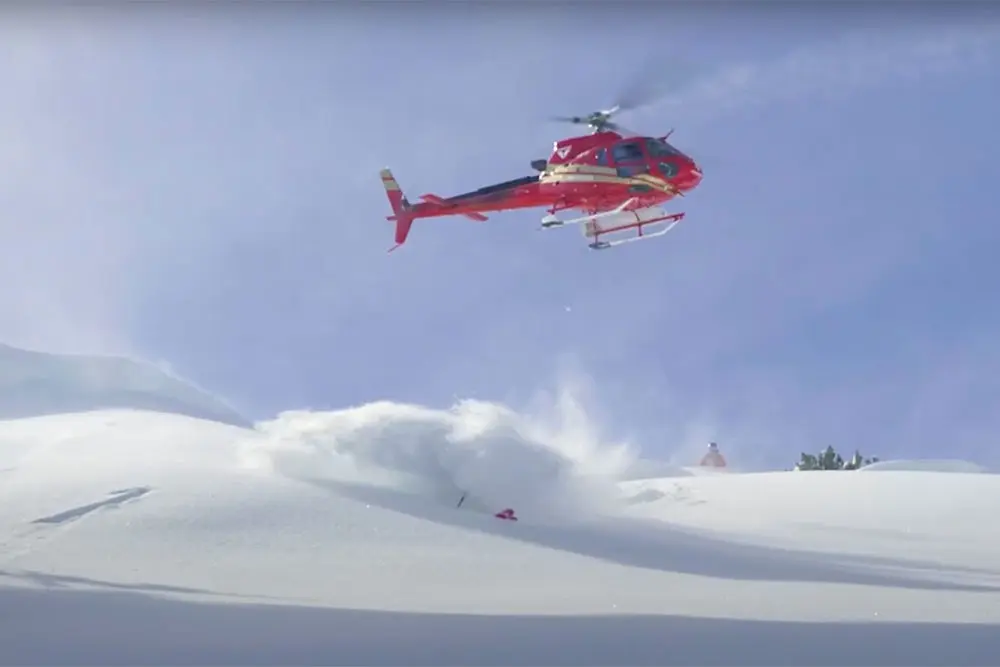
This entire basketball situation led me to improve my mogul snow skiing techniques and the mastering of deep Utah powder snow in the Wasatch Mountain range.
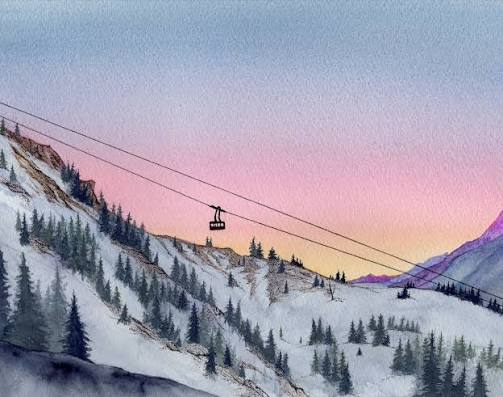
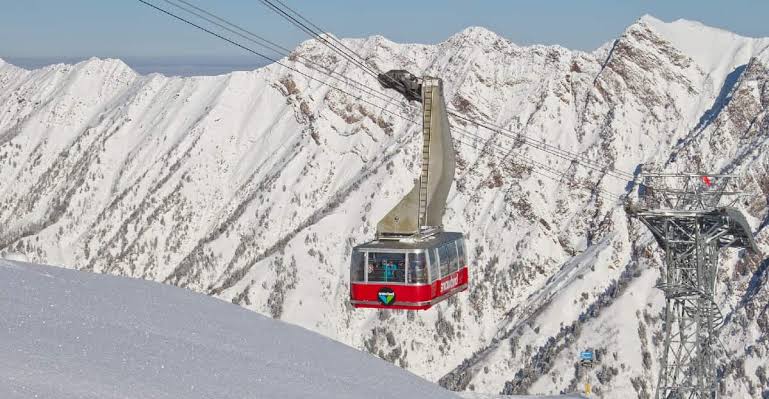
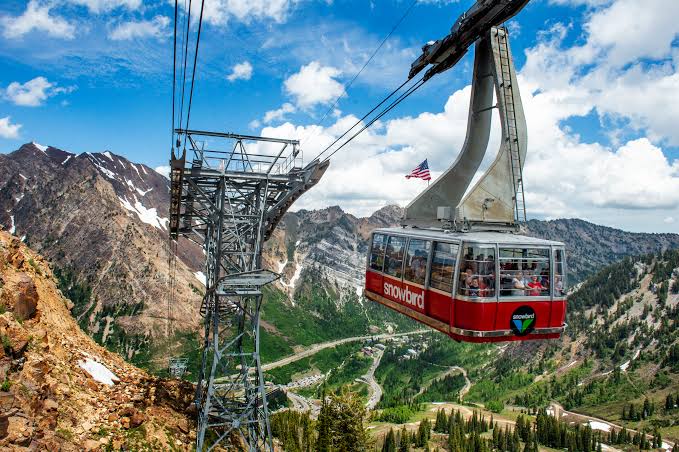
If I left campus by 5 am, I could catch the first tram run in the morning, ski until after noon, jump in the car, fly down the mountain and be at afternoon practice by 2 pm. Most practices I was face burnt red due to sunburn on the slopes. I never shared my activities with anyone on the team. But our great long time athletic medical head trainer, Billy Bean , who was an avid ski junkie, was hip to the skinny. He would laugh, ask me how many inches I had dug into — meaning inches of fresh snow was on the slopes that particular day — and then he would keep quiet.
I was not concentrating on hoops, we were not going to play in any meaningful post season tournament games. I wasn’t close to a college degree. so, I found new friends and a new adventure, one I also fell in love with upon arriving in Utah. It was snow skiing in the powder.
My basketball performance was doing just great. It didn’t need much work in those skill areas and there wasn’t much reason to improve, in my mind, at that time.
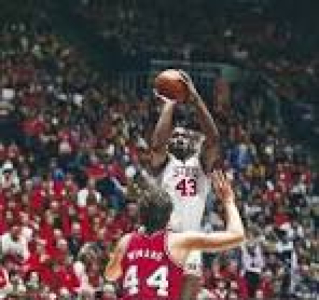
In my last year as a ‘Runnin’ Ute’, I was having my best year of personal on court performance, my stats proved it. The Utah’s team failure wasn’t due to my failures of performance. The team was just too young, and inexperienced. I was leading the University of Utah basketball team in scoring, averaging about 15 points a game. I lead the entire nation for almost two months in NCAA field goal percentage. I finished with a 58% Field Goal made percentage for the year and 55% for my entire career. Which remains to this day as a top 5 in the Utah record books, only a tiny minuscule hundredth of a percentage point away from those players ranked higher. (They didn’t play 8 games in their Sophomore year on one leg, such as I had) I led my 1984 Utah team in rebounds with 8.5 per game. And my favorite accomplishment during my Senior year, I scored 32 points and had 13 rebounds against B.Y.U. on their home court – the most beautiful player friendly basketball court I ever played on. Unfortunately, we lost that game in double O.T. I could guard any big man in the entire country, in the paint and on the wing.
I was good at defensive when I arrived at Utah, so I thought. But after three years of guarding great players, I got to be very skilled at guarding inside the paint and out to the wing. I had spent my Freshman year daily guarding Tom Champers, an 18 year NBA vet, Danny Vranes, an all American, and 7 year NBA vet, I had Pace Mannion, a 6’9″ 7 year NBA vet, and 11 year Italian basketball professional . I had multiple game time experiences against many great players, such as the likes of: A.C. Green, Michael Cage ( A rebounding NBA beast) , Charles Barkley, Stewart Gray, Thurl Bailey, Sidney Green, Greg Kite, Fred Roberts, (NBA players from our rival B.Y.U.), Sam Perkins, Patrick Ewing, James Worthy, Hakeem Olajuwon, Ralph Sampson and many more great players. That’s quite a list of basketball players to try to stop from scoring a basket. I guarded every one of these guys in my first three years of college basketball.
I could not stop anybody. But I sure learned how to ‘SLOW YOU DOWN”. I could also always score on anybody I played, I always scored in every game I played and made a high field goal percentage – when I didn’t play with an injured torn Achilles tendon. I had that Hoosier defensive education and I got it toned into a masterful skill at Utah. I loved playing defense. I loved snow skiing too. My Senior year fulfilled both my passions.
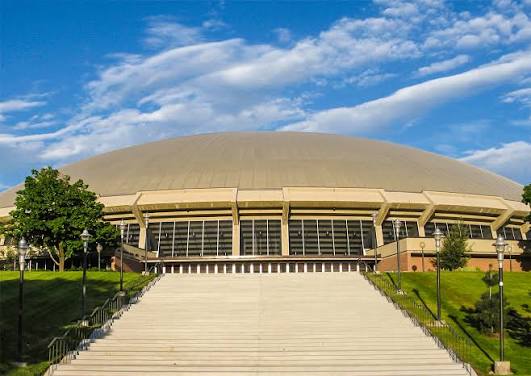
One of our secrets at Utah basketball was that the often filled 15,000 seat Huntsman Center Arena was at 5,800 feet above sea level. It’s harder to run in elevation than it is a sea level. We would run you into the ground on every court end-to-end exchange, even if we were going to slow it down and make tons of passes before a shot, we ran fast. We forced teams to switch ends of the court faster than they might be accustomed to playing . We forced the opponents to run on every play. By the forth quarter, most teams were tired dragging their butts up and down the court. We were fresh. We only needed a step or two ahead of you in the forth quarter to make the 5,800 feet of altitude pay dividends. The running preparations at Utah were intense, it started preseason as killer short and long distance running drills, each running exercise incrementally implemented a faster time. We had to make better pre-arranged set clock times every week. The running drills continued all season. We got faster and stronger at running as an entire team as the season progressed. All five guys had to buy into this skill. nobody was buying in during my Senior year at Utah.
In my first week of summer games, fresh out of high school and not yet enrolled for my freshman year in college, Mike Newlin, an 11 year skilled NBA veteran who came to play pick-up summer games, berated me up and down the court for an entire hour, screaming and swearing at me in front of everybody that could hear, yelling about how slow and out of shape I was in running the court. I was bewildered at his verbal dress down. I thought I was running just fine. After the pick-up games concluded, he took me aside and explained things nicely. I didn’t understand, I thought I could run just fine. I was wrong. But by the end of my first season I understood the pride in, ‘The Runnin’, when we said ‘The Running Utes’, – formally not Utes, but Redskins, … … Runnin’ Redskins. We ran like in a pack during basketball games just like wild Indians on a war path. Eventually, I loved being two steps in front of some cocky All-American center for the entire game, and watching him grab his shorts bent over during free throw breaks, in pain he did not understand, during the forth quarters of the games. Sadistic opponents we were indeed.
I could run well by my Senior year and snow skiing actually increased my running ability, it was strenuous exercise at high altitude. So, I played basketball until the disappointing season ended in March, and I snow skied until the snow melted away in May.
But when the month of May arrived, I was not any longer on scholarship. I was not close to a college degree. I went of the track of graduating by changing my area of study and I basically lost a lot of an educational college year in my Sophomore year by being on crutches recovering from my achilles tear. I was certain my basketball playing days were over. I was wrong about my playing days being finished and Lynn Archibald pushed me to continue trying to play.
Between the skiing and the basketball I was in the best physical shape of my life but I did not have a basketball team for the first time in my life.
With no prospects of playing basketball, Lynn came to my rescue for the second of three times and destroyed the my self created illusion that my basketball playing career was over, finished and kaput, ending for good.
The first time he extended my career was during the 16 hour plane trip to Tokyo Japan during our 1983 ten day Christmas trip — that’s another great Jerry Pimm fiasco story. Lynn Archibald had saved my college basketball career by the time the plane landed back in Salt Lake City.
Lynn did it once again as I was enjoying the warm spring weather and trying to figure out my next move in life at the end of my Senior year. But he didn’t bring all great news to me in this attempt to salvage my basketball career.
After upsetting the very powerful and wealthy Huntsman family, a major Utah Athletic program financial backing source, over a brief and innocent rendezvous with a former girl friend of true love, who eventually after our meeting became The First Lady of Utah, Mrs. Huntsman, Lynn showed up at my apartment. He told me, the Huntsman clan were aware of my activities, he said I may want to consider that in my ‘personal endeavors’, but it wasn’t his business. At least not yet.
He handed me a piece of paper with a name and number, he said I should call this guy in New York, an agent who wanted me to come to his try out camp immediately in New Jersey. Yes, Lynn was once again, as they say, hitting two birds with one stone. He thought this might be my route to finding a basketball team. His suspicions panned out, it led to positive results.
I went to the tryout camp in New Jersey. It was filled with 50 guys who were making money overseas playing basketball, and an old childhood teammate, Tom Heitz, who played at Kentucky. On the second day of the four day camp, an assistant coach from the NBA New Jersey Nets basketball team walked up to me and said, we, The Nets, are going to draft you, and bring you to our July tryout camp. I was skeptical about his promises to be drafted, but happy I had made my way to the camp. During the tryout camp, other European agents also began conversations with me about playing in Europe. There seemed to be a new light at what I had thought was a dark tunnel.
Lynn Archibald had once again looked out for me as a person and a basketball player. it wasn’t the last time he did such a thing.
A great story for another time is what Lynn did for me during that 16 hour plane flight to Tokyo Japan, where we played against the Ralph Sampson lead Virginia Caveliers and the Hakeem Olajuwan lead Houston Cougars.
Lynn Archibald went into my corner and saved my career on that memorable trip as well.
In the third week of June, 1984, I was selected 177th in the NBA draft. I went to the tryout camp for the New Jersey Nets in August of 1984. By the end of August I was a professional basketball player in Israel. I spent five years in Europe and two years in South America playing professional basketball.
[ Read the Presentation: ‘Oscar Schmidt- The Hand of God’ for insights on the New Jersey Nets draft camp and my journey into European basketball.]
In all my years, I never accomplished a single thing on or off the basketball court by myself. It is a team sport. It requires the help of other people. That’s what gives the sport magic, just as in life. Somehow, I was directed through the off court difficulties and helped with every on court play by great people for many years. That is a manifest of destiny to me. Just as it was manifest that there was to be light on earth, something always pulled me up the path forward for decades.
The conclusion, a little snow skiing mixed in with lots of basketball and a good basketball coach, who is also great person, can extend your basketball career further down the road than you can imagine.
The same principals found in this presentation can apply to any endeavor you undertake in life.