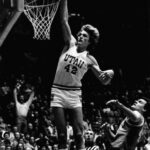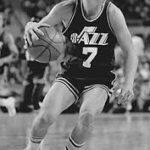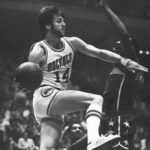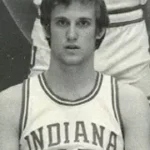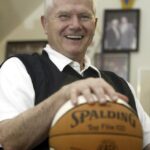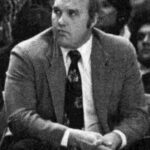

Smile! …. Say Cheese
THIS PRESENTATION IS UNDER CONSTRUCTION
DRAFT ONLY

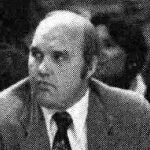
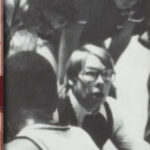
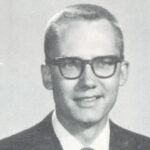
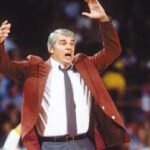
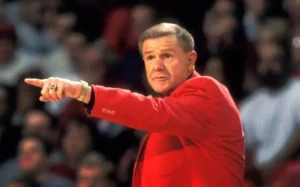
Jerry Pimm
‘Smile & Say Cheese’
The Head Coach of The 1980–81 Utah Runnin’ Utes Men’s Basketball Team.
THE BLACK MAGIC SEASON
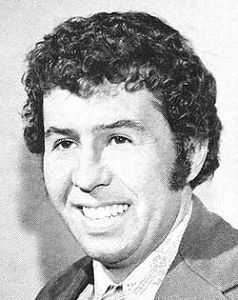

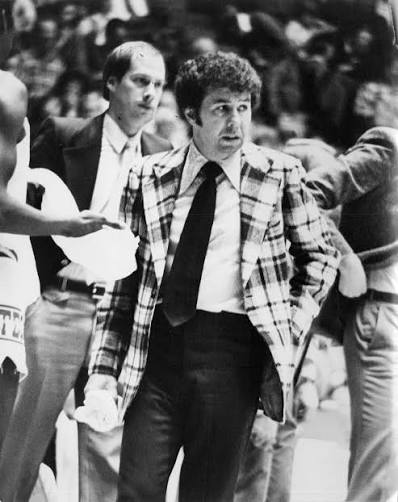
Jerry Pimm
‘Smile & Say Cheese’
The Head Coach of The 1980–81 Utah Runnin’ Utes Men’s Basketball Team.
THE BLACK MAGIC SEASON
June 10, 2026
Part 1: The Black Magic Season
The 1981 Runnin’ Utes
Title: A Wise Cute Smile Rat
By: Doctor Dunkenstein
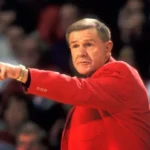
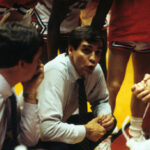
Jerry Pimm was the Head Basketball Coach for the 1980–81 Utah Runnin’ Utes men’s basketball team. He was like a cute intelligent smiling rat, who always gets the cheese and never gets caught in the trap. You had to be cautious because he would sacrifice you and leave you to be snapped by the trap in order to save himself.
Jerry Pimm knew how to coach college basketball. You were a fool if you did not listen to everything he said on the basketball court and in the locker room at half time. He knew how to teach and coach a winning college basketball team.
He had decades of extensive top level college coaching experience and he was an accomplishment as a college player as a point guard for the USC Trojans in the 1960’s. He had years of winning seasons at Utah.
He led the Utes to the NCAA tournament three of the four previous seasons before my arrival for the 1980-81 campaign. the Utes had reached the final 16 during tow of those three NCAA tournament.
But after making the tournament three consecutive seasons, the 1979-80 Utah team failed to reach the tournament the season before my arrival. They went a disappointing 18-10 that year. The team was loaded with the same very talented NBA level players now returning for my first Utah season in 1980-81. Something had gone haywire, something went off track in the 1979-80 season.
Upon my arrival as a Freshman, I did not know what happen the year before. I heard lots of rumors, but I didn’t concern myself with them, nor did I care what happen. I only knew, the team I was now on was going to be very talented. We would make it to the 32 team NCAA dance in March. My concern was improving everyday in order to get playing time as a substitute off the bench.
I listened to all the coaches and tried everything that was suggested to me during the season. It paid off. I played in all but one game in my Freshman year.
As the year progressed I realized believing anything Jerry Pimm said to you away from the basketball court could be detrimental to your entire basketball playing career. Your concerns were never his concerns unless they were of a benefit to his job security or his bank account.
The true and complete nature of Head Coach, Jerry Pimm, was no secret on the 1981 Utah basketball team. he had a bubbly personality and was pleasant. He smiled like a happy little rat eating his cheese, and had no concern you had your head snapped off by the rat trap he sent you into to check out the cheese.
He knew how to survive in the tough business of being a major college head basketball coach in the 1960’s, 70’s, 80’s and he even had successful teams into the 90’s.
But he was someone that was always willing to sacrifice anything about a player’s well being or concerns in order to maintain his coaching position. He also was a calculated gambler on and off the basketball court.
He was a rat smiling at you saying cheese.
It became evident that in 1979, some of his off court methods of of operations were beginning to create some issues jeopardizing his job. When I arrived in 1980, I was not aware of this dealings.
He didn’t actually care a darn about your educational progress. His only concern was that you remained eligible under NCAA rules to play at Utah. He could care less if you left college with or without a degree. Of course, he tells you in the 1981-82 Utah basketball promotional video how deeply concerned he was about the education of all his players.
His fake concern got him cornered, in 1980, both future NBA players were going to found academically ineligible to play basketball. The desperation led to an NCAA rules violations as the basketball program tried to transfer college credits from some mail in college in the middle of a farm field in Nebraska.
Rumors were afloat and public records were eventually exposed indicating he had some tax problems with the Internal Revenue Service (I.R.S.). Apparently he neglected paying taxes on the revenue from his summer basketball camps for years. A reported who claimed to have seen the official public records once ask me about it in an interview. He stated there was a sum of $55,000 USD of unpaid taxes now filed and owed. I didn’t care much about that in my Freshman year.
It took me months to figure out, but eventually I realized, his substitutions suspect. He was often more concerned about making sure guys were happy with playing time, so they did not leave the program and remained for the next upcoming season. He would be willing to risk losing the game you were currently playing, with illogical substitutions to make guys happy, if the circumstance of a successful season had already been achieved.
He wanted to win. He wanted to make the post season tournament. But winning a championship was not his main goal. He planned to keep his job. Reaching the tournament would allow him to do just that. Making sure he had enough good players for the next season became more important to him than the end of the year tournament or conference advancement.
Pimm learned his techniques from decades of running a ‘program’ and surviving. His substitution techniques and player personnel methods did not place a priority on winning championships
But it didn’t take me long to figure out his motas operandi
He could get you into the Tournament. You needed to heed what he told you on the basketball court. He understood the game well and he could teach on the court with the best of them. But he was a shark. Pimm had an engaging fun personality in his social life, but you couldn’t trust him or anything he said to you off the basketball court.
yyyyyyyyy
Jerry Pimm served as the head men’s basketball coach at the University of Utah from 1974 to 1983 and the University of California, Santa Barbara from 1983 to 1998, compiling career college basketball coaching record of 395–288.
Playing career:
Playing for Montebello High School, Pimm earned the Helms Athletic Foundation’s Central Section co-high school player of the year in 1956. He played at Fullerton Junior College in 1956-1958. He then played guard at the University of Southern California, where he earned second-team All-Athletic Association of Western Universities and All-Coast Team honors in 1960.
Pimm replaced former Utah coach Bill Foster, who had accepted the same position with the Duke University Blue Devils, in 1974 after serving 13 years as an assistant coach under Jack Gardner and Foster.
=====
[3] As coach of the Utes, Pimm led Utah to a 173-86 (.668) record, including four Sweet 16 appearances in the NCAA tournament.
He had one losing season during his stay.
In 1981, the Utes lost to eventual champion North Carolina, led by Sam Perkins, Al Wood, and James Worthy. The Utes were led by Danny Vranes, Tom Chambers and Karl Bankowski.
In the 1983 NCAA Men’s basketball tournament, Pimm’s Utes were seeded 10th in the west regional, but led by starters, Manny Hendrix, Angelo Robinson, Peter Williams, Pace Mannion, Chris Winans .
Utah upset 7th seed Illinois and 2nd seed UCLA before losing to eventual champion North Carolina State.
After the season, Pimm decided to leave the University of Utah for the University of California, Santa Barbara.
The 1980–81 Utah Utes men’s basketball team
5-0
all games in Utah
Utah State 2x, one close in Logan,
Nebraska gave us a game, …
NOT ranked no respect, two NBA studs,
watch Danny Dunk , Olympic player,
Our first shot at national attention,
out in the media wilderness in Utah and WAS
no respect, not warranted, BYU, Ainge, Roberts, Kite, El Paso, ‘The Bear’, great teams, … Wyoming , Tubby
STEMMES from 1979-80 season let down, disappointing results,
Pimm’s system was hitting some , clitches, …
Tom’s fight and offer to bet a Louisville fan in the hotel
Louisville
The pndsey schememrs
and Bankowski’s NFL football gambling escupadde. going great …
The 1980–81 Utah Utes
The 1980–81 Utah Utes men’s basketball team
Jerry Pimm knew how to coach college basketball. You were a fool if you did not listen to everything he said on the basketball court and in the locker room at half time. He knew how to teach and Coach a winning college basketball team. He had extensive coaching experience and accomplishment as a point guard for the USC Trojans in the 1970’s.
But believing anything he said away from the court could be detrimental to your entire basketball playing career. Your concerns were never his concerns unless they were of a benefit to his job security or his bank account. The true and complete nature of Head Coach, Jerry Pimm, was no secret on the 1981 Utah basketball team
He knew how to survive in the tough business of being a major college head basketball coach in the 1970’s, 80’s and he even had coached good successful teams into the 90’s.
But he was someone that was always willing to sacrifice anything about a player’s well being or concerns in order to maintain his coaching position. He also was a calculated gambler off the basketball court.
He was a rat smiling at you saying cheese.
In 1979, his off court method of of operations were beginning create some issues jeopardizing his job. When I arrived in 1980, I was not aware of this dealings
But it didn’t take me long to figure out his motas operandi
He could get you into the Tournament. You needed to heed what he told you on the basketball court. He understood the game well and he could teach on the court with the best of them. But he was a shark. Pimm had an engaging fun personality in his social life, but you couldn’t trust him or anything he said to you off the basketball court.
yyyyyyyyy
Jerry Pimm is an American former basketball coach. He served as the head men’s basketball coach at the University of Utah from 1974 to 1983 and the University of California, Santa Barbara from 1983 to 1998, compiling career college basketball coaching record of 395–288.
Playing career:
Playing for Montebello High School, Pimm earned the Helms Athletic Foundation’s Central Section co-high school player of the year in 1956.[1] He played at Fullerton Junior College in 1956-1958. He then played guard at the University of Southern California, where he earned second-team All-Athletic Association of Western Universities and All-Coast Team honors in 1960.[2][3]
Coaching career:
Pimm replaced former Utah coach Bill Foster, who had accepted the same position with the Duke University Blue Devils, in 1974 after serving 13 years as an assistant coach under Jack Gardner and Foster.[3] As coach of the Utes, Pimm led Utah to a 173-86 (.668) record, including four Sweet 16 appearances in the NCAA tournament. The Utes also won 3 Western Athletic Conference basketball titles and only had one losing season during his stay. In 1981, the Utes lost to eventual champion North Carolina, led by Sam Perkins, Al Wood, and James Worthy. The Utes were led by Danny Vranes, Tom Chambers and Karl Bankowski. In the 1983 NCAA Men’s basketball tournament, Pimm’s Utes were seeded 10th in the west regional, but led by Peter Williams and Pace Mannion, Utah upset 7th seed Illinois and 2nd seed UCLA before losing to eventual champion North Carolina State. After the season, Pimm decided to leave the University of Utah for the University of California, Santa Barbara.
Prior to Pimm’s career at UCSB, the Gauchos program had suffered through seven straight losing seasons. After a shaky start, which saw three more losing seasons, the Gauchos turned it around in the 1986-87 season, where they finished with a 16-13 record. The next season would be Pimm’s best at UCSB. Led by conference player of the year Brian Shaw, the Gauchos went 22-8, including an 18-point win over Jim Valvano’s North Carolina State team (with Chucky Brown, Charles Shackleford, and Vinny Del Negro), and two wins over Jerry Tarkanian’s UNLV Runnin’ Rebels (the second win coming when UNLV was ranked #2). UCSB earned its first-ever NCAA Tournament berth, but they lost to the University of Maryland in the first round, 92-82.
The 1980–81 Utah Utes men’s basketball team
NCAA Tournament Experience
He could get you into the Tournament. You needed to heed what he told you on the basketball court. He understood the game well and he could teach on the court with the best of them. But he was a shark. Pimm had an engaging fun personality in his social life, but you couldn’t trust him or anything he said to you off the basketball court.
He cost me a year of eligibility my Sophomore season by lying to me about the NCAA red shirt game rule limits. I started the season with a torn Achilles Tendon, it was not healing quickly. Nevertheless, stubbornly, I tried playing in games. Then, I played hurt in one too many games and lost my eligibility for an injury red shirt replacement year. I was relying on Pimm’s information. His face-to-face lies about the required limit in the number of eligibility games and his push and pressure to play, persuaded me to continue playing injured. I re-tore the Achilles a second time having played one game over the NCAA allowed limited games to acquire red-shirt status. If I had not played in that one extra game, I would have been provided with an entire extra year of playing eligibility beyond the normal four years.
I lost a year of college basketball because I forced myself onto the basketball court injured, I made that decision, ultimately I was responsible. But I made it based on the lies Coach Pimm told me in his office in our face-to-face conversations. Terrible medical advice as to a timely path to recovery also contributed. When I inquired about the matter, Pimm said, he had checked with the Athletic Director and the NCAA, he told me I was already over the limit of games for red-shirt status. I wasn’t over the limit, I forged on with playing hurt. He flat out lied to me. Later I was informed by the athletic department, Pimm hadn’t checked anything with anybody, and I got re-injured during the game that set me over the limit. Pimm was a snake.
I should have never believed him, as I didn’t trust him after my Freshman year, witnessing his off court shenanigans. That’s another long story. … … … ! I had been fooled yet once again by Pimm. It wouldn’t happen a third time, but I wasn’t going to transfer to another basketball program and spend yet another year not playing in college basketball games. The NCAA Division I transfer required an entire year of sitting out games before your eligibility kicked in – just another NCAA noose placed around a player’s neck. I was stuck playing in the yard with a snake in the grass for my Junior year at Utah.
Pimm was all about his money and his self preservation. That was the real nature of the business for most college coaches of that time period in the 80’s. Nobody raised an eyebrow over the entire fiasco of my lost Sophomore year.
zzzz
In the 1980’s the NCAA college athletic regulation and enforcement organization had strict rules regarding recruiting. There was a 60 day period when college coaches could visit your family and hometown. The Head Coaches along with an Assistant Coach of all the interested individual basketball programs would travel to the college basketball prospects town. The visiting college coaches had arranged a ‘speed dating’ visiting schedule during August to see as many potential basketball recruits as possible. I was deep into the speed recruiting process by the end of summer.
It was a misnomer that Head College Basketball Coaches actually recruited you back in those days. Assistant coaches did the actual recruiting, Head Coaches, for the most part, made telephone calls. They were busy running a basketball team, they visited with you once in the summer for an hour or so, then once again for few hours during your official recruiting trip visit, and they could attend games. Rules did not allow for in person contacts during the basketball season. Most assistant coaches broke visiting rules, but head coaches remained cautious. In person meetings and conversations were restricted by the NCAA rules book. Verbal contacts during the season were limited by the NCAA rules and no Head Coach wanted to be turned in to the the NCAA for violation of the rules, although rules were often broken by many coaches.
The phone calls from recruiters began in my Junior year of High School, as the United States Military Academies had early recruiting privileges. For some reason, the Academies all believed I wanted to be a soldier. It had something to do with my father’s military history in the U.S. Navy and his previous success of acquiring Academy appointments for two students from my High School. The moment I received my first non-military scholarship offer, I let the Academy recruiters know, it was an honor to be considered, but I respectfully declined any offers.
By August before my Senior year the phone would ring every night constantly with calls from dozens of coaches I did not know. This became a problem, between my four siblings phone requirements and a father who did everything in his power to avoid business related phone calls at home, something needed to change. My High School coach, Larry Piety, who sat with me during every college visit, solved the phone issue and recruiting frenzy problems, he sent out a quick mass mailing letter to everybody and put a damper on the speed recruiting in person visits. He stopped the calls and put a date limit on any future in person the visits. His intervention was more than welcomed.
Somewhat funny and quite disclosing. as a show of his power in the State of Indiana, after receiving the letter from my High School Coach, Indiana University Head Coach, Bob Knight, called up my coach and informed him he would be flying in on his private plane to visit me 3 days after the visit restriction was established.
View Presentation: ‘Bobby The Butt Slapper’ for the complete story on Coach Knight
What began as one of the last allowable scheduled rapid recruiting introduction visits to my home town in Garrett, Indiana during August of 1979, resulted in me signing a letter of intent in May of 1980 to the University of Utah basketball program.
The coaches utilized the opportunity to ‘play’ on a top nationally ranked team and combined the State’s natural landscape as a secret recruiting weapon to sign me as a full scholarship basketball player. It was a brilliant clever orchestration of recruiting, conducted by a marvelous person, Coach Tracy Tripuka.
Soon after checking Utah out, I was quite aware of what Utah had to offer in regards to my basketball requirements. The team was going to be a highly ranked team during my Freshman year with great Senior players. After those guys moved on to professional careers, there would not be any other upperclassmen big men to play in my position. An opportunity to earn a starting position would avail itself in my Sophomore and Junior seasons. My Freshman year offered the opportunity to earn playing time as a substitute for a great team that was going to make the NCAA post season tournament.
Most of the new basketball coaches who came in to visit me during the speedy recruiting sessions, presented themselves as all knowing, prime and proper basketball aficionados, offering instant court time. I wasn’t that naive. If I was going to play as a Freshman starter, your team probably wasn’t very good. These schools didn’t make my list.
During the summer visits, most of the coaches would show you a professionally pre-packaged promo video of how great the basketball team and respective colleges were to attend, lots of beautiful coeds walking through campus adorning their fan gear apparel and they would tell you how you would fit perfectly into that basketball program on the promo film . While coaches recruiting me focused these traditional basketball pitches and promo videos, Utah assistant Tracy Tripucka built a personal bond with my coach and family, and he showed me game tapes of the Utah team playing basketball games.
The 1980–81 Utah Utes men’s basketball team
Paste
Title: Smile Say Cheese The 1981 Runnin’ Utes Basketball Team.
By: Doctor Dunkenstein ( a.k.a. Christopher Lee Winans )
Paste
Title: Smile Say Cheese The 1981 Runnin’ Utes Basketball Team.
By: Doctor Dunkenstein ( a.k.a. Christopher Lee Winans )
Paste
Title: Smile Say Cheese The 1981 Runnin’ Utes Basketball Team.
By: Doctor Dunkenstein ( a.k.a. Christopher Lee Winans )
zxxx
Date: June 8, 2026
Title: Run, Run, Run & Run Some More – The 1981 Runnin’ Utes Basketball Team.
By: Doctor Dunkenstein ( a.k.a. Christopher Lee Winans )
In the Summer time month of July, prior to my Freshman year in 1980, the Utah basketball program had arranged for all incoming and veteran players to be in Salt Lake City. We played full court 5-on-5 pick-up games every afternoon on the Huntsman Center arena main court.
It was my first experience of basketball for any length of time with a court full of college basketball players. Many former Utah players who had turned professional would also join in the games. Sometimes we let a BYU or a neighboring college player into the games. It was a pick ’em and play situation, winners stay on, losers go to the back of the line.
It was an extremely challenging, difficult and fun experience. I was surprised that the games were so fast paced, rough, and competitive. I learned quickly that the older players were more talented than I was and that they played to win, even in pick-up games. No quarter was to be provided to me just because I was a Freshman. You got selected to play according to your ability to help the arranged team win and continue playing.
During that Summer, the new Freshman were given a pre-arranged job and housed in the campus dormitory. The upperclassmen all lived off campus in private housing and had their individual personal lives well established. There wasn’t much personal off court contact between the new comer players and older guys. My first experience of hanging out with the entire team was during the annual Grand Canyon Lake Powell trip.
The University did not begin classes at Utah until the late date of October 1st.
After five weeks of summertime pick-up games, we would break during August and September, then we returned a week before school commenced to meet and travel to Lake Powell for 4 days of recreational fun, water skiing, mountain hiking, cliff jumping, lots of tasty meals, all in the sunny warm Fall weather of the Grand Canyons. This was my first experience in getting to know the older team members on a personal level.
[ Read: Snowbird Utah’s Secret Recruiting Weapon’, for a detailed presentation about the exciting adventures to Lake Powell. ]
The NCAA always established Oct. 15th as the first allowable day of official practice for all University basketball programs in the country. After returning from Lake Powell, we had two weeks of grueling preparations, run by one of the lower graduate assistant coaches, before official practice began, but our preparation did not wait for Oct. 15th.
For two weeks we would run, run, run, and then, run some more. After we ran, then we played pick-up games until everybody had their daily fill of basketball. We ran sprints, we ran mile distances, we ran the stadium stairs, we ran cone drills, then we played. Everything was timed and incremental time limits were set for every drill. We also jumped rope daily like rabbits for extended periods of time, just to warm-up. It was grueling, and more running than I had ever done in my entire life. When official practice rolled around on October 15th, you were in good shape and ready for more running and serious coached practice sessions.
The first game of the season was not scheduled until December. by that time, you were either dead or ready to play college basketball the ‘Runnin’ Ute’ way. I was ready.
That way included using the home court 5,000 foot elevation above sea level to our advantage. We could run most teams into a fourth quarter of fatigue and gain a few steps ahead while running the basketball court.
We played 5 games in 10 days when the 1981 basketball season started in December. We won all five games and I played in every game. The 1981 Utah basketball team was not an easy team to find playing minutes on in games. The team was loaded with great basketball players, some of the best in the country. I was proud of my new found ability to play and contribute when the season got going.
Date: June 9, 2026
Title: River Boat Gamblers – The 1981 Runnin’ Utes Basketball Team.
By: Doctor Dunkenstein
(a.k.a. Christopher Lee Winans )
The 1981 Utah basketball team had four returning Senior starters, three future NBA stars, and lots of experience. You earned everything you got on that team.
On a personal level, all the guys on the 1981 Utah basketball team had nice personalities, with a good sense of humor and were intelligent and interesting people. Nevertheless, on the basketball court it was a war, they were experienced veteran soldiers playing for life changing results.
The three future NBA players were already married with children to feed and bills to pay. It was a group of men, not boys. Results in basketball had actual life consequences.
During the Lake Powell trip, the one shared vice that these men all manifest was a passion for gambling. Drugs were not ever used by anyone on the team, alcohol was conservatively consumed, if at all by the team members. Some guys enjoyed a beer once in a while. But real Vegas style ‘black jack’ with real money was played every night on the big houseboat during the Lake Powell trip. It was a tradition. The Utah players knew how to play black jack quite well. I had never played.
I learned the game, and played my first hand of black jack in Lake Powell, Utah.
I learned that everybody on the Utah team was a gambler. It wasn’t gripping or addictive to me, I wouldn’t get into the games with much at stake. They older team members had years of experience and they would play until the late hours of the night down in the lower main cabin of the houseboat. I usually fell asleep on the houseboat roof in my sleeping bag under the never ending sky of shooting stars to the loud sounds of the winners and losers of the nightly black jack games down below. The previous nights results would be dragged and carried over in conversation throughout the following days of outdoor fun activities, awaiting and discussing someones further gains or deeper losses. I didn’t risk much and wasn’t financially able to play at that level, but we all played a little, and we all had fun.
It wouldn’t be the last time these gamblers challenged the odds in the 1981 basketball season.
On the first day of the season an F.B.I. agent was sent to formally inform the Utah basketball team as a group about the serious nature of unlawful betting on college basketball by college basketball players. I took this as standard procedure at the time we were told about the strict laws. I already knew, you would go to jail if you bet on college basketball games. I was told, this law enforcement visit happens every year, the F.B.I. does this to every basketball team in the country. I did not think much of it until months later.
Gambling was the furthest thing from my mind at the time.
I knew one thing for sure, this group of players on the 1981 Utah team always played to win in any basketball situation.
Date: June 10, 2026
Title: The House
By: Doctor Dunkenstein (a.k.a. Christopher Lee Winans )
The first off court Utah basketball team rile I learned was: sacrifice yourself, and your money for a teammate if it gave a teammate a better chance to win.
I learned this during my first adventure to the Utah basketball team’s annual trip to Lake Powell in 1981.
We were all trying to bet and beat ‘the house’ during our black jack games in Lake Powell. It was us against him. The ‘House’ wanted to beat all of us just as much as we wanted his money. It was an infamous competition for many years.
After dinner on the preseason trips to Lake Powell, in the Grand Canyons of Utah – and great food was available 24/7 during the annual trips – everybody knew the magnificent stunning sunsets just had to be taken in for observation. As a team, we would climb to a peak which allowed a panoramic view over the water filled red stone Grand Canyons. It was breath taking. The nightly ‘black jack’ on the house boats was never scheduled before sunset and not until the ‘House Money Man’ was prepared and ready for battle.
The annual trip always included about a dozen or so booster families. We had a central beach side parking spot for all the houseboats and the booster’s speed boats. There were multiple activities of skiing, cliff jumping, hiking and fishing simultaneously occurring, you could pick the one you wanted to partake in throughout the day, or just relax and work on your tan. But come nightfall, every player gathered around a table in the lower kitchen cabin area of the player’s house boat to watch or play in the nightly black jack game.
One of only a few well known and experienced wealthy boosters would be that night’s Vegas ‘house dealer’. He would be the card dealer and the bank money source for every hand played. His reputation was on the line.
These gentlemen would often travel with the team throughout road games during the season. They had been friends of the program for years. His reputation and the results of his performance during the ‘Vegas House’ black jack games on the Lake Powell trip could follow him for months as he traveled as a fan to away games. As black jack basketball players we wanted to take all the money we could from him and win. As the ‘House’, he did not want to carry the mantra of being a loser at the annual games with him for the entire season. And believe me, the results were going to be spoken of by all parties in forthcoming ribbing and joking, at some point during the seasons interactions with boosters.
Everybody wanted to win. He wanted to remind us for months about how he ended up with everybody’s money on the annual Lake Powell trip.
We would all be laughing and screaming, showing each other our cards, and breaking rules at the table which ‘Vegas’ wouldn’t ever allow without throwing you out of the casino. But this was Lake Powell House boats rules, 10 against 1, anything goes, if you could get away with it.
Everybody vocalized their reaction and thoughts on every hand played during the black jack games. Everybody was paying attention to the cards played, and the cards still available. It was a team card count.
The rule, if everybody thought a money card – face card or an ace card – was due and it would help a player beat the booster house dealer, … if your bet was small, and a teammate had a high bet on the table, you passed on taking a card.
That was the first off court Utah team basketball rule I learned: You must sacrificed your chance to better your low risk hand and pass up the opportunity on taking a card, just for the chance that a teammate could use the next dealt card and beat the house dealer with his high risk bet. We worked as a team against the dealers.
The Nightly Booster ‘Vegas House Dealer’ might lose $300 to $400 dollars to any given basketball player over the three night event. He might lose that much to a few more players. He usually was going to end up taking all the money from most of the Utah team players. Sometimes, he won it all. Then he had bragging rights for a year. Sometimes, we as players got deep into his pockets. Whatever the final results were after the vacation trip, the bragging rights would live on throughout the season. Teasing each other during travel trips was expected. It was always fun and festive, loud and raucous, it was the annual team gambling Lake Powell event.
The 1980–81 Utah Utes men’s basketball team
The 1980–81 Utah Utes men’s basketball team
The Louisville Cardnals 1980
Game
The 1980–81 Utah Utes men’s basketball team
The University of Utah basketball program had my attention at hello. After showing me Utah game film, on their first visit to my home, displaying the talented team I would be joining my Freshman year, then after my subsequent visit to Utah on my official recruiting in the Fall of 1979, they had me on the line like a big fish and they were reeling me in slowly but surely.
I got hooked and netted on the tram ride at Snowbird Ski Resort in Utah’s uncovered mountains. I was mesmerized during my visit by the beauty of the school, impressed by the normal student-athlete life presented to me by future teammates, and enthusiastic about joining a team that was full of great players and had the potential to be one of the best teams in college. The stunning view of the entire Utah valley from the on campus 15,000 seat stadium which I would have future practice and games in was ranked in the nations top attendance records. I was caught, netted and sitting on the boat side a long way from home. It was all brilliantly orchestrated for months by Tracy Tripucka, the Utah assistant basketball coach.
I was only ever hesitant about becoming a Running Ute because it was 1500 miles from my home and family.
Utah just fit all my requirements and offered something no other school on my list had to give me … … an adventurous unique outdoor life experience.
EDIT
& DELETE
Date: July 3, 2026
Title: Utah’s Secret Recruiting Weapon
By: Doctor Dunkenstein (a.k.a. Christopher Lee Winans)
This is a reflection of details during the 1980’s era of NCAA recruiting process through the eyes of a player who became a Runnin’ Ute.
In the 1980’s the NCAA college athletic regulation and enforcement organization had strict rules regarding recruiting. There was a 60 day period when college coaches could visit your family and hometown. The Head Coaches along with an Assistant Coach of all the interested individual basketball programs would travel to the college basketball prospects town. The visiting college coaches had arranged a ‘speed dating’ visiting schedule during August to see as many potential basketball recruits as possible. I was deep into the speed recruiting process by the end of summer.
It was a misnomer that Head College Basketball Coaches actually recruited you back in those days. Assistant coaches did the actual recruiting, Head Coaches, for the most part, made telephone calls. They were busy running a basketball team, they visited with you once in the summer for an hour or so, then once again for few hours during your official recruiting trip visit, and they could attend games. Rules did not allow for in person contacts during the basketball season. Most assistant coaches broke visiting rules, but head coaches remained cautious. In person meetings and conversations were restricted by the NCAA rules book. Verbal contacts during the season were limited by the NCAA rules and no Head Coach wanted to be turned in to the the NCAA for violation of the rules, although rules were often broken by many coaches.
The phone calls from recruiters began in my Junior year of High School, as the United States Military Academies had early recruiting privileges. For some reason, the Academies all believed I wanted to be a soldier. It had something to do with my father’s military history in the U.S. Navy and his previous success of acquiring Academy appointments for two students from my High School. The moment I received my first non-military scholarship offer, I let the Academy recruiters know, it was an honor to be considered, but I respectfully declined any offers.
By August before my Senior year the phone would ring every night constantly with calls from dozens of coaches I did not know. This became a problem, between my four siblings phone requirements and a father who did everything in his power to avoid business related phone calls at home, something needed to change. My High School coach, Larry Piety, who sat with me during every college visit, solved the phone issue and recruiting frenzy problems, he sent out a quick mass mailing letter to everybody and put a damper on the speed recruiting in person visits. He stopped the calls and put a date limit on any future in person the visits. His intervention was more than welcomed.
Somewhat funny and quite disclosing. as a show of his power in the State of Indiana, after receiving the letter from my High School Coach, Indiana University Head Coach, Bob Knight, called up my coach and informed him he would be flying in on his private plane to visit me 3 days after the visit restriction was established.
View Presentation: ‘Bobby The Butt Slapper’ for the complete story on Coach Knight
What began as one of the last allowable scheduled rapid recruiting introduction visits to my home town in Garrett, Indiana during August of 1979, resulted in me signing a letter of intent in May of 1980 to the University of Utah basketball program.
The coaches utilized the opportunity to ‘play’ on a top nationally ranked team and combined the State’s natural landscape as a secret recruiting weapon to sign me as a full scholarship basketball player. It was a brilliant clever orchestration of recruiting, conducted by a marvelous person, Coach Tracy Tripuka.
Soon after checking Utah out, I was quite aware of what Utah had to offer in regards to my basketball requirements. The team was going to be a highly ranked team during my Freshman year with great Senior players. After those guys moved on to professional careers, there would not be any other upperclassmen big men to play in my position. An opportunity to earn a starting position would avail itself in my Sophomore and Junior seasons. My Freshman year offered the opportunity to earn playing time as a substitute for a great team that was going to make the NCAA post season tournament.
Most of the new basketball coaches who came in to visit me during the speedy recruiting sessions, presented themselves as all knowing, prime and proper basketball aficionados, offering instant court time. I wasn’t that naive. If I was going to play as a Freshman starter, your team probably wasn’t very good. These schools didn’t make my list.
During the summer visits, most of the coaches would show you a professionally pre-packaged promo video of how great the basketball team and respective colleges were to attend, lots of beautiful coeds walking through campus adorning their fan gear apparel and they would tell you how you would fit perfectly into that basketball program on the promo film . While coaches recruiting me focused these traditional basketball pitches and promo videos, Utah assistant Tracy Tripucka built a personal bond with my coach and family, and he showed me game tapes of the Utah team playing basketball games.
He discovered my passion for water skiing in those conversations with family, and eventually he learned it would translate into a passion for snow skiing the Utah mountains. By showcasing the potential to actually playing as a Freshman in an NCAA Final Four and showing me the dramatic peaks of Snowbird and the water recreation at Lake Powell, the coaching staff convinced me to choose Utah. No rules needed to be broken to convince me to attend Utah, as many might have believed.
The rule book had hundreds of pages , nobody knew all the rules — my father actually received a copy of the NCAA rules book from Tracy Tripuka, and he actually read much of it. We often joked if receiving the NCAA rule book as a gift was actually a rules violation. I think my father wrote a $10 check just to make sure rules were followed. It was a humorous jester by all parties. It was just one act of kindness made by Tracy that demonstrated his humor and personality.
After your initial personal contact with Head Coaches recruiting you, assistance took over the process. Nevertheless, I had years of personal experience and hundreds of hours with the Head Basketball Coaches I wanted to play for in college. I had spent countless hours with all of these different coaches during the summer camp sessions dating back many years. But I had no experience with the Utah basketball program prior to their first visit.
I did not even know Tracy Tripuka or the Head Coach Jerry Pimm when they started recruiting me. Tracy Tripucka was the Assistant Basketball Coach at Utah assigned to my area, and eventually he successfully recruited me to attend the University of Utah on a full athletic scholarship. It was a lifetime dream come true accomplishment. Tracy made it a reality.
My list had been set before summer started, these August speed dating recruiting events just seemed like it was just going through the motions, until Tracy Tripuka and Jerry Pimm showed up at Garrett, Indiana, prepared to show me how great the Utah basketball program was by demonstrating actual game play, how good the educational opportunities would be, how I could fit into a team as a Freshman that was going to have two All-american Senior players in Danny Vranes and Tom Chamberes, and future opportunities to increase playing time. They pushed me hard to make a visit with my father. During that visit they applied their secret recruiting weapon on me, the Wasatch Mountains and the Grand Canyons of lake Powell.
Tracy did his homework talking to the right people and attending practices. He had a good understanding regarding my basketball skills and was absolutely confident after watching me practice and after the first few meetings that I would fit in at Utah.
Tracy wasn’t at all like most other college recruiters. He was a gregarious fun loving good kind man who wasn’t in awe of the hype surrounding basketball. He didn’t present a sales pitch, he just told you the facts. He didn’t take everything too seriously and was relaxing to be around while recruiting. Tracy came from a famous sports family he wasn’t easily impressed by any athletes. He knew everybody is just a normal person despite their athletic prowess.
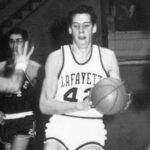
His father, Frank Tripuka, was a legendary college and professional football quarterback who had played at the University of Notre Dame, in South Bend , Indiana, during the 1940s, and in then in pro football for many years. And in 1979, Tracy’s brother, Kelly Tripuka, was an All-american basketball player, carrying on the family tradition at The University of Notre Dame. The Tripuka’s had a deep family sports history. Tracy was re-known for his playing days and scoring performance at Lafayette College. He treated me with respect and expressed confidence in his assessment of my basketball skills level.
I had heard of the family name, but I had never met Tracy. In August 1979 he changed that by visiting me with the Head Utah Coach, Jerry Pimm, and his reels of actual game tapes along with a reel-to-reel film projector – there were no videos in the 1980’s, just film on reels that played on a noisy combersome machine. They wanted to first show me the team playing in games. It was a good strategy that stood apart from the other speed recruiters.
My High School Coach and I spent hours with Coach Pimm and Tracy in the conference room of a local hotel watching Utah play basketball during our first meeting.
My Coach and I left our first meeting with our eyes forced wide open about what we had just seen on film and the potential prospects for a basketball career at Utah. There were not any promo films shown, just basketball. They immediately got added to my list of five schools I wanted to consider attending.
We watched a game film on the exact team I would be joining if I selected Utah. It included All-American Danny Vranes, a seven year NBA pro, and 16 year NBA veteran Tom Chambers, along with Pace Mannion, and other good players, these guys would be the core of the team returning during my Freshman year at Utah, if I decided to attend. Jeff Judkins was also on the film, but he would be the only player moving on from Utah, he played in the NBA for years for the Boston Celtics. Utah had some great players, they played my style of team basketball, and they were very interested in me, it all got my immediate serious attention.
With contacts between Tracy and I increasing over the weeks, the only thing Tracy ever demanded from me was that I make a set date for a four day weekend official recruiting visit to Utah, demanding that my father would accompany me on the forthcoming trip – rules required my Dad pay his own expense on such a trip. It wasn’t difficult for that to be arranged. Tracy and my father had much in common, they enjoyed each other’s company, and Tracy’s phone calls were part of the limited number of calls welcomed by my Dad. As a busy man at work, he did not have time to play phone tag with anyone or any recruiters. He had many more important matters than my recruiting process. But he enjoyed talking to Tracy and Johnny Orr, with whom he befriended years earlier.
I could play the Utah style of basketball, I had minutes waiting for me, no other underclassmen big men were going to be in the program during my Freshman year, the team was going to be loaded with big men talent with the two Senior stars: Vranes and Chambers, as well as two other returning Senior starters, and Pace Mannion, who was a very talented big tall guard. Pace played years in the NBA and professional basketball in Italy until the age of 40, he would be a year ahead of me in school and a three year Utah teammate. Having a chance to play as a Freshman on a very good team was all I wanted. This was only made obvious to me after investigating the program, watching game film and listening to the Utah coaches.
In the late 1970s, cable television was showing a very limited amount of college basketball outside of your living broadcast area. I knew almost nothing about the Runnin’ Utes of Utah, I had watched them only once on TV when they played in a game in the NCAA tournament during my Junior year. I was impressed but it wasn’t something in the front of my mind in August of 1979, during the recruiting frenzy period, that changed.
The volume of different coaches who put me on the ‘Speed Dating Recruiter List’ for summer time was somewhat overwhelming. My High School Coach began to filter out all visitors and calls. Things calmed down and my direction was established.
Coach Piety had taken control and was in charge of running the process. My father did not have hyper-active participation in my recruiting. He had work and a large family to tend to … … . He stayed informed, and let me make my own decisions about where I visited and what to do. He just let things work out on their own, and in the end, they did indeed work out for the best.
My recruiting door had a small opening. All the coaches I wanted to play for in college were already inside the door. There were some funny underhanded attempts to subvert Larry’s rules and system. The University of Louisville and Richmond University come to mind. Louisville tried to use cash on me, and Richmond offered Larry Piety a coaching job if he would deliver me to them. Neither acts of subversion got anywhere or they were not successful.
I had many years of contact with all of the college basketball coaches I wanted to play for, and I was certain that was what I would do, eventually. Utah was on my desired list even though I had no history with the program.
In my mind, I was going to play for one of those coaches. They all had one thing in common, they had taken a basketball team to the NCAA Final Four weekend.
I had personal contact and many hours of playing demonstrations over a period of years in front of the coaches I wanted to play for in college. They all knew my basketball skills level and personality well. My first choice was Dean Smith, I had years of attending the ‘Dean Smith Basketball School’ at the University of North Carolina. But I was not ever going to play as a starter in front of James Worthy or Sam Perkins. The UNC staff went to great lengths to investigate whether I could play the small forward 3 spot. I did not fit. I did not want to spend years as a substitute bench basketball player, even though I liked the coaches and loved Chapel Hill. In the end, they selected Matt Dohrety for that position.
I had just survived a demanding week of playing basketball in front of Bobby Knight of Indiana, … … . (read: ‘Bobby The Butt Slapper’) Playing at IU did not seem very enjoyable and I just did not need to join a basketball program that was like the military with a raving General. Not selecting Indiana was made by Knight’s awareness of the misfit of the program to the player. He was right, by Christmas time of my Senior year, we both knew I was not going to be a basketball player at Indiana. Eventually, he moved on from me …
Rick Majerus, of Marquette – who won the 1977 national Championship – had run the Medalist basketball camps I attended for three years. We talked about Marquette until the week I made my decision to go to Utah. We stayed friends for decades after my time in college. He was honest and told me I wouldn’t fit well into the team, and I didn’t much like Milwaukee.
Lee Rose was close to my coach Larry Piety. We visited Purdue many times, and I made an official weekend visit to Purdue. Coach Rose told Coach Piety before it was made public that he was leaving Purdue and the coaching profession all together, early during my Senior year of High School. I think he knew he was leaving before he even started recruiting me in the summer. I instantly had verbal conflict issues with Gene Keady, and had already signed my letter of intent by the time he became Coach at Purdue. Issues of conflict extended for decades between us, unfortunately.
I had many years experience and many days of basketball with Johnny Orr of Michigan, he had befriended my father years before he recruited me to play at Michigan. He spent dozens of days with me at the HBC basketball camp. I was all set and going to play for Coach Orr, then he left Michigan.
Johnny Orr left Michigan to go Coach at Iowa State, he asked me several times to consider Iowa State, but he knew I wanted a school that was going to the NCAA tournament. Iowa States was years from doing that with Coach Orr at the helm. His replacement, Bill Frieder. was still recruiting me as my Senior season in High School ended, he was very ingratiating, but not a guy I trusted at that time. I later in life learned that I had completely misjudged Coach Frieder.
In my mind, I was going to play for one of those coaches. They all had one thing in common, they had taken a basketball team to the NCAA Final Four weekend. It was almost certain, Utah was also going to play in the NCAA tournament during my Freshman season. I liked the program, the people and the location.
My basketball program requirements were simple, play in the NCAA final Four. Don’t sit and watch the games in the tournament, play in the games as an active participant, not as a substitute bench player.
I knew I wasn’t going to walk into a top program and take a starting position on a good team. But I had excellent team skills and defensive abilities. I needed a place where playing time would be available and starting would be possible in my later college years, I was counting on my ability to improve.
I needed to select a coach and basketball program that was going to make the very limited 32 team invite NCAA Tournament dance list, not the current 2026 year 68 team dance invite list. I had my list of coaches, schools, and teams set, with a few alternative possibilities if things didn’t work out and offers to play were not made by my desired coaches.
Evansville, was about to be coached by Jimmy Crews, Oklahoma was coached by Dave Bliss, a former Knight assistant at Indiana University, and Toledo University, which made the tournament in previous years, had all made me a full scholarship offer before my Senior year in High School.
I maintained contact with all these schools through Coach Piety and I took recruiting visits to each of these schools.
On my recruiting visit to Utah, I felt welcomed and wanted by the players that were a year ahead of me, Pace and Pete, they was showed me just how much damn fun it was to live as a college student and play in Utah. My eyes were completely open after the first few visits that Tracy Tripuka made to Garrett Indiana, but my visit to Utah was pulling me toward the Mountains.
But they were not my first selection. The distance from home was a drawback for me. I was a home small town boy comfortable in my surroundings.
All the schools and coaches recruiting me were aware of my personal long term relationships with all the other coaches. There was no recruiting war, the coaches who wanted me to play for their teams were not trying to out recruit each other. There was no surprises to anyone involved in the ordeal. Relationships between us were long existent and settled. My desires and list was set. Utah was on my list.
There would not be any chance at all for any under the table deals and rules violations in my recruiting. My High School Coach, Larry Piety was a straight arrow, he always played everything by the rules book. He was in charge of the day-to-day activities. He was not only my basketball coach in a small Indiana town, had been extended family to me for years.
Regarding how my recruitment would be conducted was also my father, he was a walking ‘Book of Rules’. He had memorized rules and laws for decades.
My father was a 25 year District Criminal Prosecutor. He also ran a general law practice. He graduated from the University of Notre Dame Law School in 1957. Nobody broke many rules around him during my lifetime. He also knew when a person was lying, or exaggerating circumstances, it was part of his profession. He made visits to schools with me but showed no concern which school I attended, just as long as I was happy, and I obtained a college degree. Basketball was to be used as a temporary path to higher education. He wasn’t concerned which court the basketball bounced on for me and all of my considerations offered a great education, good coaches who were good people. This fulfilled his requirements. Any attempt to recruit my father or convince him of where I should attend college was not going to be very effective. He had five children to put through college. I was just in the middle of that pack. The coaches did not try that path of recruiting.
Long before my Senior year of High School, I had figured out in life that it was just better to tell my father the truth immediately in a bad situation rather than to lie about something to his face. He seemed always to have already known the truth about things before issues were discussed, and it was always better to immediately deal with the consequences. We had an open honest relationship.
I was close to my father and my eventual decision to attend Utah was only hindered by being 1500 away from him and my family.
This following story illustrates how Utah used outdoor adventure and personal connections to serve as powerful incentives that landed me as a recruit to their prestigious basketball program.
Jerry Pimm is an American former basketball coach. He served as the head men’s basketball coach at the University of Utah from 1974 to 1983 and the University of California, Santa Barbara from 1983 to 1998, compiling career college basketball coaching record of 395–288.
Playing career
Playing for Montebello High School, Pimm earned the Helms Athletic Foundation’s Central Section co-high school player of the year in 1956.[1] He played at Fullerton Junior College in 1956-1958. He then played guard at the University of Southern California, where he earned second-team All-Athletic Association of Western Universities and All-Coast Team honors in 1960.[2][3]
Coaching career
Pimm replaced former Utah coach Bill Foster, who had accepted the same position with the Duke University Blue Devils, in 1974 after serving 13 years as an assistant coach under Jack Gardner and Foster.[3] As coach of the Utes, Pimm led Utah to a 173-86 (.668) record, including four Sweet 16 appearances in the NCAA tournament. The Utes also won 3 Western Athletic Conference basketball titles and only had one losing season during his stay. In 1981, the Utes lost to eventual champion North Carolina, led by Sam Perkins, Al Wood, and James Worthy. The Utes were led by Danny Vranes, Tom Chambers and Karl Bankowski. In the 1983 NCAA Men’s basketball tournament, Pimm’s Utes were seeded 10th in the west regional, but led by Peter Williams and Pace Mannion, Utah upset 7th seed Illinois and 2nd seed UCLA before losing to eventual champion North Carolina State. After the season, Pimm decided to leave the University of Utah for the University of California, Santa Barbara.
Prior to Pimm’s career at UCSB, the Gauchos program had suffered through seven straight losing seasons. After a shaky start, which saw three more losing seasons, the Gauchos turned it around in the 1986-87 season, where they finished with a 16-13 record. The next season would be Pimm’s best at UCSB. Led by conference player of the year Brian Shaw, the Gauchos went 22-8, including an 18-point win over Jim Valvano’s North Carolina State team (with Chucky Brown, Charles Shackleford, and Vinny Del Negro), and two wins over Jerry Tarkanian’s UNLV Runnin’ Rebels (the second win coming when UNLV was ranked #2). UCSB earned its first-ever NCAA Tournament berth, but they lost to the University of Maryland in the first round, 92-82.
In 1990, UCSB once again made the NCAA Tournament (propelled by a 78-70 win over top-ranked and eventual national champion UNLV), this time beating the University of Houston 70-66 in the first round before falling to #1 seed Michigan State 62-58 in the 2nd round. Under Pimm, UCSB also played in three National Invitation Tournaments. In the mid-late 90s, UCSB had suffered through five straight losing seasons, and Pimm resigned, although he later took a job with the athletic department. Pimm went 217-187 (.537) in 16 seasons with the Gauchos. He holds an all-time record of 390-273 (.588) in 25 years as a head coach.
Pimm assisted Lute Olson with the US national team at the 1986 Goodwill Games and the 1986 FIBA World Championship, winning the gold medal both times.[4]
Jamie Dixon and Ben Howland both were assistant coaches for Pimm while at UCSB.[5][6]
Head coaching record
| Season | Team | Overall | Conference | Standing | Postseason | |||
|---|---|---|---|---|---|---|---|---|
| Utah Utes (Western Athletic Conference) (1974–1983) | ||||||||
| 1974–75 | Utah | 17–9 | 7–5 | 4th | ||||
| 1975–76 | Utah | 19–8 | 9–5 | T–2nd | ||||
| 1976–77 | Utah | 22–7 | 11–3 | 1st | NCAA Division I Sweet 16 | |||
| 1977–78 | Utah | 23–6 | 12–2 | 2nd | NCAA Division I Sweet 16 | |||
| 1978–79 | Utah | 20–10 | 9–3 | 2nd | NCAA Division I First Round | |||
| 1979–80 | Utah | 18–10 | 10–4 | T–2nd | ||||
| 1980–81 | Utah | 25–5 | 13–3 | T–1st | NCAA Division I Sweet 16 | |||
| 1981–82 | Utah | 11–17 | 6–10 | 7th | ||||
| 1982–83 | Utah | 18–14 | 11–5 | T–1st | NCAA Division I Sweet 16 | |||
| Utah: | 173–86 | 88–40 | ||||||
| UC Santa Barbara Gauchos (Pacific Coast Athletic Association / Big West Conference) (1983–1998) | ||||||||
| 1983–84 | UC Santa Barbara | 10–17 | 5–13 | 9th | ||||
| 1984–85 | UC Santa Barbara | 12–16 | 8–10 | T–6th | ||||
| 1985–86 | UC Santa Barbara | 12–15 | 7–11 | 9th | ||||
| 1986–87 | UC Santa Barbara | 16–13 | 10–8 | T–2nd | ||||
| 1987–88 | UC Santa Barbara | 22–8 | 13–5 | T–2nd | NCAA Division I First Round | |||
| 1988–89 | UC Santa Barbara | 21–9 | 11–7 | 3rd | NIT First Round | |||
| 1989–90 | UC Santa Barbara | 21–9 | 13–5 | T–2nd | NCAA Division I Second Round | |||
| 1990–91 | UC Santa Barbara | 14–15 | 8–10 | T–4th | ||||
| 1991–92 | UC Santa Barbara | 20–9 | 13–5 | 2nd | NIT First Round | |||
| 1992–93 | UC Santa Barbara | 18–11 | 10–8 | T–5th | NIT First Round | |||
| 1993–94 | UC Santa Barbara | 13–17 | 9–9 | 7th | ||||
| 1994–95 | UC Santa Barbara | 13–14 | 8–10 | 6th | ||||
| 1995–96 | UC Santa Barbara | 11–15 | 8–10 | T–7th | ||||
| 1996–97 | UC Santa Barbara | 12–15 | 7–9 | 3rd (Western) | ||||
| 1997–98 | UC Santa Barbara | 7–19 | 4–12 | 6th (Western) | ||||
| UC Santa Barbara: | 222–202 | 134–132 | ||||||
The Black Magic 1981 Running Utes Basketball Season
The 1980–81 Utah Utes men’s basketball team
the University of Utah in the 1980-81 season.
the Utes to a Western Athletic Conference championship and
the Sweet Sixteen of the NCAA tournament. In
the best season the Utes would have
the team finished with an overall record of 25–5
(13–3 WAC).
The 1980–81 Utah Utes men’s basketball team
Preseason:
Five games in 10 days
Utah State Leo Cunningham ( 6’11” )
the Oklahoma State
Soph. (6’8″) Leroy Combs
Nebraska -Coach: Moe Iba
( 6’8″ ) Andre Smith 19 pts. per game
| Dec 6, 1980* | Weber State | W 76–61 | 1–0 | Jon M. Huntsman Center Salt Lake City, Utah | ||||
| Dec 9, 1980* | at Utah State | W 83–81 | 2–0 | Dee Glen Smith Spectrum Logan, Utah | ||||
| Dec 12, 1980* | Oklahoma State | W 89–73 | 3–0 | Jon M. Huntsman Center Salt Lake City, Utah | ||||
| Dec 13, 1980* | Nebraska | W 57–55 | 4–0 | Jon M. Huntsman Center Salt Lake City, Utah | ||||
| Dec 16, 1980* | Utah State | W 99–74 | 5–0 | Jon M. Huntsman Center Salt Lake City, Utah | ||||
| Dec 20, 1980* | at No. 20 Louisville | W 78–59 | 6–0 | Freedom Hall Louisville, Kentucky | ||||
| Dec 26, 1980* | No. 19 | vs. Drake Far West Classic | L 68–69 | 6–1 | Memorial Coliseum Portland, Oregon | |||
| Dec 27, 1980* | No. 19 | vs. Cal State Fullerton Far West Classic | W 76–70 | 7–1 | Memorial Coliseum Portland, Oregon | |||
| Dec 28, 1980* | No. 19 | vs. Northwestern Far West Classic | W 73–63 | 8–1 | Memorial Coliseum Portland, Oregon | |||
| Jan 2, 1981* | No. 20 | at UNLV | W 76–75 | 9–1 | Las Vegas Convention Center Las Vegas, Nevada | |||
| Jan 3, 1981 | No. 20 | at Air Force | W 74–60 | 10–1 (1–0) | Clune Arena Colorado Springs, Colorado | |||
| Jan 8, 1981 | No. 18 | Hawaii | W 100–87 | 11–1 (2–0) | Jon M. Huntsman Center Salt Lake City, Utah | |||
| Jan 10, 1981 | No. 18 | San Diego State | W 97–74 | 12–1 (3–0) | Jon M. Huntsman Center Salt Lake City, Utah | |||
| Jan 15, 1981 | No. 16 | at UTEP | W 69–64 | 13–1 (4–0) | Special Events Center El Paso, Texas | |||
| Jan 17, 1981 | No. 16 | at New Mexico | W 82–76 | 14–1 (5–0) | The Pit Albuquerque, New Mexico | |||
| Jan 23, 1981 | No. 14 | Wyoming | W 55–53 | 15–1 (6–0) | Jon M. Huntsman Center Salt Lake City, Utah | |||
| Jan 24, 1981 | No. 14 | Colorado State | W 86–56 | 16–1 (7–0) | Jon M. Huntsman Center Salt Lake City, Utah | |||
| Jan 31, 1981 | No. 9 | No. 15 BYU | W 60–56 | 17–1 (8–0) | Jon M. Huntsman Center Salt Lake City, Utah | |||
| Feb 6, 1981 | No. 7 | Air Force | W 48–46 | 18–1 (9–0) | Jon M. Huntsman Center Salt Lake City, Utah | |||
| Feb 7, 1981 | No. 7 | UNLV | W 95–83 | 20–1 | Jon M. Huntsman Center Salt Lake City, Utah | |||
| Feb 12, 1981 | No. 6 | at San Diego State | W 62–53 | 21–1 (10–0) | San Diego Sports Arena San Diego, California | |||
| Feb 14, 1981 | No. 6 | at Hawaii | L 74–83 | 21–2 (10–1) | Neal S. Blaisdell Center Honolulu, Hawaii | |||
| Feb 19, 1981 | No. 9 | New Mexico | W 90–73 | 22–2 (11–1) | Jon M. Huntsman Center Salt Lake City, Utah | |||
| Feb 21, 1981 | No. 9 | UTEP | W 69–59 | 23–2 (12–1) | Jon M. Huntsman Center Salt Lake City, Utah | |||
| Feb 26, 1981 | No. 7 | at Colorado State | W 73–50 | 24–2 (13–1) | Moby Arena Fort Collins, Colorado | |||
| Feb 28, 1981 | No. 7 | at Wyoming | L 50–53 | 24–3 (13–2) | War Memorial Fieldhouse Laramie, Wyoming | |||
| Mar 7, 1981 | No. 9 | at No. 18 BYU | L 76–95 | 24–4 (13–3) | Marriott Center Provo, Utah | |||
| NCAA tournament | ||||||||
|---|---|---|---|---|---|---|---|---|
| Mar 15, 1981* | (3 W) No. 14 | vs. (11 W) Northeastern Second Round | W 94–69 | 25–4 | Special Events Center El Paso, Texas | |||
| Mar 19, 1981* | (3 W) No. 14 | vs. (2 W) No. 6 North Carolina Regional semifinal – Sweet Sixteen | L 56–61[4] | 25–5 | Jon M. Huntsman Center Salt Lake City, Utah | |||
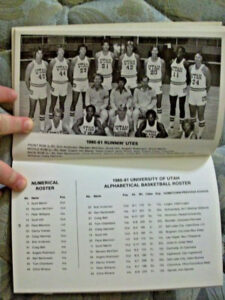

The 1980–81 Utah Utes men’s basketball team represented the University of Utah in the 1980-81 season. Head coach Jerry Pimm, and Senior stars Tom Chambers and Danny Vranes would lead the Utes to a Western Athletic Conference championship and the Sweet Sixteen of the NCAA tournament.
Pace Mannion was a Sophomore starter and returning Seniors Scot Martin and Karl Bankowski completed the starting core. Pete Williams and Chris Winans substituted for the inside players, and Angelo Robinson was a substitute guard.
In the best season the Utes would have under Pimm, the team finished with an overall record of 25–5 (13–3 WAC).
Vranes and Chambers were both selected in the top 8 picks of the NBA Draft. Vranes was taken 5th by Seattle, and Chambers, drafted by the San Diego (Now Los Angeles) Clippers, would go on to play for several NBA teams in his career, most notably the Phoenix Suns, with whom he would make an appearance in the 1993 NBA Finals; and the Utah Jazz. Pace Mannion would later be drafted in the NBA by the Golden State Warriors, and Chris Winans was later drafted in the NBA by the New Jersey Nets.
The 1980–81 Utah Utes men’s basketball team
The 1980–81 Utah Utes men’s basketball team
the University of Utah in the 1980-81 season.
the Utes to a Western Athletic Conference championship and
the Sweet Sixteen of the NCAA tournament. In
the best season the Utes would have
the team finished with an overall record of 25–5
(13–3 WAC).





Black Magic 1981 Running Utes Basketball Season
Black Magic In Portland
Running running and running pre-season
miles, sprints, stairs, suicides, cone circles, …. then scrimmage , …
Tom and his watch,
6’10 fastest ( and Pete Williams in the mile,
Then, the actually practices, grueling,
physical, elbows, guarding two top NBA guys everyday, 3 years older , …
difficult
studies are hard , …
Married clean gamblers,
the Lake Powell Black Jack
the downtown ponsey scheme ,
the FBI visit,
Empty
1981 University of Utah Basketball Game Results (25-5)
The 1980–81 Utah Utes men’s basketball team
the University of Utah in the 1980-81 season.
the Utes to a Western Athletic Conference championship and
the Sweet Sixteen of the NCAA tournament. In
the best season the Utes would have
the team finished with an overall record of 25–5
(13–3 WAC).
The October 7 2026 Hearing Outcome with Judge Jagger – order to enjoin the cases
RATO’S RESEARCH – To Which It Stands: ” War at Lot 210″
The Flag: For Which It Stands – An Introduction
James Naismith The Origins of Basketball
ALL PRESENTATIONS
Website Pages