
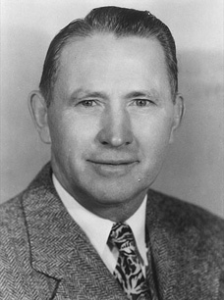
The Spiritual Tranference of Basketball’s Origins
Date: July 2026
Title: The Spiritual Transference of Basketball’s Origins
By: Doctor Dunkenstein
Phog Allen is known as the “Father of Basketball Coaching” because he was a direct link to the game’s origin, and he spent a lifetime developing the game on and off the court into a serious athletic and profitable endeavor.
Doctor Forrest ‘Phog’ Allen played for the inventor of the game, James Naistmith at The University of Kansas. He later coached at Kansas. Most early roots of the game stem back directly to him or to the revolutionary innovations he implemented as a coach.
Forrest ‘Phog’ Allen died before I was able to meet him in 1974, at the age of 89. But his love of basketball and his teaching were transferred directly to me. It wasn’t channeling or a spiritual transference of his essence regarding basketball that I received from the great Doctor, it was an religious impartation of sorts, the actually laying of the hands by which he passed the his love of the game and his teaching directly upon me.
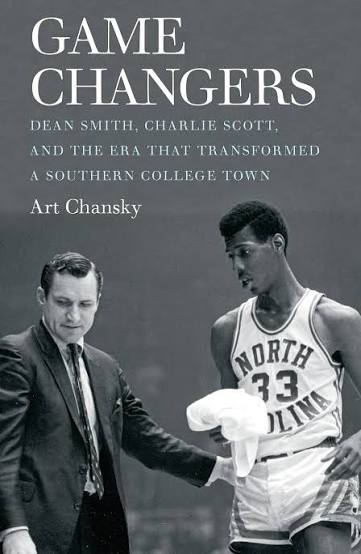
Doctor Forrest coached Dean Smith at Kansas, they won a national championship together in 1952.
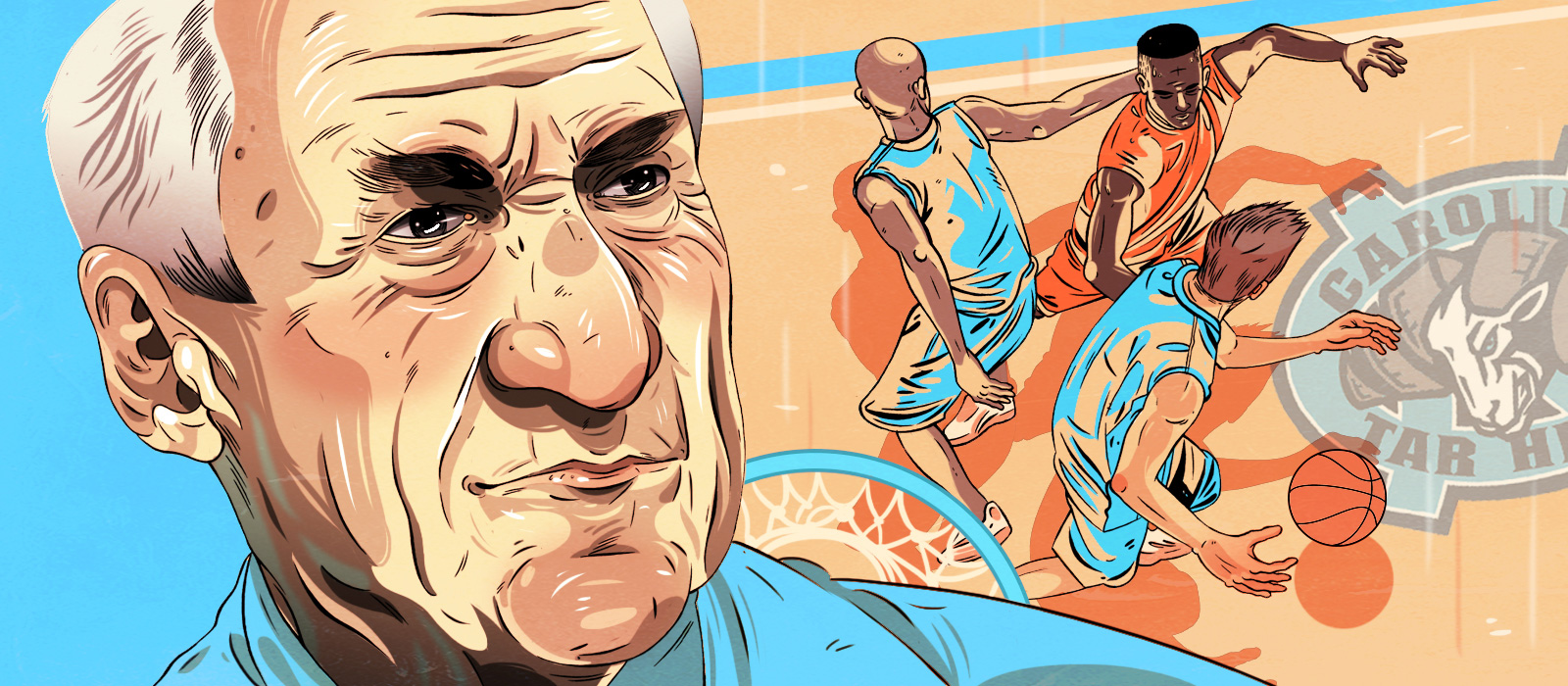
Dean Smith Coached at the University of North Carolina and led the Tarheels from 1961* until 1997.
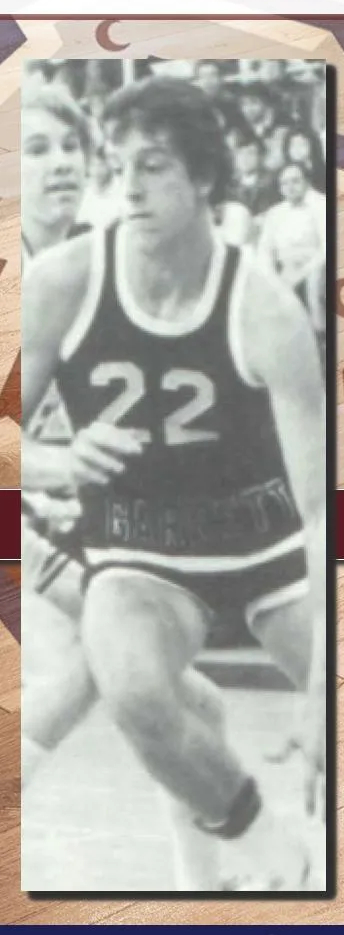
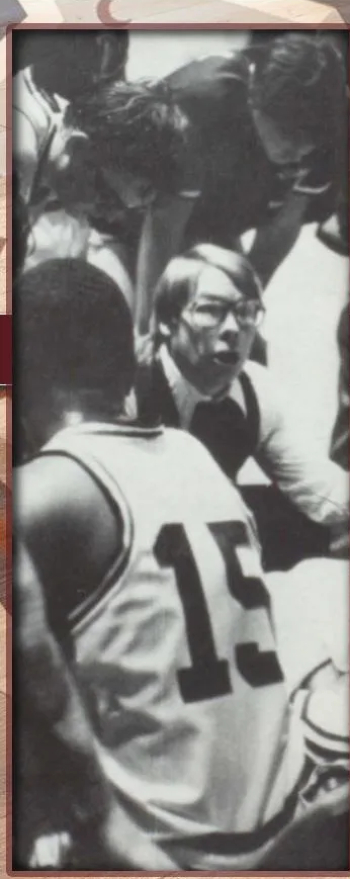
Larry Piety coached me at Garrett High School from 1976 until 1980. Larry emulated most everything that Dean Smith taught on the basketball court. We played the game the ‘Tarheel Way‘.
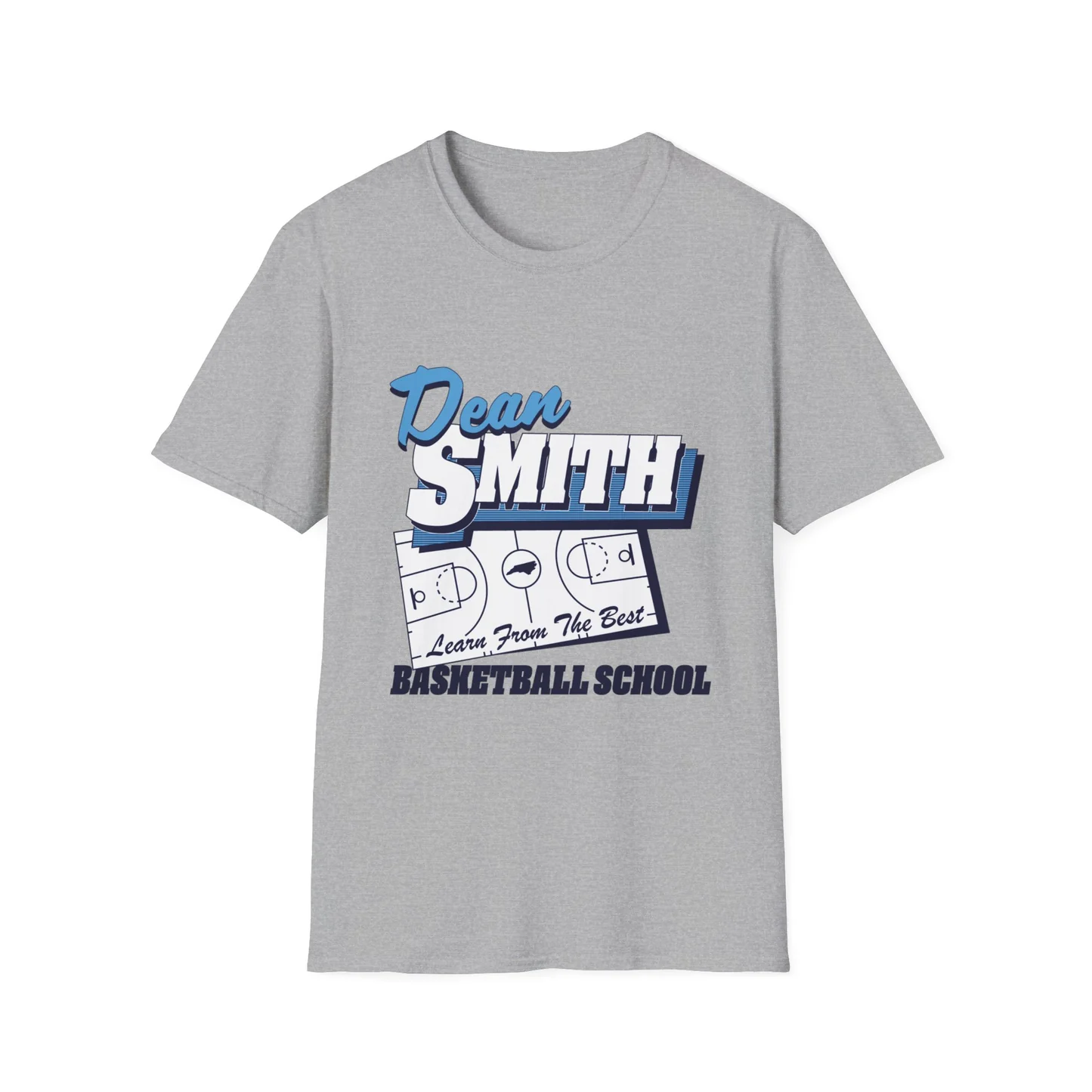
Larry facilitated this passing of the spirit and methods of the game of basketball by taking me and my faithful side kick teammate, Andy Herzer, to the Dean Smith Basketball School in the summer of our Sophomore year in High School, 1977.
It was there in Chapel Hill and on that first day of basketball camp (school) that the certified spiritual transfer commenced in physical form.
Dean put his hands on me within the first 20 minutes of watching me play basketball. He did the exact same thing in another gymnasium to my teammate, Andy, only a short time after he first met me.
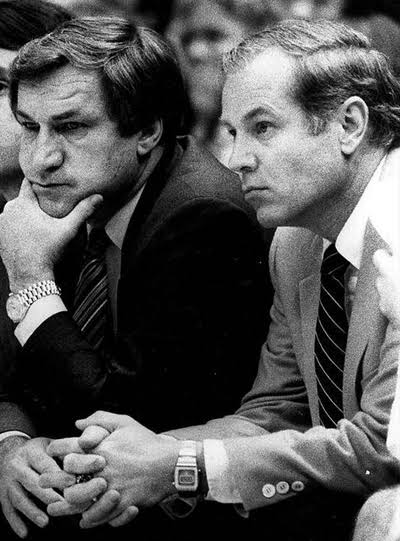
By the afternoon hours of that very same day, Dean had Coach Larry, Andy and myself in his office in Carmichael Auditorium. My relationship with Coach Smith and Bill Guthridge lasted for almost two decades
A more in depth personal transference of Doctor Forrest Clare ‘Phog’ Allen began as Coach Dean Smith began to demonstrate the proper manner by which you should lace and tie your converse basketball high top tennis shoes in order to gain maximum traction and performance. The session lasted nearly an hour as he verbally drilled with deep curiosity and interest my Coach Larry Piety on all his teaching and practice techniques. He wanted to know how those two kids, who he picked out of hundreds of players, were taught basketball. As we spoke, he would interrupt the conversation and digress into the reason and principals of correctly placing the shoe laces as he was physically demonstrating. I had never heard anyone goo into such detail about lacing up basketball shoes, but it made sense to me.
At the end of our first memorable gathering in his office, Dean directly handed Coach Piety, the new size 12 Converse sneakers to my Coach. It was completely within the NCAA rules to provide any Coach working at your basketball camp a teaching tool. He didn’t ask, but somehow, he knew Larry did NOT wear high-top converse shoes and he was not a size 12, but he obviously knew exactly both shoe sizes of Andy and myself. The Carolina blue star Converse shoes used as teaching tools just happen to fit.
I laced my shoes up tight and precisely just as he taught me on that day for many games and years in the future.
PART 2 /
Date: July 2026
Title: Singled Out by Dean Smith
By: Doctor Dunkenstein
I was 14 years old the day I met Dean Smith. Before, the sunset of that day I was quite surprisingly in his basketball office.
My high school coach followed the Dean Smith ways of coaching and teaching. As a rising Fresman, my coach took myself and my teammate Andy 1000 miles by car to the ‘Dean Smith Basketball School’. He would Coach during the camp and Andy and I would participate as campers, all of us assigned to different gyms. Over 350 weekly campers where bussed to a dozen different off campus locations for morning sessions and evening games. Coach Dean Smith would drive to all these locations daily and spend 15 to thirty minutes observing the activities of each gym.
It was my first day at the Dean Smith Basketball School. However, I was an experienced summertime camper having started at the Hoosier Basketball Camp at the age of 10. Regardless of my experience, I was nervous and anxious. I was in a gym with unfamiliar faces and they had separated me from my beloved high school coach and teammate.
After the short morning scrimmage, dripping with sweat, I bolted for the drinking fountain. Just as I finished drinking, a man who I did not know at that time came up to me and initiated a conversation. He wanted to know my name where I was from … … … . He inquired as to why and how I came this camp. He wanted to know, who had taught me to play ‘that way’? He complimented me on my screening technique and defense. Other campers immediately let me know, ‘that was Coach Smith’!
An hour later, he approached my teammate Andy, complimenting him on his playing performance, while he visited another location. It was in this conversation with Andy that Coach Smith learned my high school coach was working at the camp. When Andy and I returned to our dorm room before lunch, we were ecstatic with the news of our encounter with Coach Smith.
By 2:30 pm that very day, Coach Smith had three of us, my coach, Andy and myself in his basketball office. He continually questioned my high school coach about his techniques.
That first day at the Dean Smith Basketball School was an amazing experience. It led to a 15 year relationship with the ‘Dean Smith Basketball School’, lots of great Chapel Hill experiences, and a coaching staff of friends.
I developed a life long lasting relationship with Bill Guthridge during my Chapel Hill years. He never stopped making a positive difference in my life.
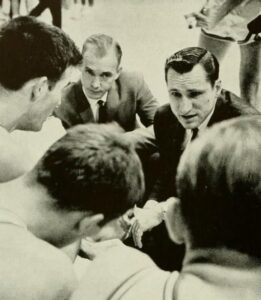
Dean Smith won a national championship in 1952 while playing for Hall of Fame coach Phog Allen at the University of Kansas.
On the face cover of the above video is a photo of Dean Smith during his Kansas playing career. There he is, sitting on the bench, he made his team contribution as a substitute player.
Being a substitute player on an NCAA Championship team played a integral part in how Dean Smith set up his program at the University of North Carolina.
He was the first to implement a five man instant wholesale substitution during all games – even the important games. He would sub in five guys at one time from the bench, at any given point in a game. This often lead to a spark of success and instant energy on the court and it always provided a brief rest for starting players. Thus, by giving all team members game playing time, they had a stake in the outcome of the game.
Coach Smith maintained a Junior Varsity squad within the UNC program for years after most every other major school had abandoned this part of their college program.
This UNC JV program, by the way, quite ironically, provided Roy Williams with a players position at UNC and entry into coaching. He later returned to the University of Kansas, coaching championship teams.
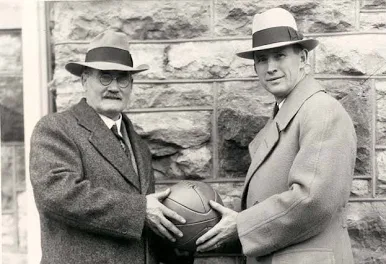
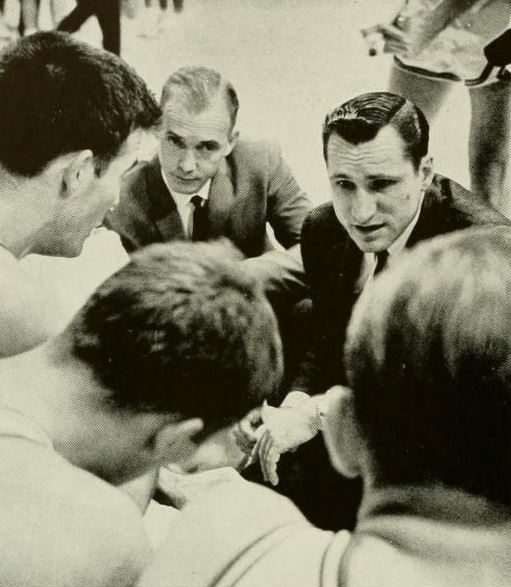

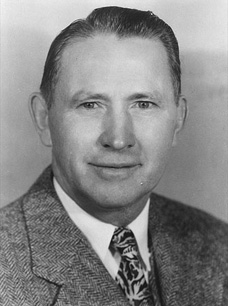
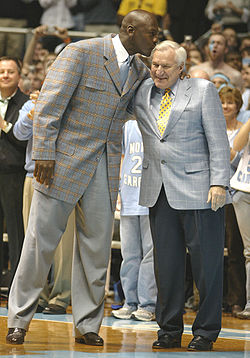
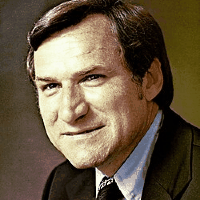
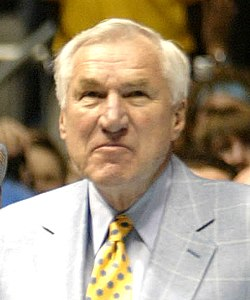
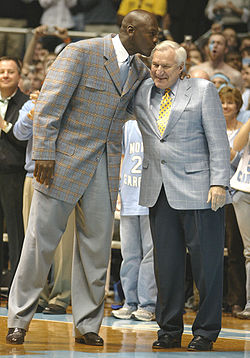
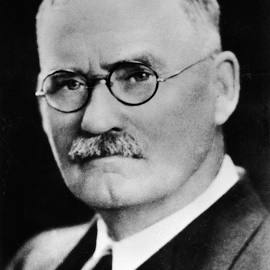
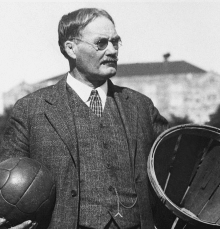
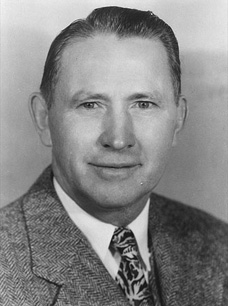
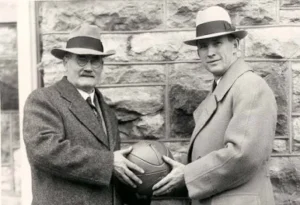
Forrest Clare “Phog” Allen (November 18, 1885 – September 16, 1974) was an American basketball coach and physician. Known as the “Father of Basketball Coaching,”[1] he served as the head basketball coach at Baker University (1905–1908), the University of Kansas (1907–1909, 1919–1956), Haskell Institute—now Haskell Indian Nations University (1908–1909), and Warrensburg Teachers College—now the University of Central Missouri (1912–1919), compiling a career college basketball head coaching record of 746–264. In his 39 seasons at the helm of the Kansas Jayhawks men’s basketball program, his teams won 24 conference championships[2] and three national titles.[3]
The Helms Athletic Foundation retroactively recognized Allen’s 1921–22 and 1922–23 Kansas teams as national champions. Allen’s 1951–52 squad won the 1952 NCAA tournament and his Jayhawks were runners-up in the NCAA Tournament in 1940 and 1953. His 590 wins are the second most of any coach in the history of the storied Kansas basketball program.
Allen attended the University of Kansas, having already acquired the nickname “Phog” for the distinctive foghorn voice he had as a baseball umpire. At KU, Allen was a member of Phi Kappa Psi fraternity.[4]
He lettered in baseball and basketball, the latter under James Naismith, the inventor of the game. Allen served as the head football coach at Warrensburg Teachers College from 1912 to 1917 and at Kansas for one season in 1920, amassing a career college football head coaching record of 34–19–3. He also coached baseball at Kansas for two seasons, in 1941 and 1942, tallying a mark of 6–17–1, and was the university’s athletic director from 1919 to 1937.
Allen was inducted into the Naismith Memorial Basketball Hall of Fame with the inaugural class of 1959.[3]The home basketball arena at the University of Kansas, Allen Fieldhouse, was named in his honor when it opened in 1955. His final season at Kansas was the first full season the Jayhawks played at Allen Fieldhouse.
Early life
Allen was born in the town of Jamesport, Missouri. His father, William Allen, was among the 30 people who originally incorporated Jameson, Missouri in 1879 and the doctor who delivered Allen lived in Jameson. However, he had strong ties to Jamesport where he was town clerk, collector, and constable. His family later moved to Independence, Missouri.[5]
James Naismith, the man who created basketball, coached Allen from 1905 to 1907 at the University of Kansas in Lawrence. Allen spent his last two years in school (1907–09) as the team’s coach. Naismith inspired Phog Allen to pursue a medical degree as well. After two years of coaching, Allen took a three-year break to complete his degree at Kansas City’s Central College of Osteopathy (now Kansas City University College of Osteopathic Medicine). After graduating from medical school, Allen integrated numerous concepts of healthy eating, efficient exercise regimens, and proper body alignment into his coaching. A section on sports medicine was included in his book, My Basket-Ball Bible. Among the many elite athletes he treated at his downtown office at 13 E. 8th St. was Mickey Mantle.[6][7][8]
Playing career
Allen began classes at the University of Kansas in 1904, where he lettered three years in basketball under James Naismith’s coaching, and two years in baseball. Unlike his time as a coach, the Jayhawks struggled on the court. In his three seasons as a player, the team only had one winning season. He was a player for the team for the Jayhawks’ first games in their rivalries against Kansas State and Missouri. In 1905 he also played for the Kansas City Athletic Club.[9]
Coaching career
Basketball
Allen coached at William Chrisman High School (then known as Independence High School) in Independence, Missouri, the University of Kansas, Baker University, Haskell Institute, and Warrensburg Teachers College in Warrensburg, Missouri.
Allen launched his coaching career at his alma mater in 1907, but took a hiatus after graduating in 1909 to study osteopathic medicine at Central College of Osteopathy in Kansas City, Missouri. Known as “Doc” to his players and students, he was reputed to be a colorful figure on the University of Kansas campus, coaching all sports and becoming known for his osteopathic manipulation techniques for ailing athletes.
Allen was a legend in the field of treatment of athletic injuries and benefited a long list of high-profile performers. He also had a successful private osteopathic practice, and many he treated, the famous and otherwise, contended he had a “magic touch” for such ailments as bad backs, knees and ankles. He said he applied the same treatments to “civilians” as he did to his athletes.
His forceful, yet reasonable, disposition helped him become the driving force behind the acceptance of basketball as an official Olympic sport at the 1936 Summer Olympic Games. Allen later worked as an assistant coach in the 1952 Summer Olympics,[10] helping to lead the United States to the gold medal in Helsinki, Finland.
He coached college basketball for 50 seasons, and compiled a 746–264 record, retiring with the all-time record for most coaching wins in college basketball history at the time. During his tenure at Kansas, Allen coached Dutch Lonborg, Adolph Rupp, Ralph Miller and Dean Smith, all future Hall of Fame coaches. During the summers of 1930, 1931, and 1932, he directed the prestigious basketball coaching program at Springfield College in Massachusetts, the birthplace of basketball. While at Springfield College, Allen developed a close friendship with his assistant, Lee Patton, who later became a legendary basketball coach at West Virginia University. He also coached John Bunn, who is a member of the Hall of Fame and did go on to coach at Stanford, but he is honored as a contributor to the game of basketball.[citation needed]
Additional former players that make up Allen’s coaching tree who coached at the collegiate level but are not enshrined in the Hall of Fame include Frosty Cox, George E. Rody, Andrew McDonald, Charlie T. Black, Howard Engleman and his replacement upon retirement Dick Harp. Among the Hall of Fame players he coached were Paul Endacott, Bill Johnson, and Clyde Lovellette. He also recruited Wilt Chamberlain to Kansas, and even coached former United States Senate Majority Leader Bob Dole. Allen Fieldhouse, the basketball arena on the campus of the University of Kansas, is named in his honor. A banner that hangs in the rafters of Allen Fieldhouse reads: “Pay heed all who enter, beware of the Phog.” He was enshrined as part of the inaugural class in the Basketball Hall of Fame in 1959.
Allen also created the National Association of Basketball Coaches, which went on to create the NCAA tournament.[11]
Football
Warrensburg
Allen coached the football team at Warrensburg Teacher’s College, now known as University of Central Missouri. At Warrensburg, he coached for six seasons. The team won their conference title each of his first four seasons as coach. He left after the 1917 and focused on his basketball coaching duties. He finished his time at the school with a 29–17–2 record.
Kansas
Allen was hired as the coach for the Jayhawks football team in 1920. The Jayhawks began the season 5–0, including a 14–0 victory over rival Kansas State. Kansas would lose 2 of their last 3 games and tie the other game to finish the season 5–2–1. They finished 3rd in the MVIAA. Allen resigned at the conclusion of the season to focus on his duties as the men’s basketball coach, coaching only one season for the football program.
Head coaching record
Basketball
| Season | Team | Overall | Conference | Standing | Postseason | ||||
|---|---|---|---|---|---|---|---|---|---|
| Baker Wildcats (Independent) (1905–1908) | |||||||||
| 1905–06 | Baker | 18–3 | |||||||
| 1906–07 | Baker | 14–0 | |||||||
| 1907–08 | Baker | 13–6 | |||||||
| Baker: | 45–9 (.833) | ||||||||
| Kansas Jayhawks (Missouri Valley Intercollegiate Athletic Association) (1907–1909) | |||||||||
| 1907–08 | Kansas | 18–6 | 6–0 | 1st (North) | |||||
| 1908–09 | Kansas | 25–3 | 8–2 | 1st (North) | |||||
| Haskell Indians (Independent) (1908–1909) | |||||||||
| 1908–09 | Haskell | 27–5 | |||||||
| Haskell: | 27–5 (.844) | ||||||||
| Warrensburg Teachers (Missouri Intercollegiate Athletic Association) (1912–1919) | |||||||||
| 1912–13 | Warrensburg Teachers | 11–7 | 6–0 | 1st | |||||
| 1913–14 | Warrensburg Teachers | 15–4 | 9–1 | 1st | |||||
| 1914–15 | Warrensburg Teachers | 13–4 | |||||||
| 1915–16 | Warrensburg Teachers | 9–4 | |||||||
| 1916–17 | Warrensburg Teachers | 13–2 | |||||||
| 1917–18 | Warrensburg Teachers | 9–4 | |||||||
| 1918–19 | Warrensburg Teachers | 14–6 | |||||||
| Warrensburg Teachers: | 84–31 (.730) | ||||||||
| Kansas Jayhawks (MVIAA/Big Six/Big Seven/Big Eight Conference) (1919–1956) | |||||||||
| 1919–20 | Kansas | 10–7 | 9–7 | 3rd | |||||
| 1920–21 | Kansas | 10–8 | 10–8 | 4th | |||||
| 1921–22 | Kansas | 16–2 | 15–1 | T–1st | Helms National Champion | ||||
| 1922–23 | Kansas | 17–1 | 16–0 | 1st | Helms National Champion | ||||
| 1923–24 | Kansas | 16–3 | 15–1 | 1st | |||||
| 1924–25 | Kansas | 17–1 | 15–1 | 1st | |||||
| 1925–26 | Kansas | 16–2 | 16–2 | 1st | |||||
| 1926–27 | Kansas | 15–2 | 10–2 | 1st | |||||
| 1927–28 | Kansas | 9–9 | 9–9 | 4th | |||||
| 1928–29 | Kansas | 3–15 | 2–8 | T–5th | |||||
| 1929–30 | Kansas | 14–4 | 7–3 | 2nd | |||||
| 1930–31 | Kansas | 15–3 | 7–3 | 1st | |||||
| 1931–32 | Kansas | 13–5 | 7–3 | 1st | |||||
| 1932–33 | Kansas | 13–4 | 8–2 | 1st | |||||
| 1933–34 | Kansas | 16–1 | 9–1 | 1st | |||||
| 1934–35 | Kansas | 15–5 | 12–4 | 2nd | |||||
| 1935–36 | Kansas | 21–2 | 10–0 | 1st | |||||
| 1936–37 | Kansas | 15–4 | 8–2 | T–1st | |||||
| 1937–38 | Kansas | 18–2 | 9–1 | 1st | |||||
| 1938–39 | Kansas | 13–7 | 6–4 | 3rd | |||||
| 1939–40 | Kansas | 19–6 | 8–2 | T–1st | NCAA Runner-up | ||||
| 1940–41 | Kansas | 12–6 | 7–3 | T–1st | |||||
| 1941–42 | Kansas | 17–5 | 8–2 | T–1st | NCAA Regional Third Place | ||||
| 1942–43 | Kansas | 22–6 | 10–0 | 1st | |||||
| 1943–44 | Kansas | 17–9 | 5–5 | 3rd | |||||
| 1944–45 | Kansas | 12–5 | 7–3 | 2nd | |||||
| 1945–46 | Kansas | 19–2 | 10–0 | 1st | |||||
| 1946–47 | Kansas | 8–5[n 1] | 0–1[n 1] | [n 1] | |||||
| 1947–48 | Kansas | 9–15 | 4–8 | T–6th | |||||
| 1948–49 | Kansas | 12–12 | 3–9 | T–6th | |||||
| 1949–50 | Kansas | 14–11 | 8–4 | T–1st | |||||
| 1950–51 | Kansas | 16–8 | 8–4 | T–2nd | |||||
| 1951–52 | Kansas | 28–3 | 11–1 | 1st | NCAA Champion | ||||
| 1952–53 | Kansas | 19–6 | 10–2 | 1st | NCAA Runner-up | ||||
| 1953–54 | Kansas | 16–5 | 10–2 | T–1st | |||||
| 1954–55 | Kansas | 11–10 | 5–7 | 5th | |||||
| 1955–56 | Kansas | 14–9 | 6–6 | 5th | |||||
| Kansas: | 590–219 (.729) | 334–123 (.731) | |||||||
| Total: | 746–264 (.739) | ||||||||
National champion Postseason invitational champion | |||||||||
Football
| Year | Team | Overall | Conference | Standing | Bowl/playoffs | ||||
|---|---|---|---|---|---|---|---|---|---|
| Warrensburg Teachers (Missouri Intercollegiate Athletic Association) (1912–1917) | |||||||||
| 1912 | Warrensburg Teachers | 6–2 | 1st | ||||||
| 1913 | Warrensburg Teachers | 7–2 | 1st | ||||||
| 1914 | Warrensburg Teachers | 5–4 | 1st | ||||||
| 1915 | Warrensburg Teachers | 4–2–2 | 1st | ||||||
| 1916 | Warrensburg Teachers | 6–3 | |||||||
| 1917 | Warrensburg Teachers | 1–4 | |||||||
| Warrensburg Teachers: | 29–17–2 | ||||||||
| Kansas Jayhawks (Missouri Valley Conference) (1920) | |||||||||
| 1920 | Kansas | 5–2–1 | 3–2 | T–3rd | |||||
| Kansas: | 5–2–1 | 3–2 | |||||||
| Total: | 34–19–1 | ||||||||